Newsletter Jan-June 2022

It was a novelty to have children back in school full time from February!

Looking back over the last two difficult and unusual years, one realises that good teamwork, community spirit and all your support have unleashed our creativity and resilience to the maximum. In fact, many new projects have sprouted in Thulir!

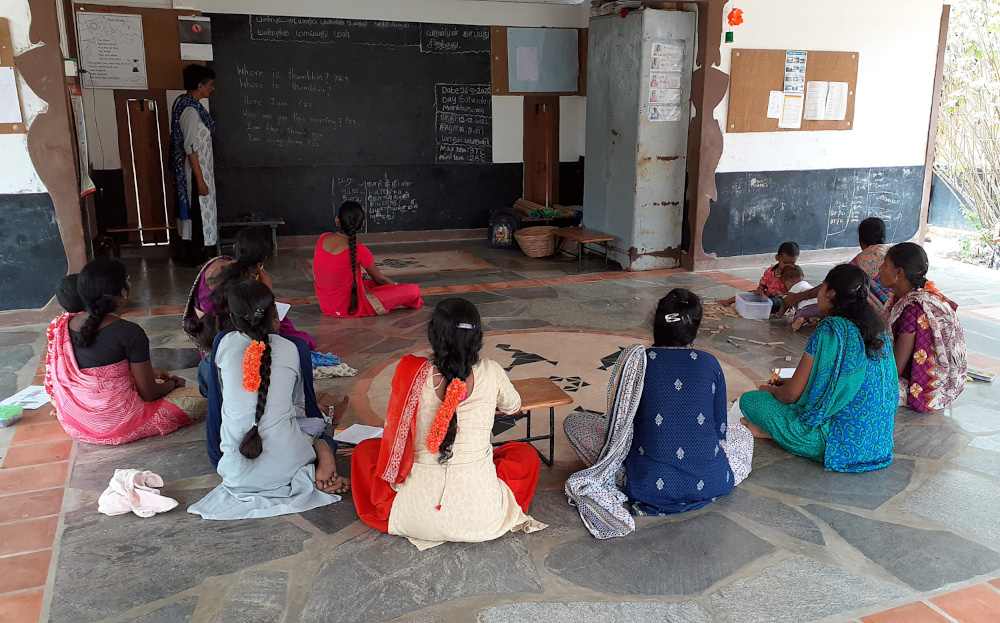
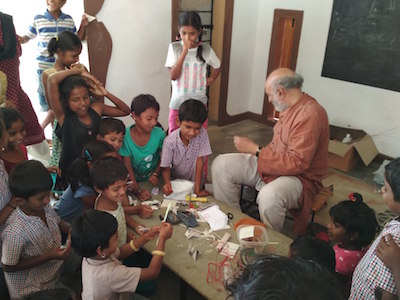
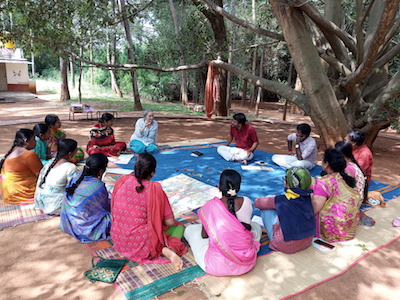
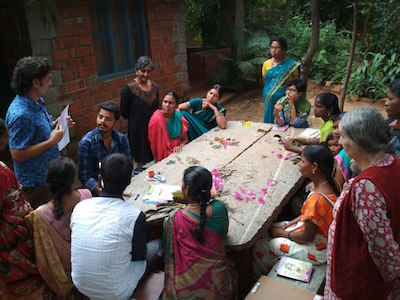
Training of government appointed Illam Thedi Kalvi volunteers.

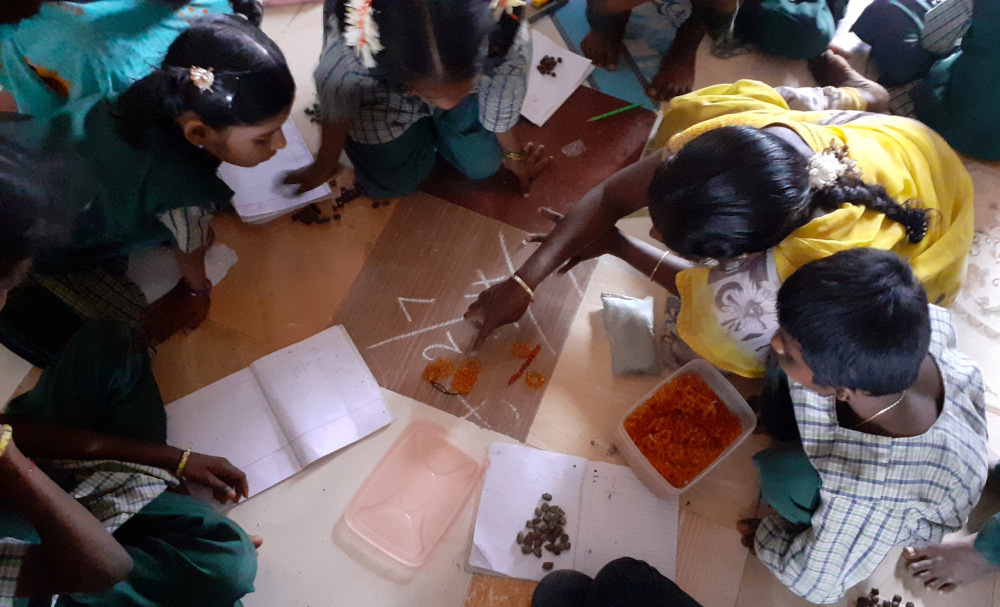
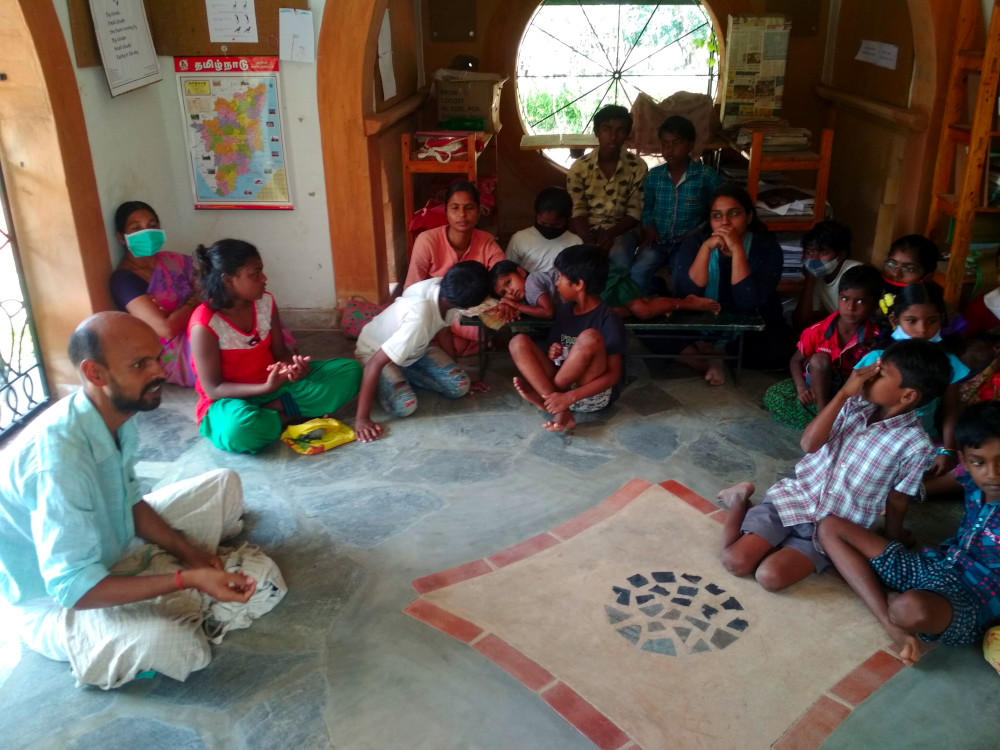
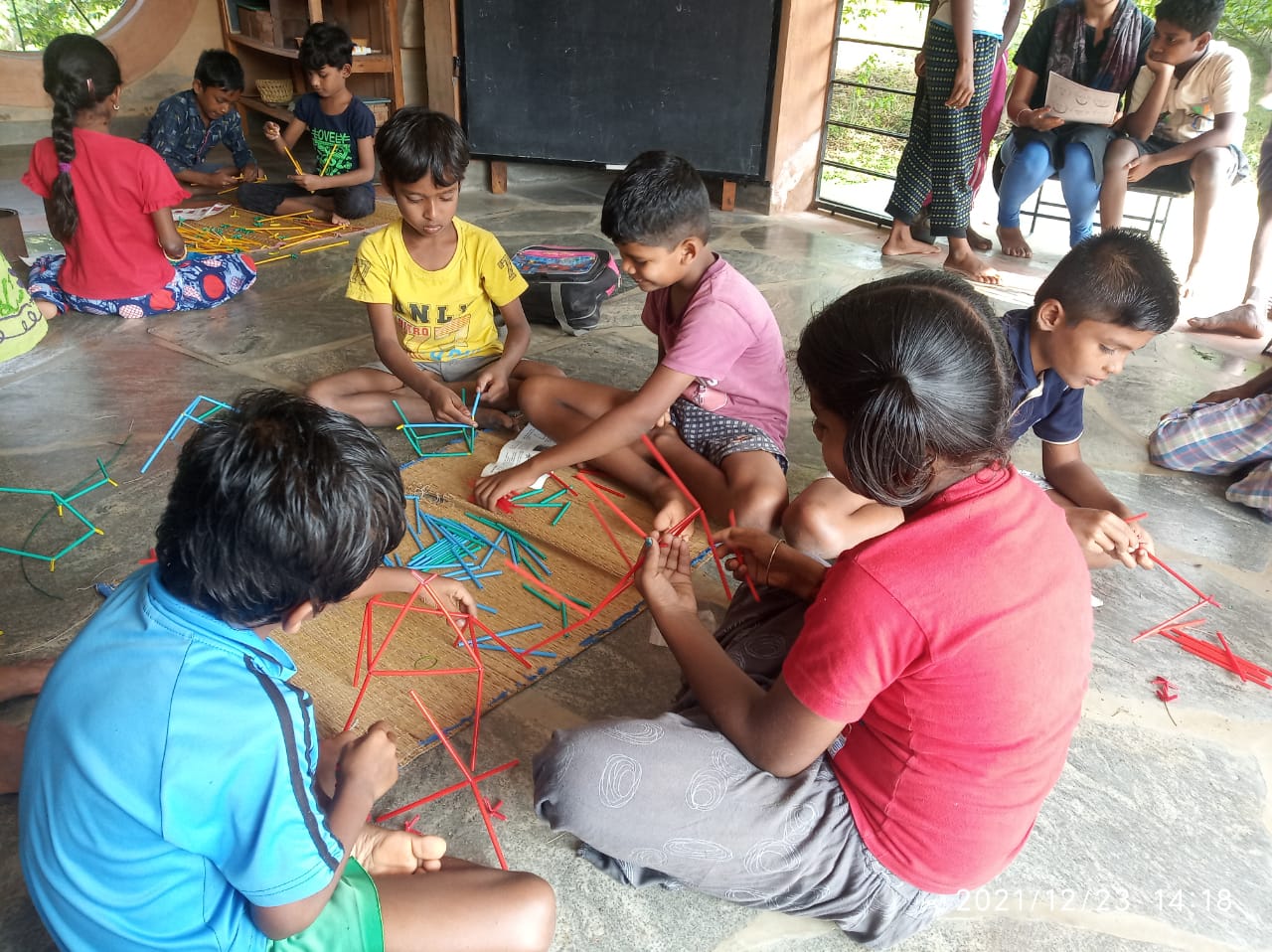
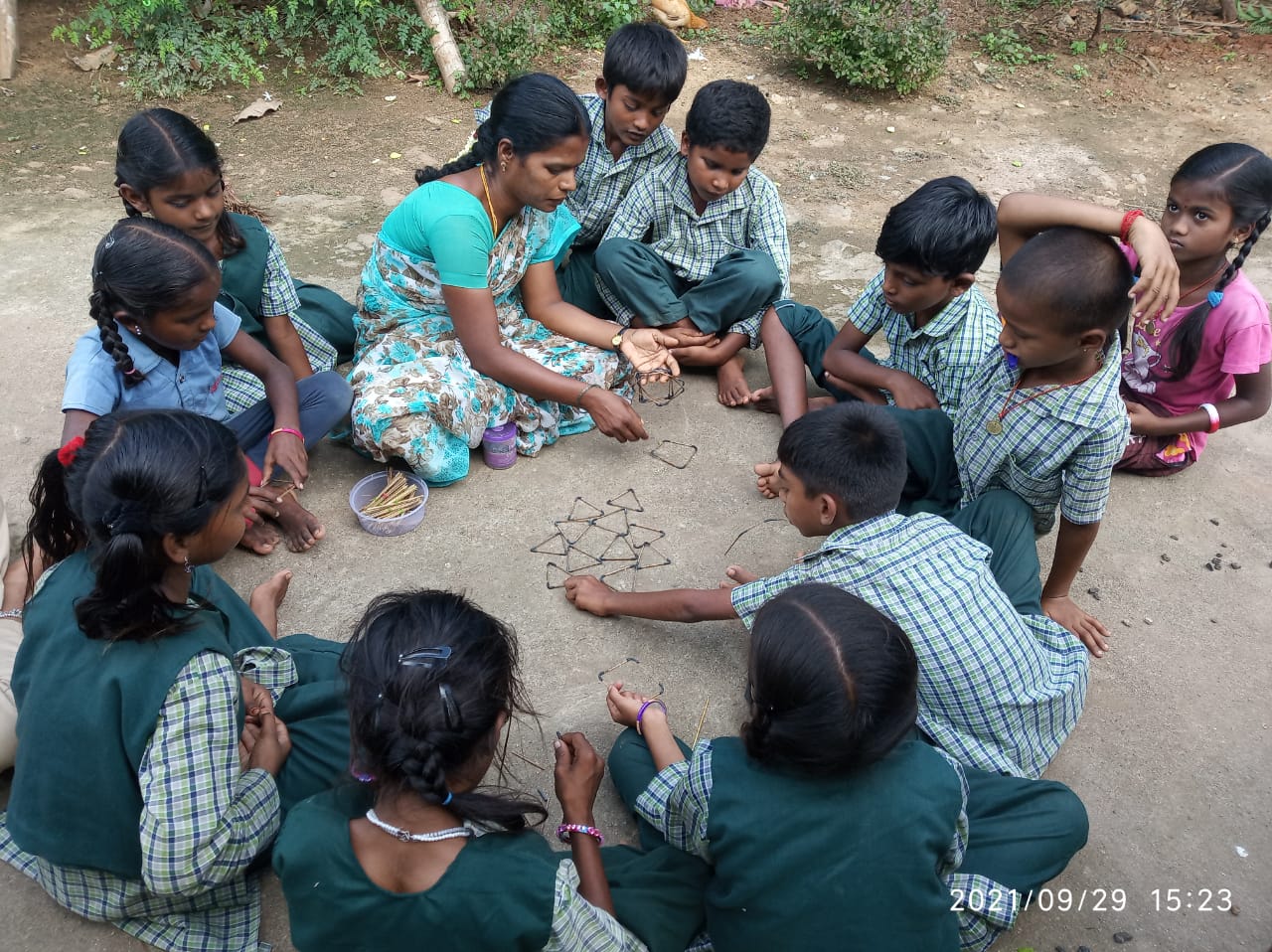
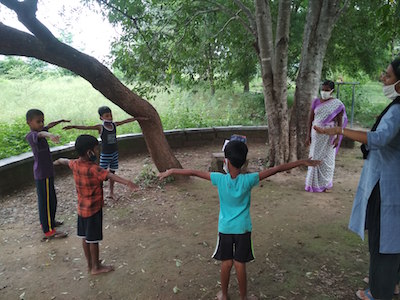
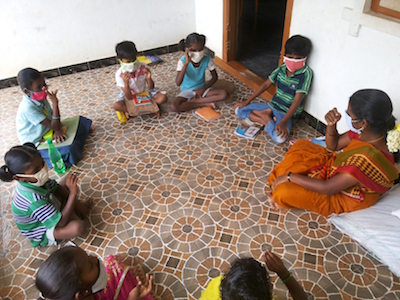
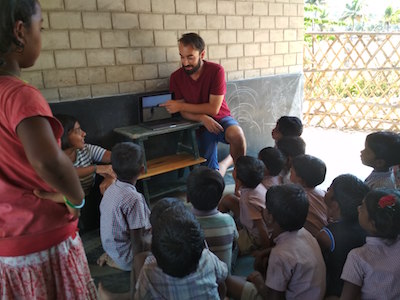
“I never knew multiplication could be taught so interestingly!” “Why was I never taught Maths this way?” “Can we come every day to your school?” These were the enthusiastic refrains we heard during the one-day training workshops we conducted every fortnight for the government appointed village volunteer teachers under the Illam Thedi Kalvi (education at your doorstep) scheme.

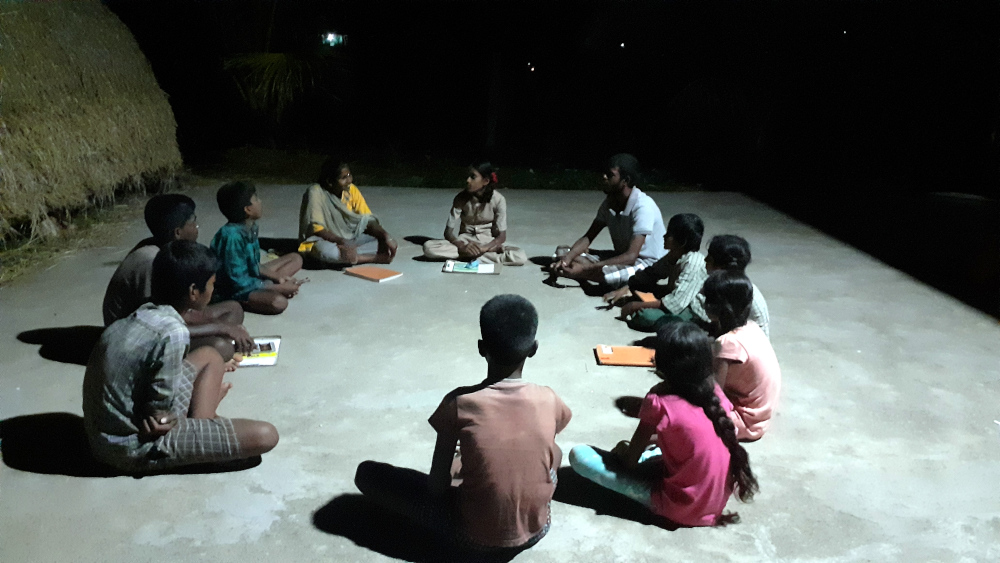
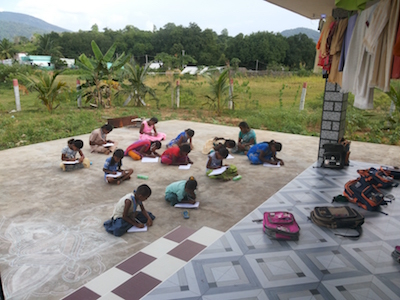
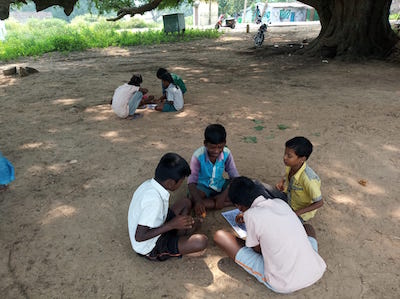
The Illam Thedi Kalvi scheme has been launched by the Tamil Nadu Government to help children catch up after the gap in their schooling due to the lockdowns. Under this scheme they have appointed a few volunteers (mostly recent graduates) in every village to provide supplementary and bridge classes to a specified number of children from their neighbourhood every evening. Classes are conducted in front of their houses in the village. Unfortunately, most of these volunteers have no prior teaching experience and found it hard to teach a multi level, multi graded group of students!

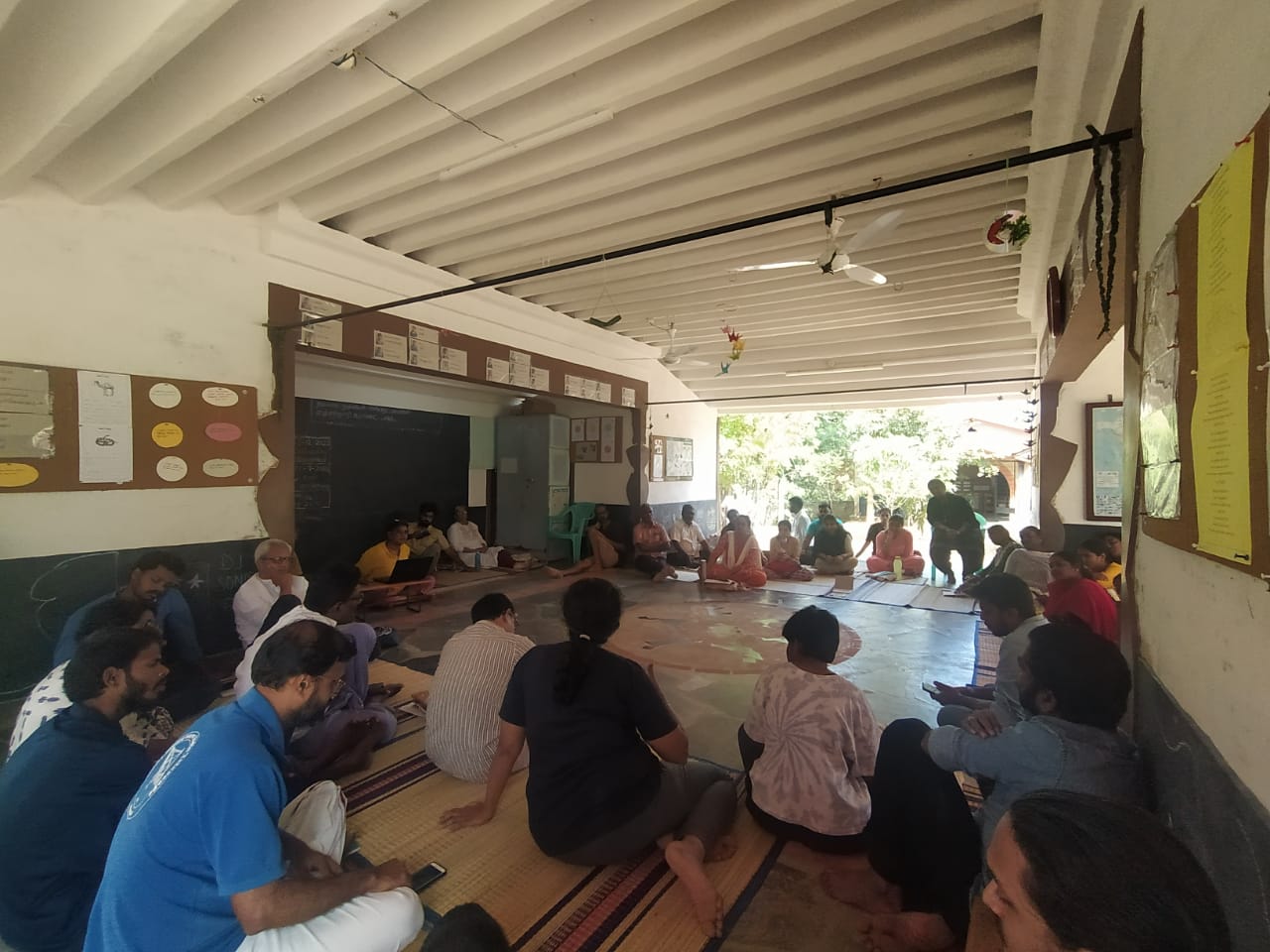
We talked to the Chief Educational Officer of Dharmapuri and offered to train these volunteers at Thulir so that they would be better equipped to give the children in our villages their required educational support. The response, both from the volunteers themselves and the headmasters of the local government schools, has been very positive. Volunteers from Palakuttai, Velanur, Nammankadu and Sittilingi villages now attend a full day workshop at Thulir school once in two weeks. We have also started a WhatsApp group for these teachers so that materials could be shared easily and continuous guidance could be provided.

Interactions with government schools in the valley

Our discussions on how to continue and maintain our interactions with government school children during the lockdown spurred us on to re-establish our contacts with the government schools in the valley. One cannot remain an island when one is in a community like this.

We visited all the government schools in the valley, interacted with their teachers and headmasters and gave them some library materials. This is the first step towards further programmes in these schools in the future.

Classes in government schools

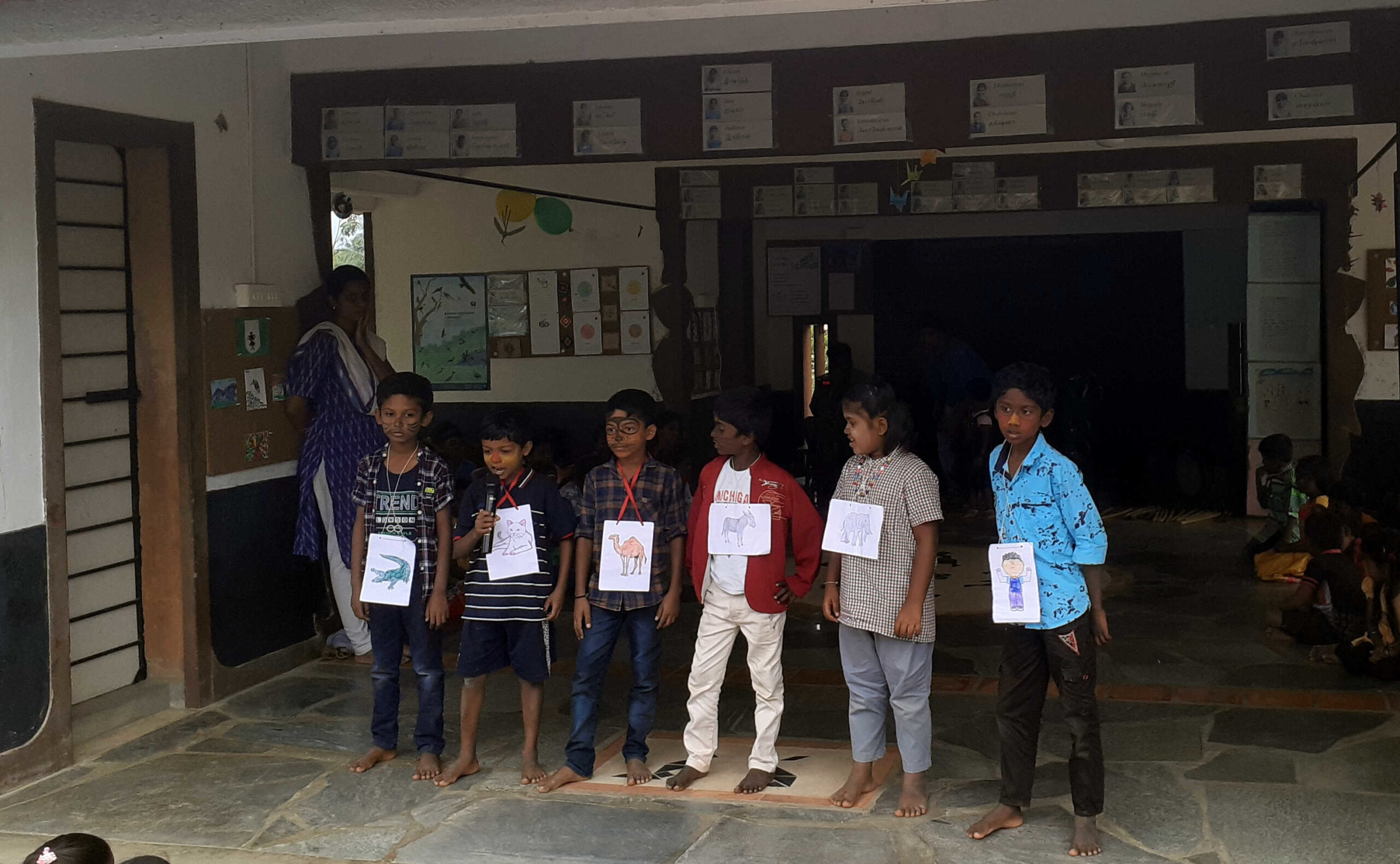
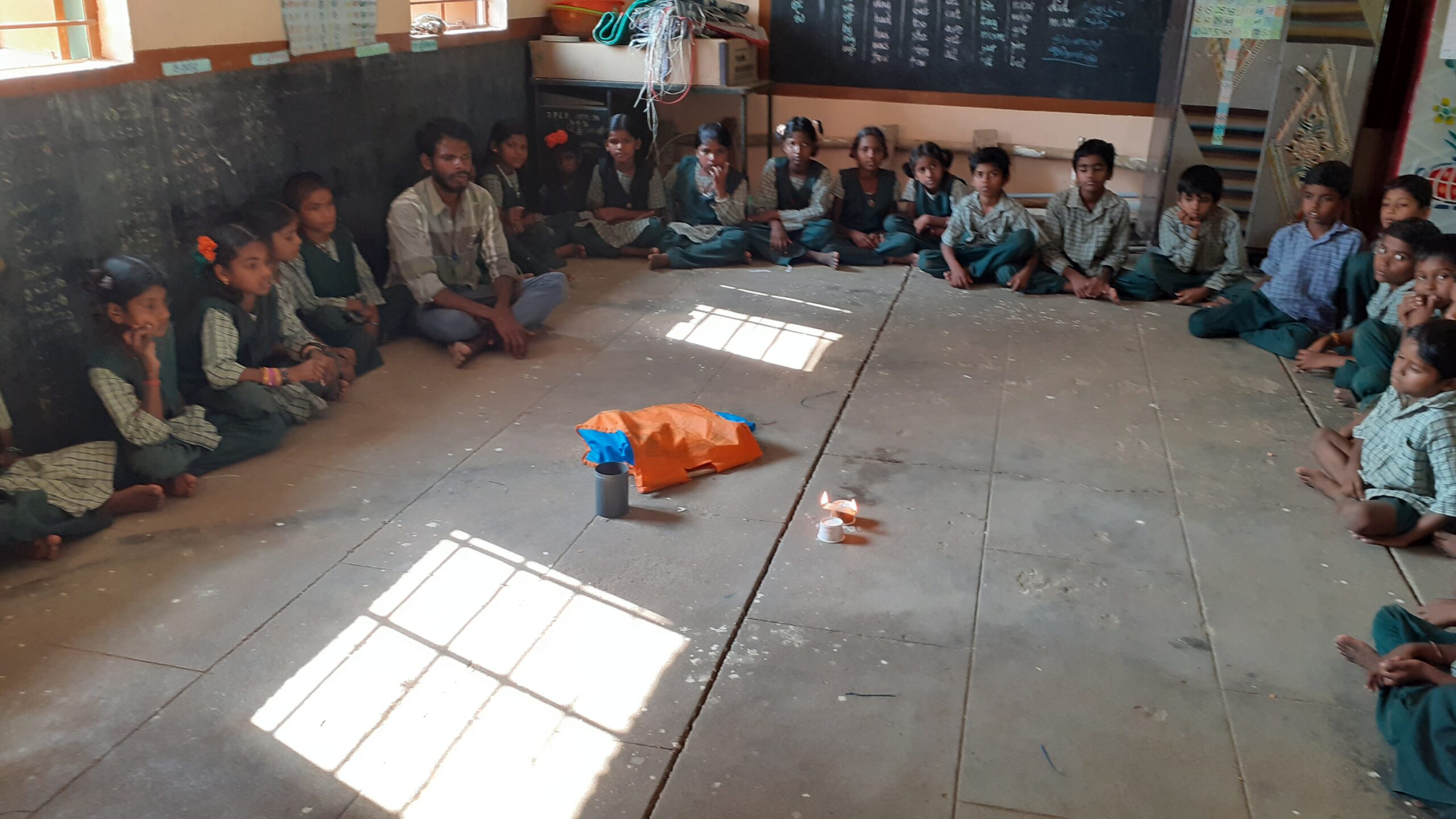
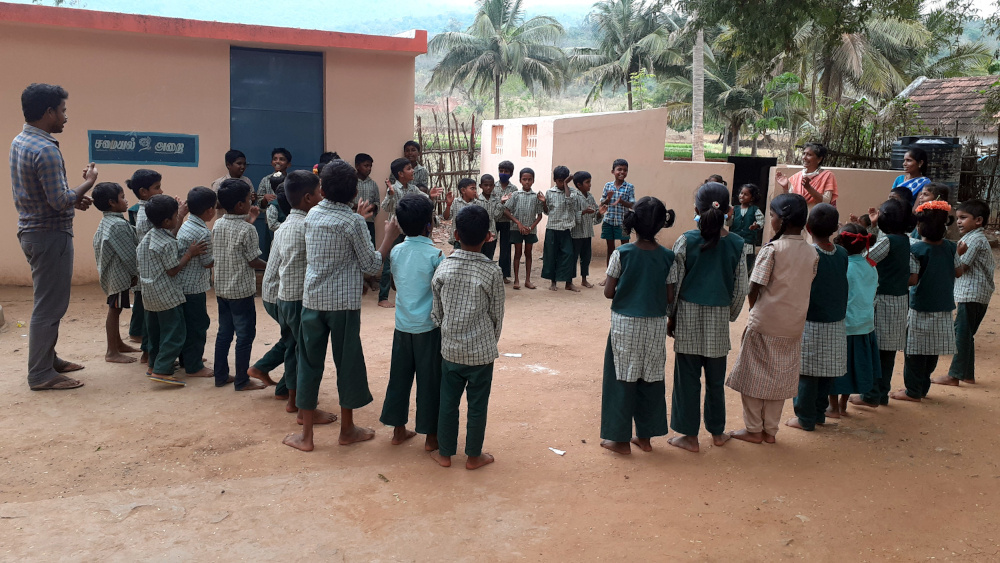
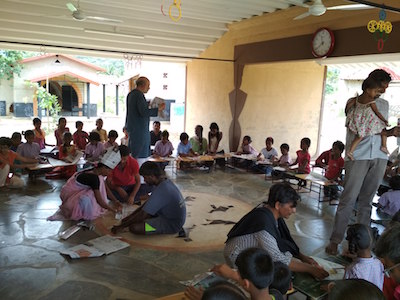
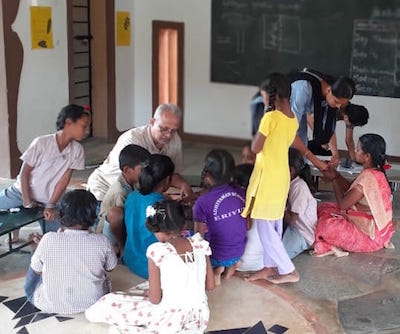
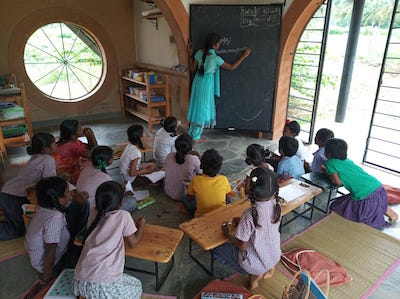
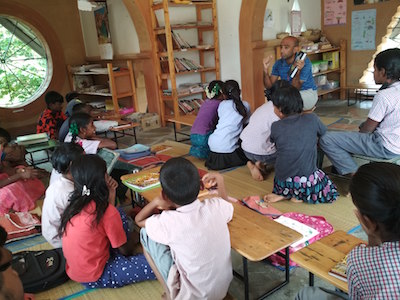
To begin with, we selected two government schools, in Nammankadu and Palakuttai, for regular interactions. Two teachers from Thulir go one afternoon a week to each of these schools and conduct classes for the children there.

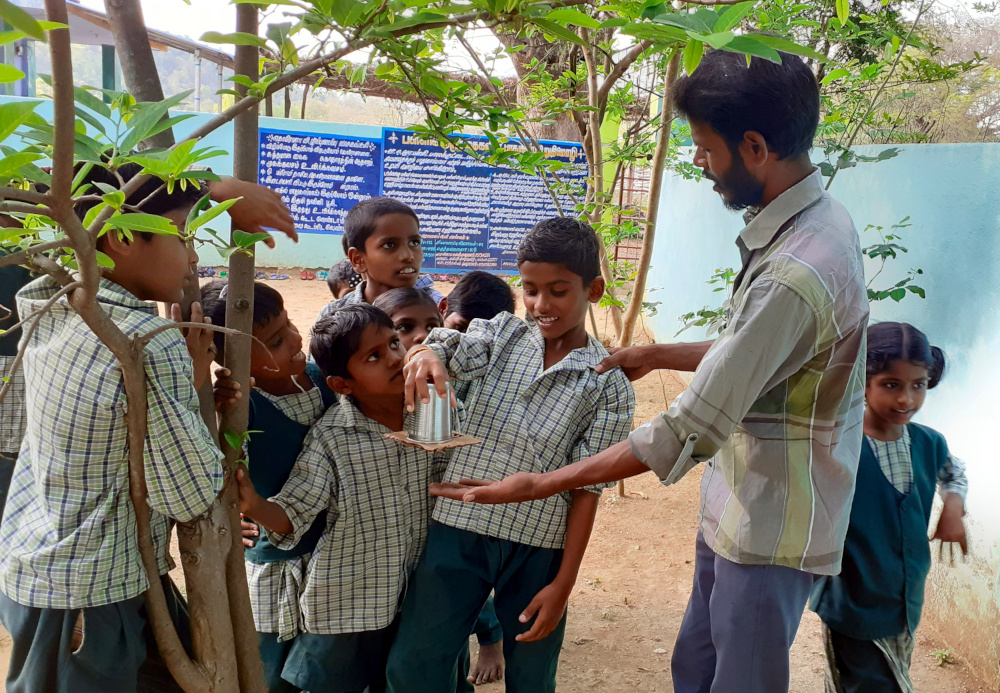
Each of these schools have around 50 children from class 1 to 5 with one teacher and a headmistress. Our sessions include songs, stories, maths and science activities.

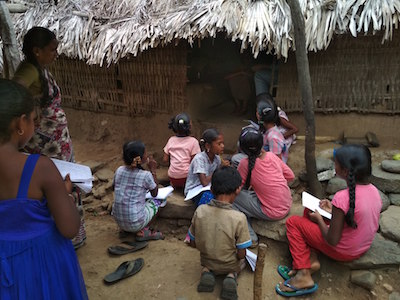
Daily Evening class in Palakuttai village

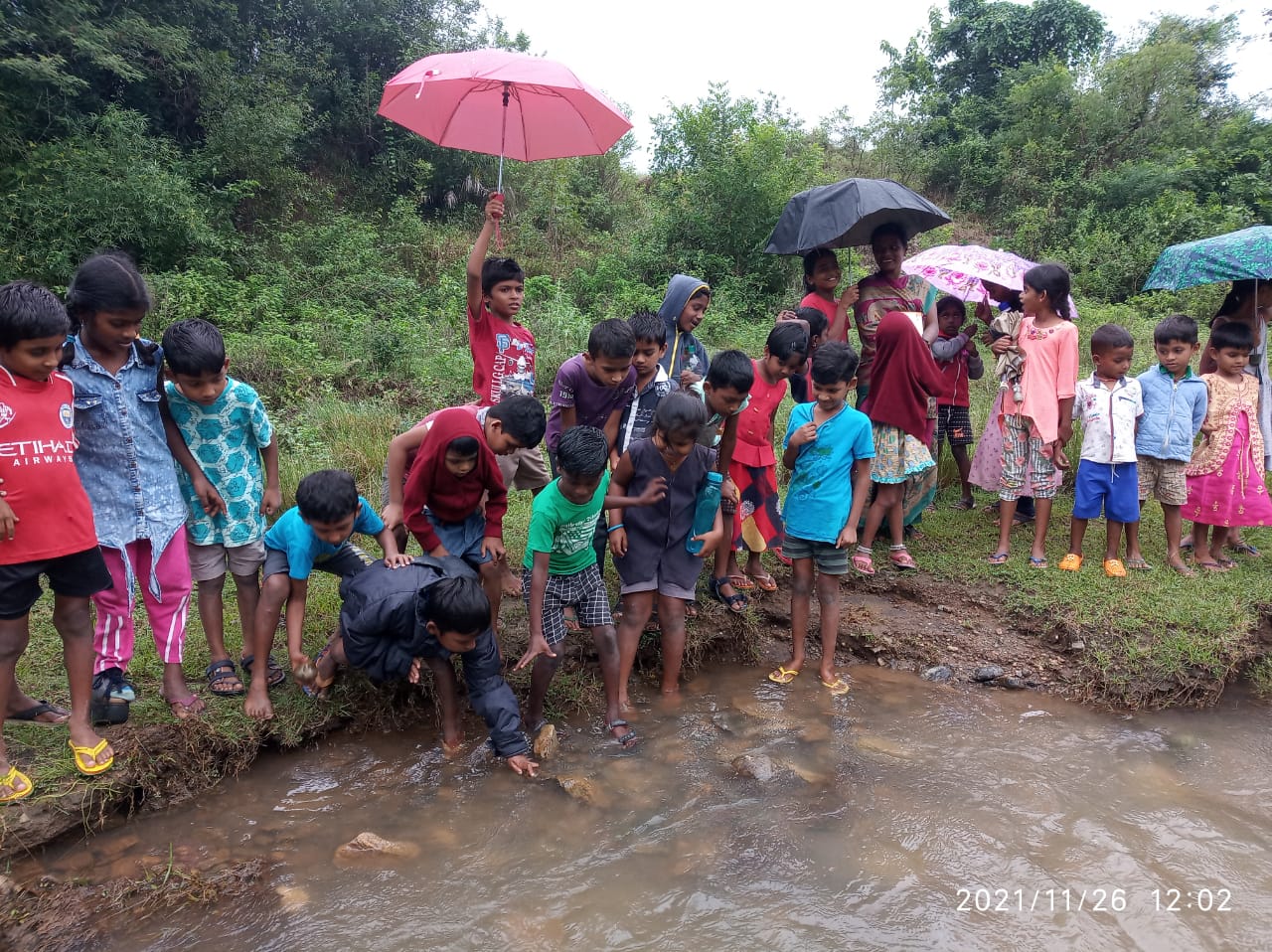
Suresh has started taking classes every day in his village, Palakuttai. The number of children attending varies, but there is a constant group of 12 to 15 children coming every evening. The confidence that these children have gained when it comes to learning is visible and palpable, when compared to the other children in the govt school there. Suresh also brought his students to Thulir school for a day.

Working with children with developmental delays

Ambika has rejoined Thulir to work with children with developmental delays. She attended two week-long training programmes at the Developmental Paediatrics Department in CMC Vellore. The doctors in the department were amazed at Ambika’s training in Thulir and the way she was handling the children’ s activities. They have expressed an interest in training her more and in continuing interactions with Thulir in the future. She has interacted with and taught two such children in school this year apart from her own daughter. Lakshmi, an Educational Psychology student from Vellore, acts as an interpreter between the doctors and Ambika and helps the doctors remotely guide Ambika in her work.

Scholarship Fund

Many students from Sittilingi are now going outside the valley to pursue higher studies. Higher education fees are now quite steep and far beyond the abilities of their families. So we have started a scholarship fund to provide some initial assistance to a few deserving students each year. We helped two students from Sittilingi to pursue BSc nursing and one student to pursue Engineering in NIT, Trichy.

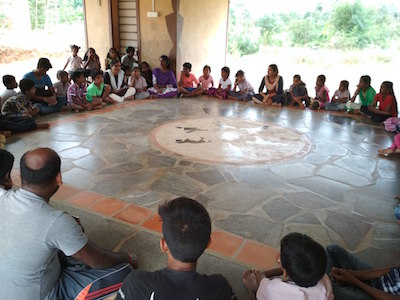
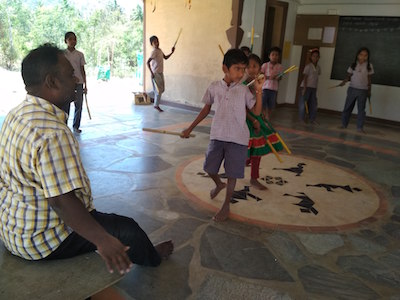
Folk song and dance workshop

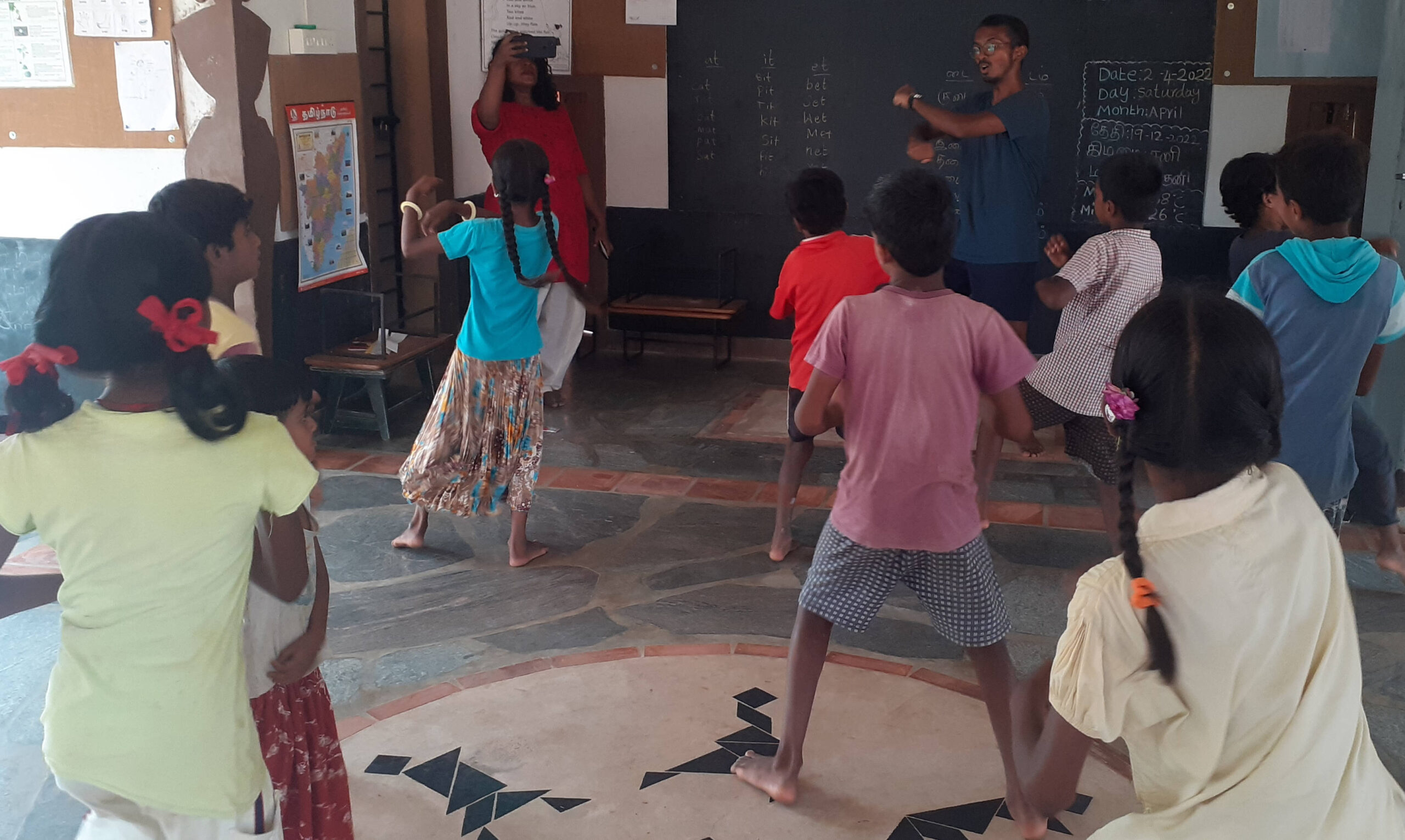
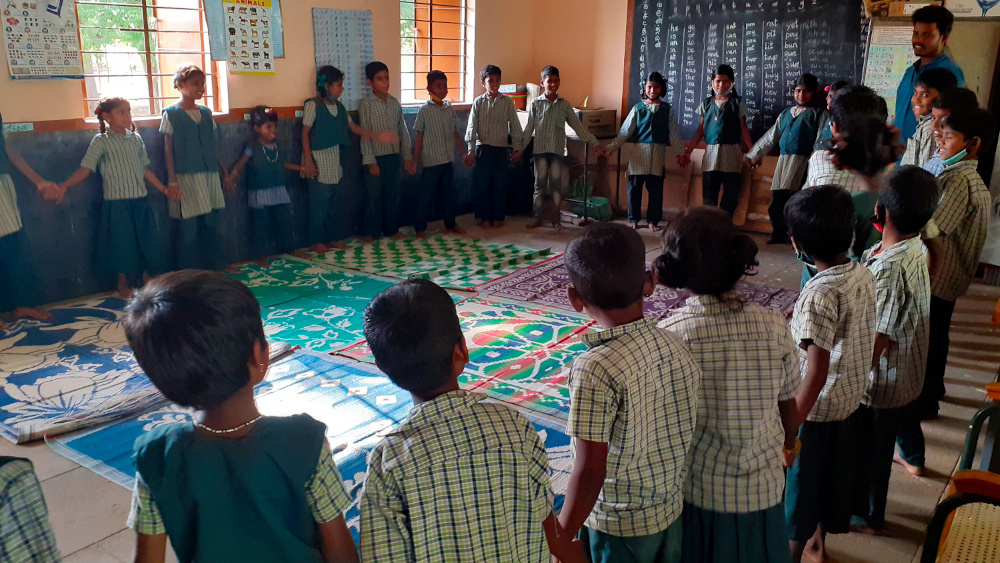
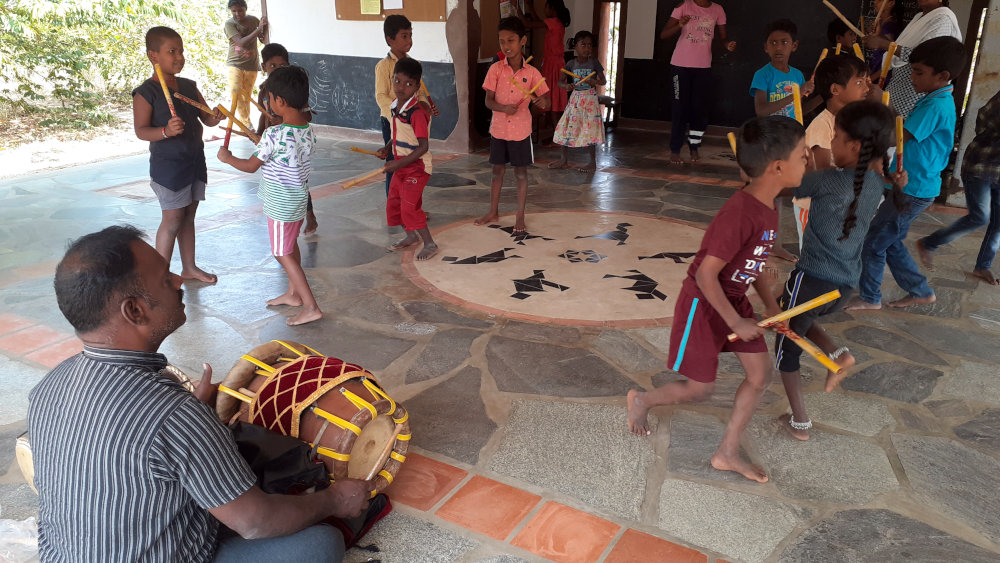
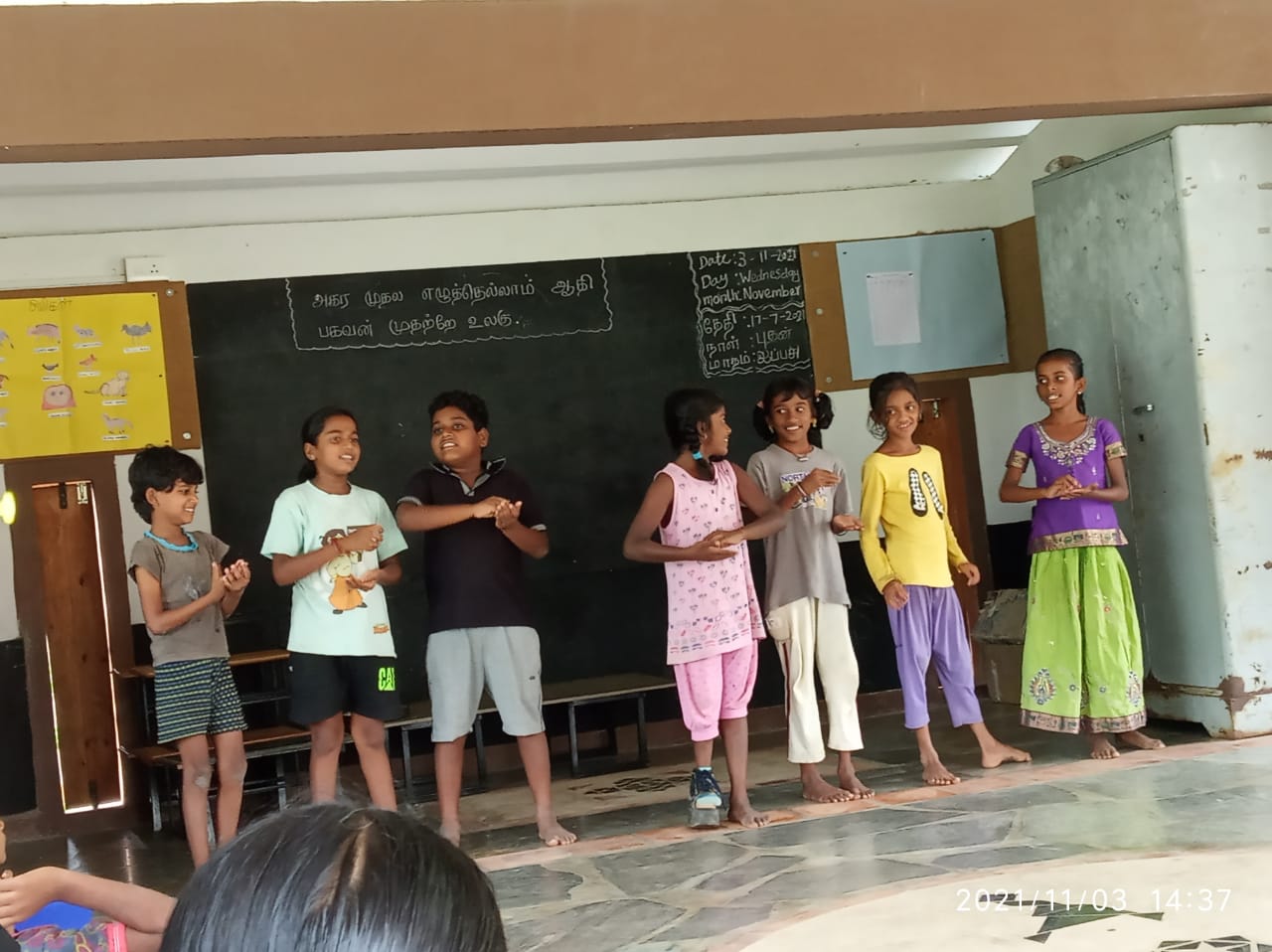
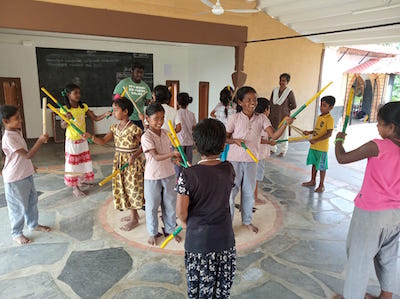
Multiplication tables sung enthusiastically accompanied by the rhythm of the parai (traditional drums) reverberated around the school. Thiru. Manimaran conducted a week-long folk song and dance workshop in Thulir. Observing that children learnt very well through songs and chants, we requested him to set the multiplication tables to music. He did so, and the result was a huge success!

Anandayana Run

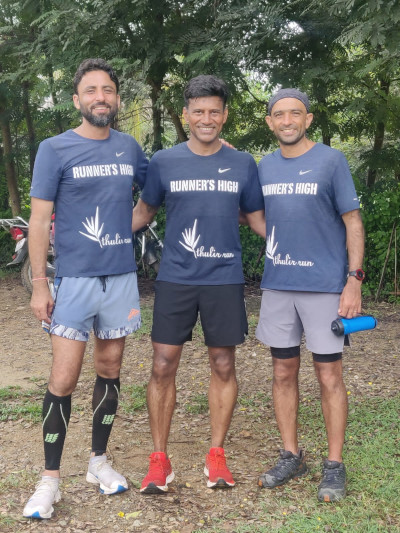
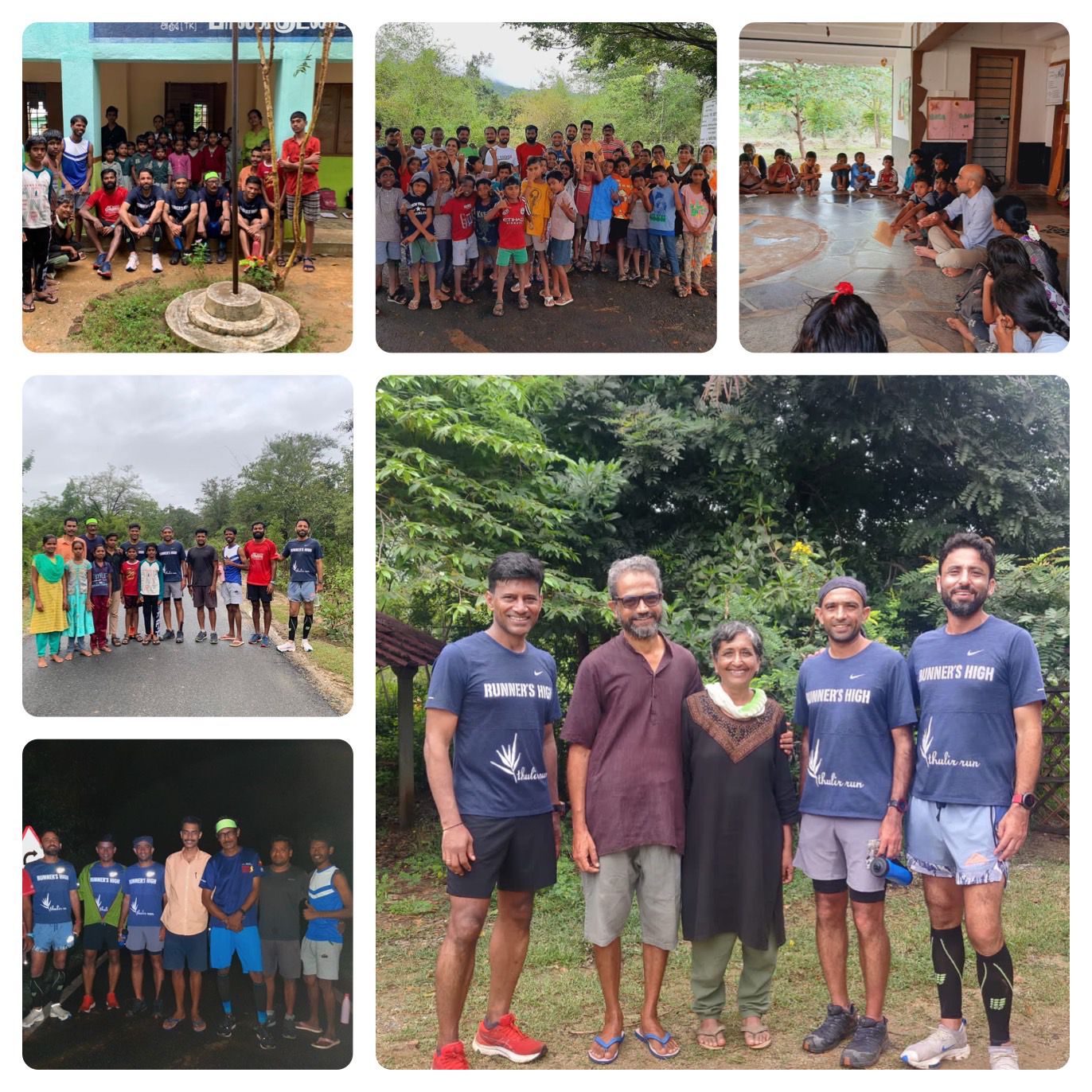
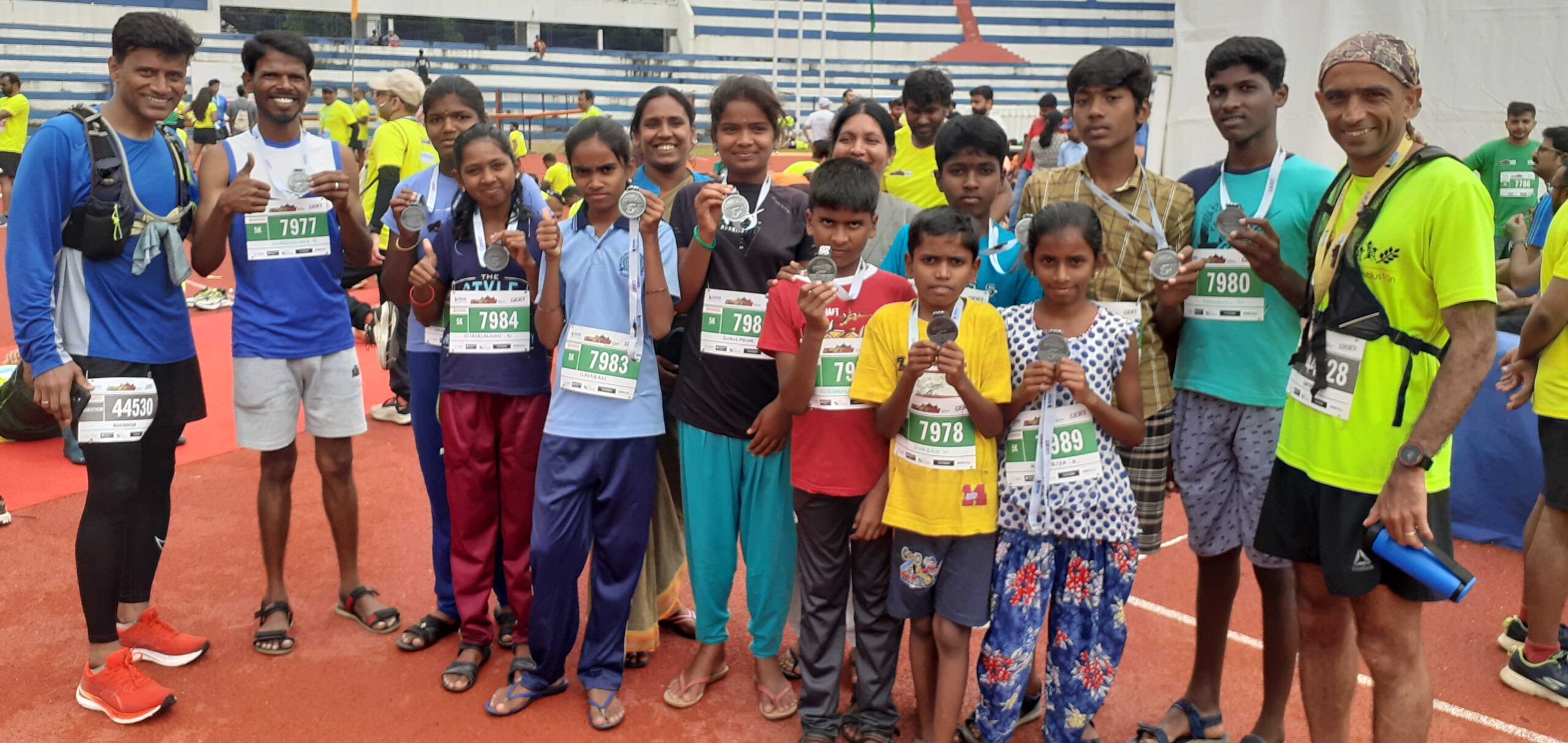
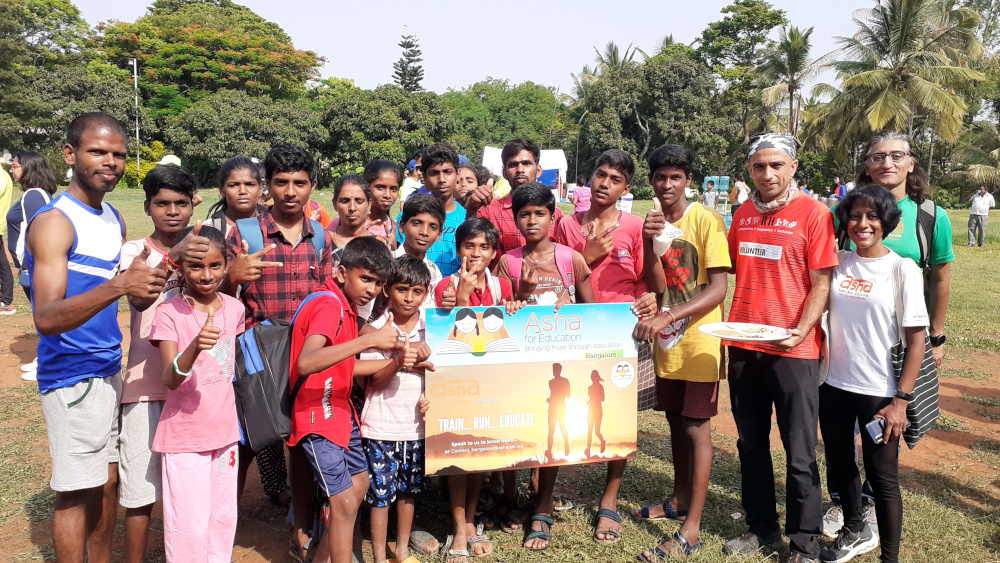
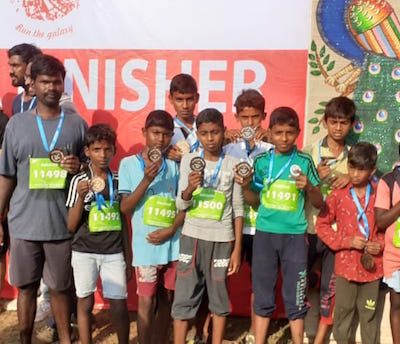
Attending a public gathering after 2 years of restraints seemed a novel and very welcome experience! Suresh and Jyoti took a group of 18 children from Palakuttai and Sittilingi to run 5km in the inclusive event, Anandayana, organised by Runner’s High. Getting to meet and mingle with differently able and differently privileged children from various schools was a great learning experience.

Bringing children to school

The private mini-bus which operates in our valley, and which many children used to come to school, stopped operating in March and April. But parents took the initiative to share bikes or get help and somehow brought children to school in spite of physical and financial hardships.

Glimpses from the campus

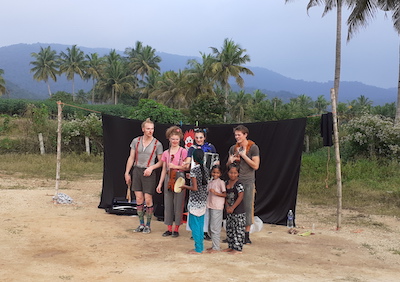
Anil and Rekha and students from Sahodaya school, Bihar visited the school in January.
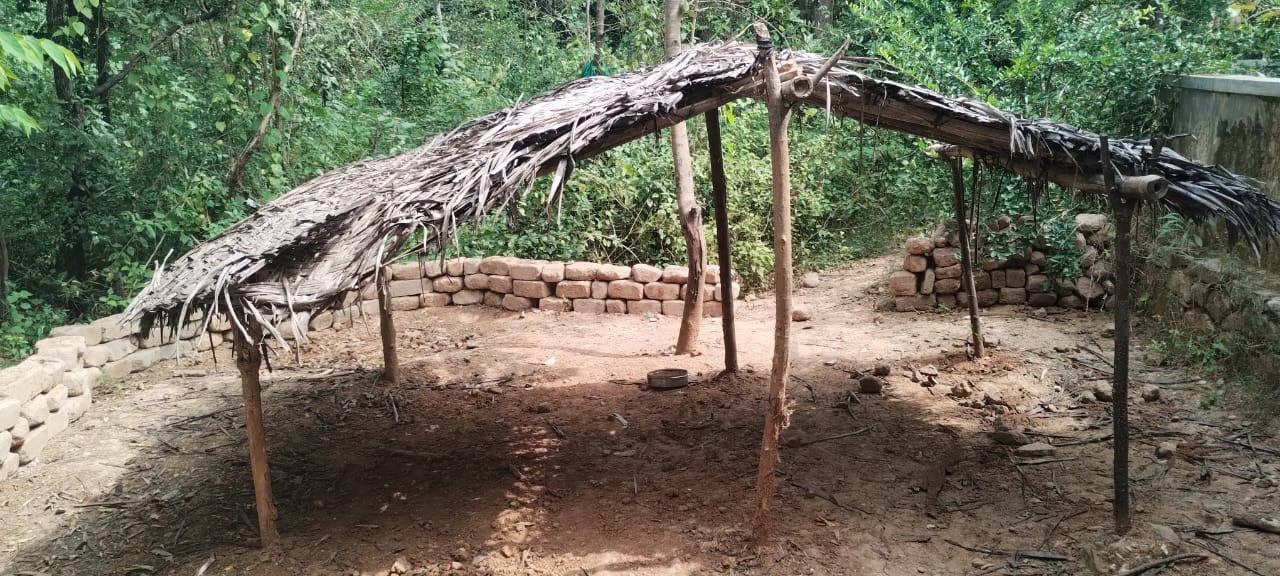
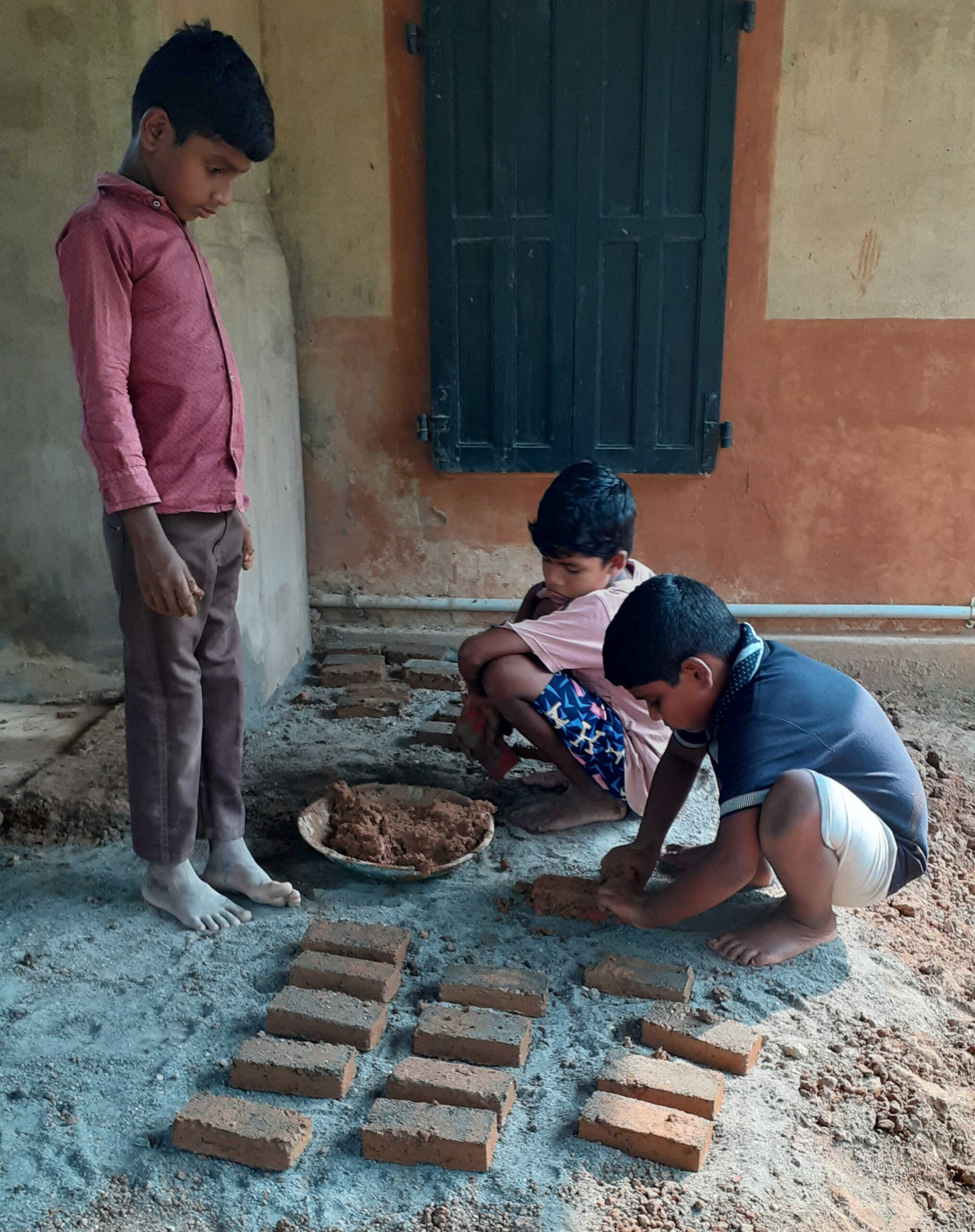
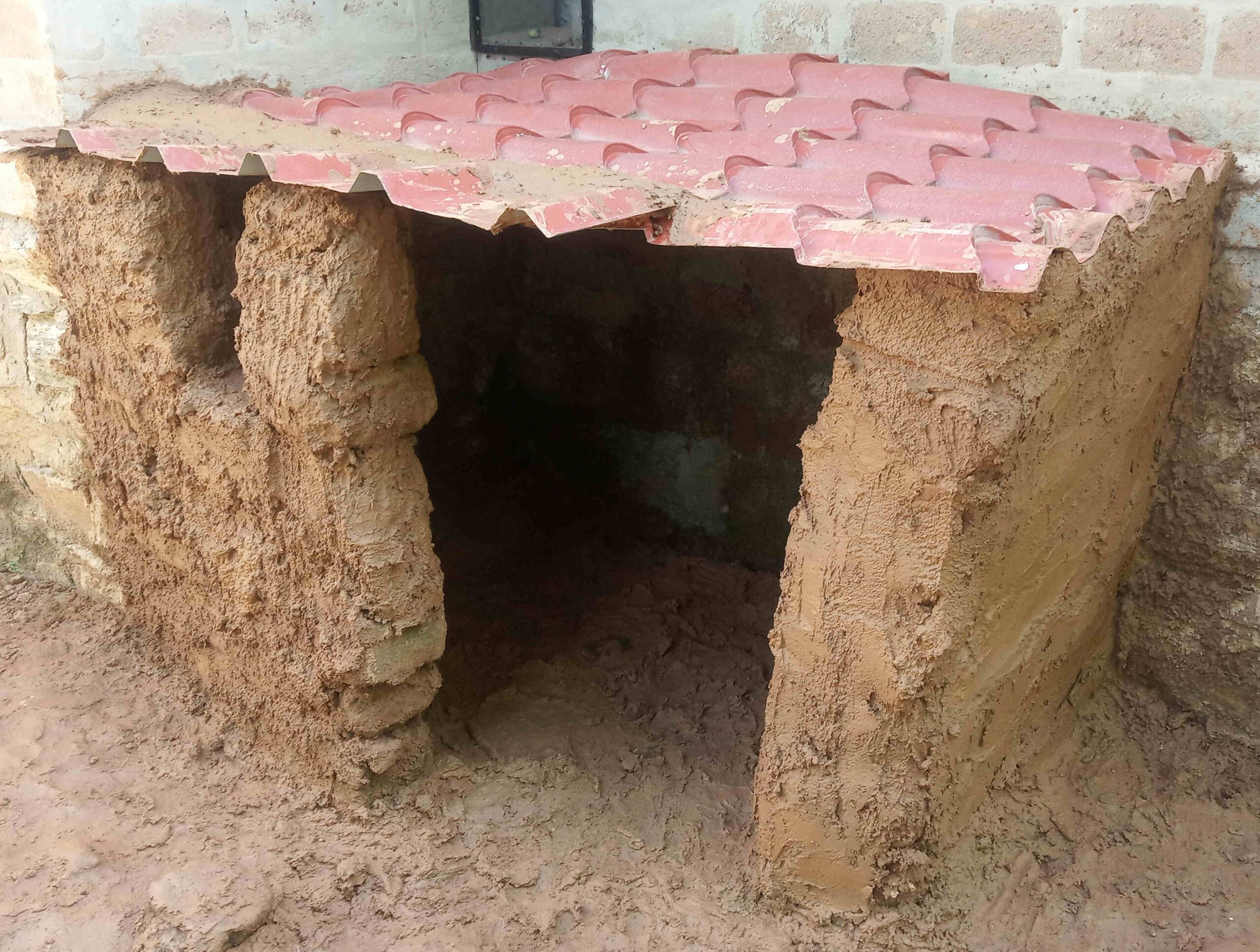
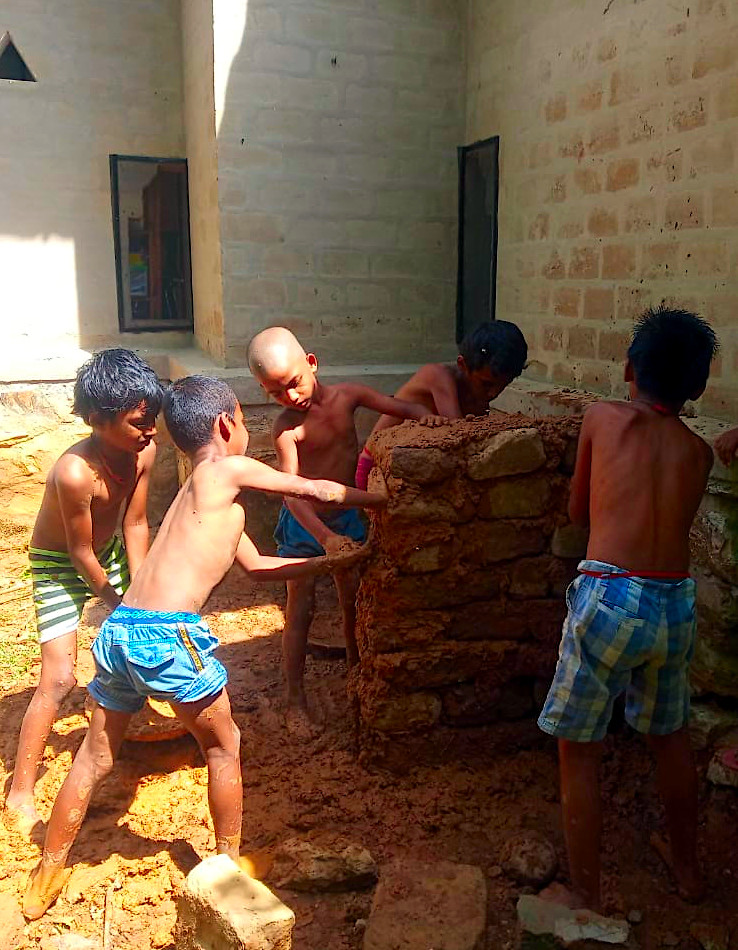
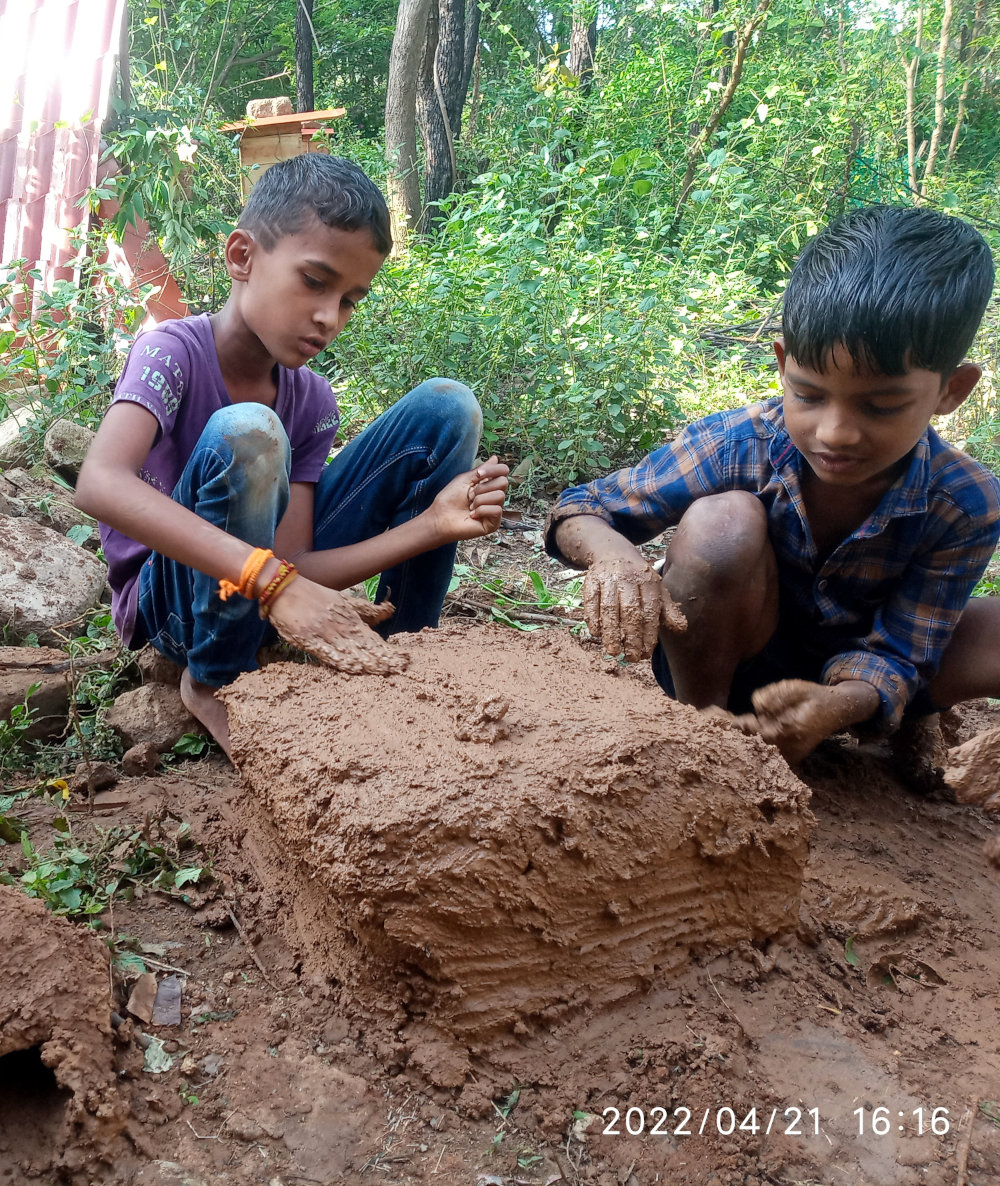
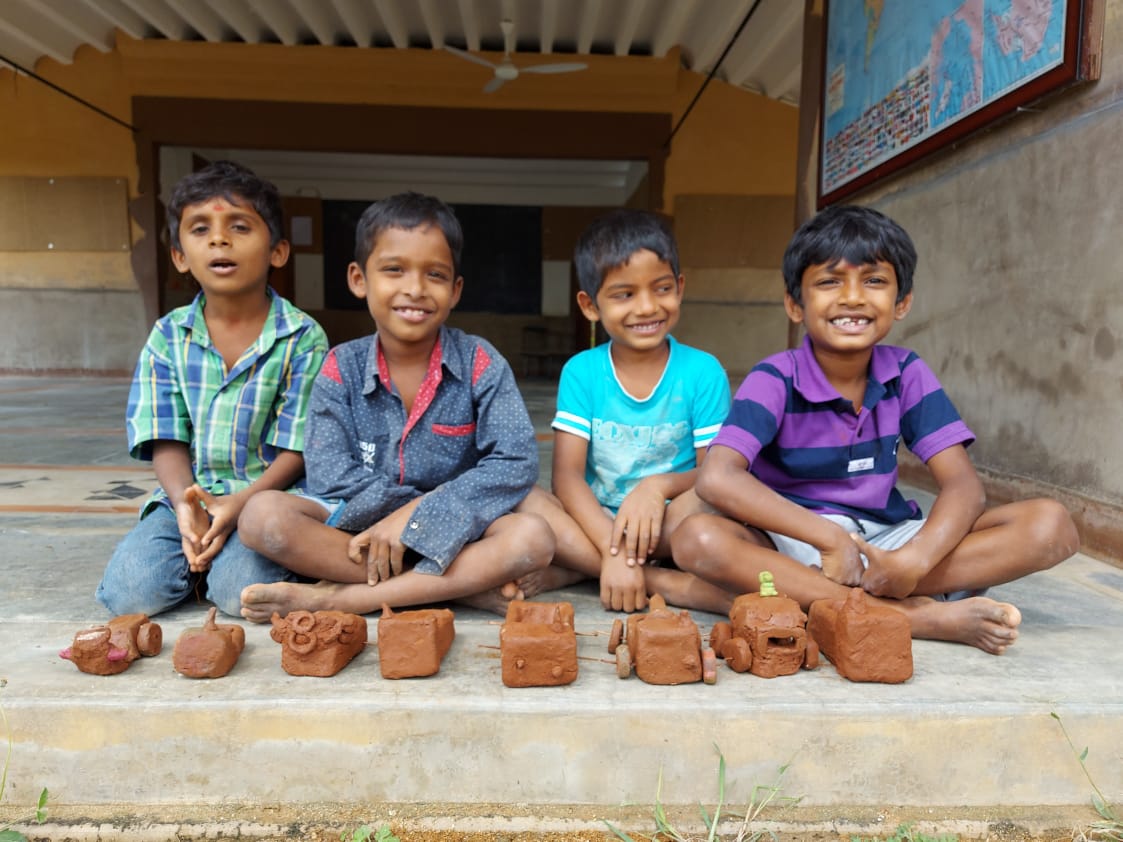
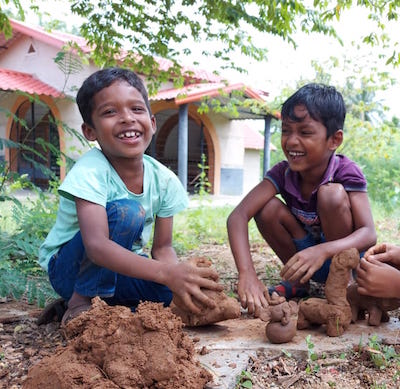
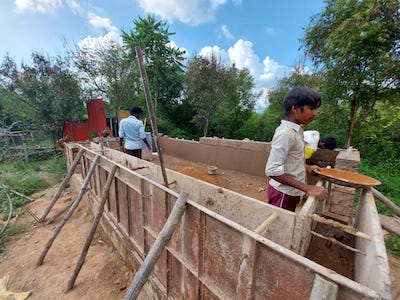
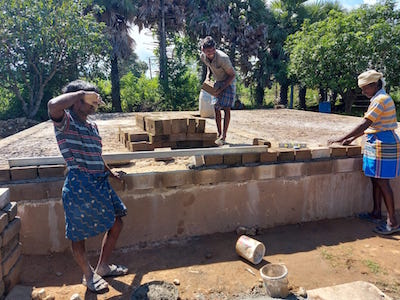
Natural Builders!
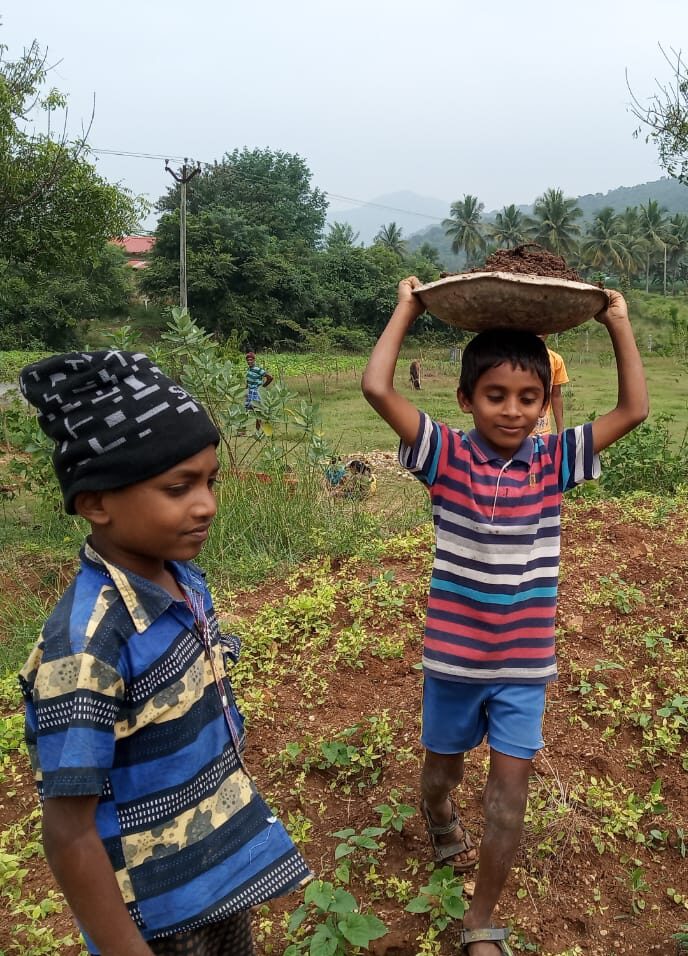
Building with mud seems to be a very natural and enjoyable instinct!
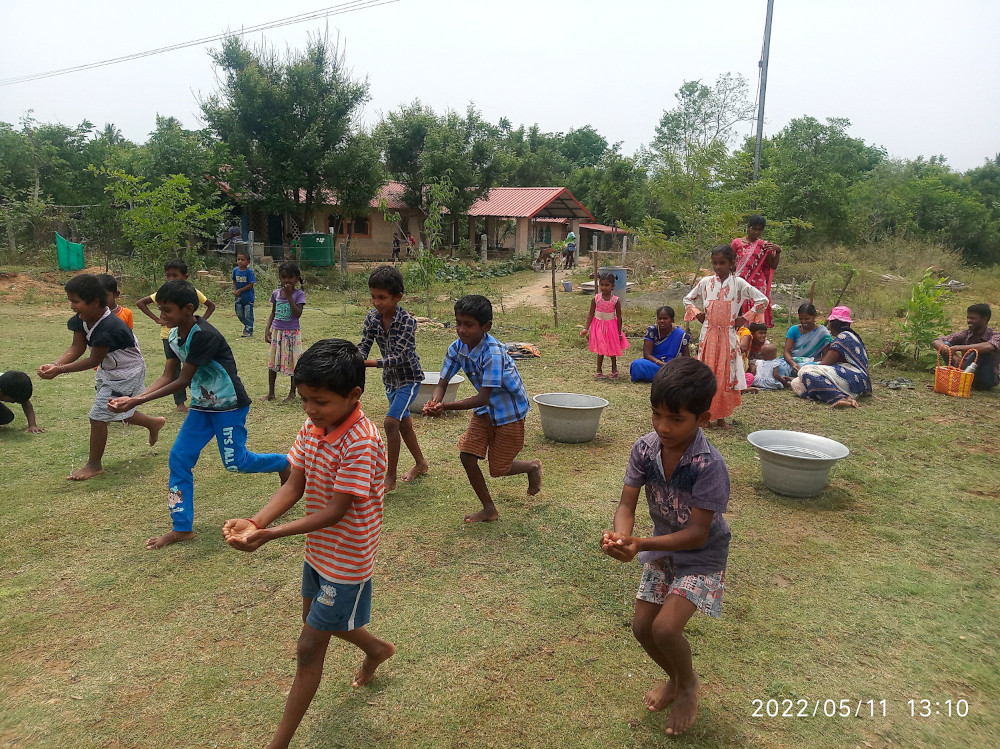
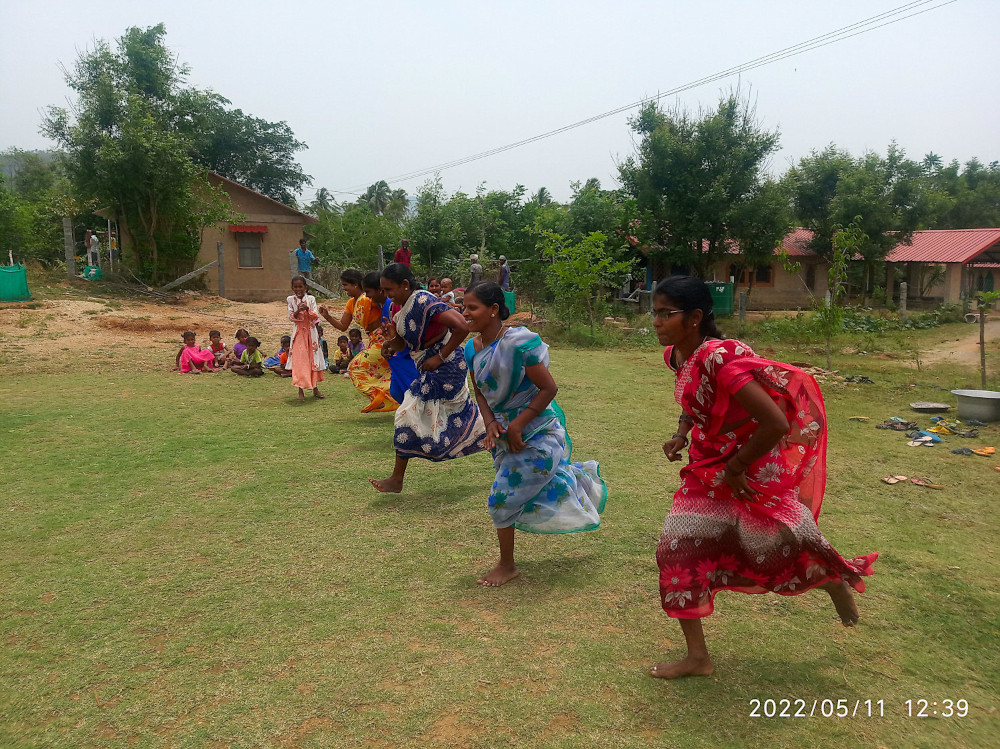
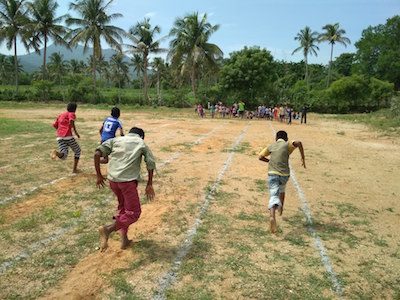
Sports day in the blazing sun!
Active participation from the teachers.
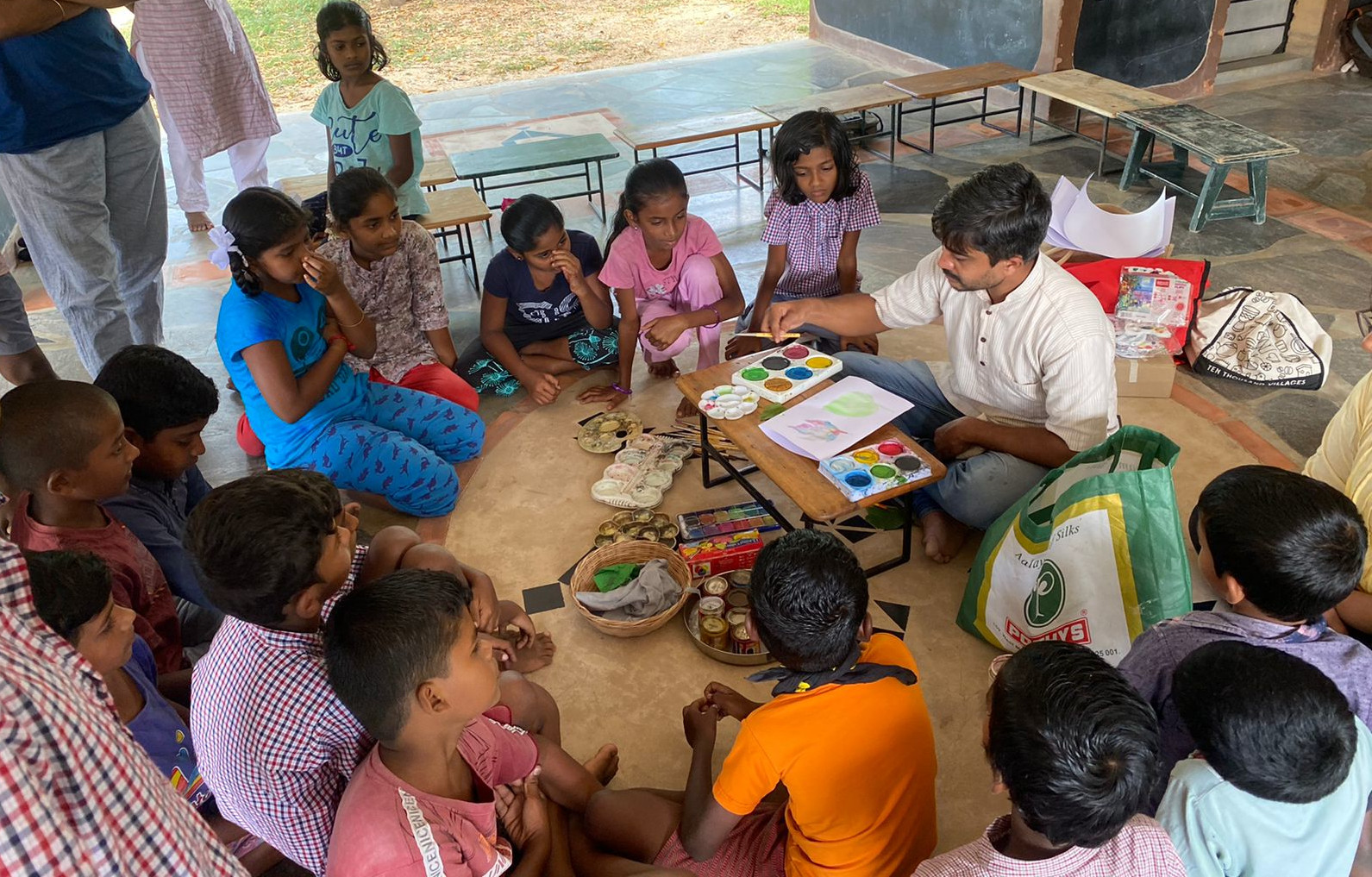
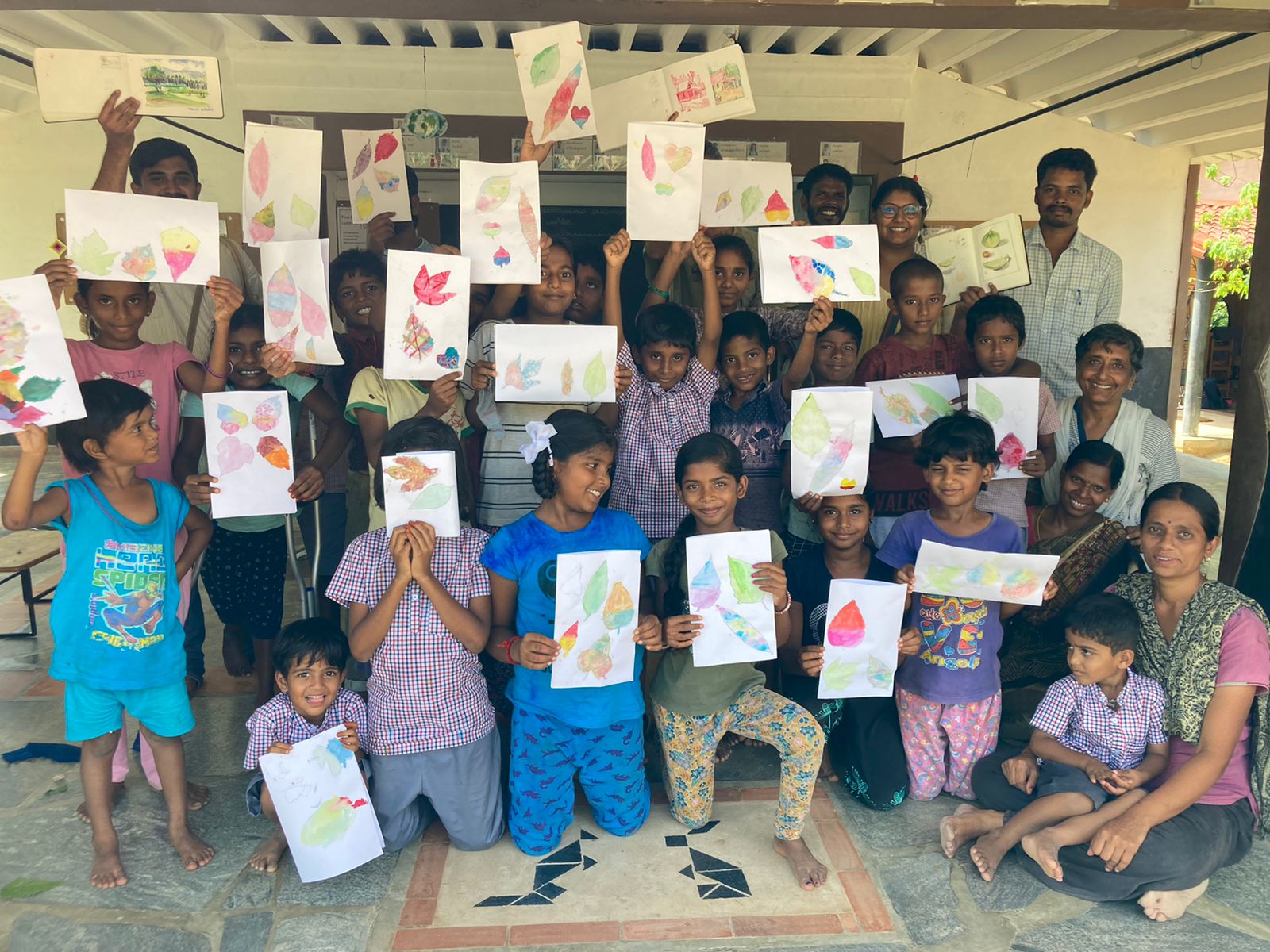
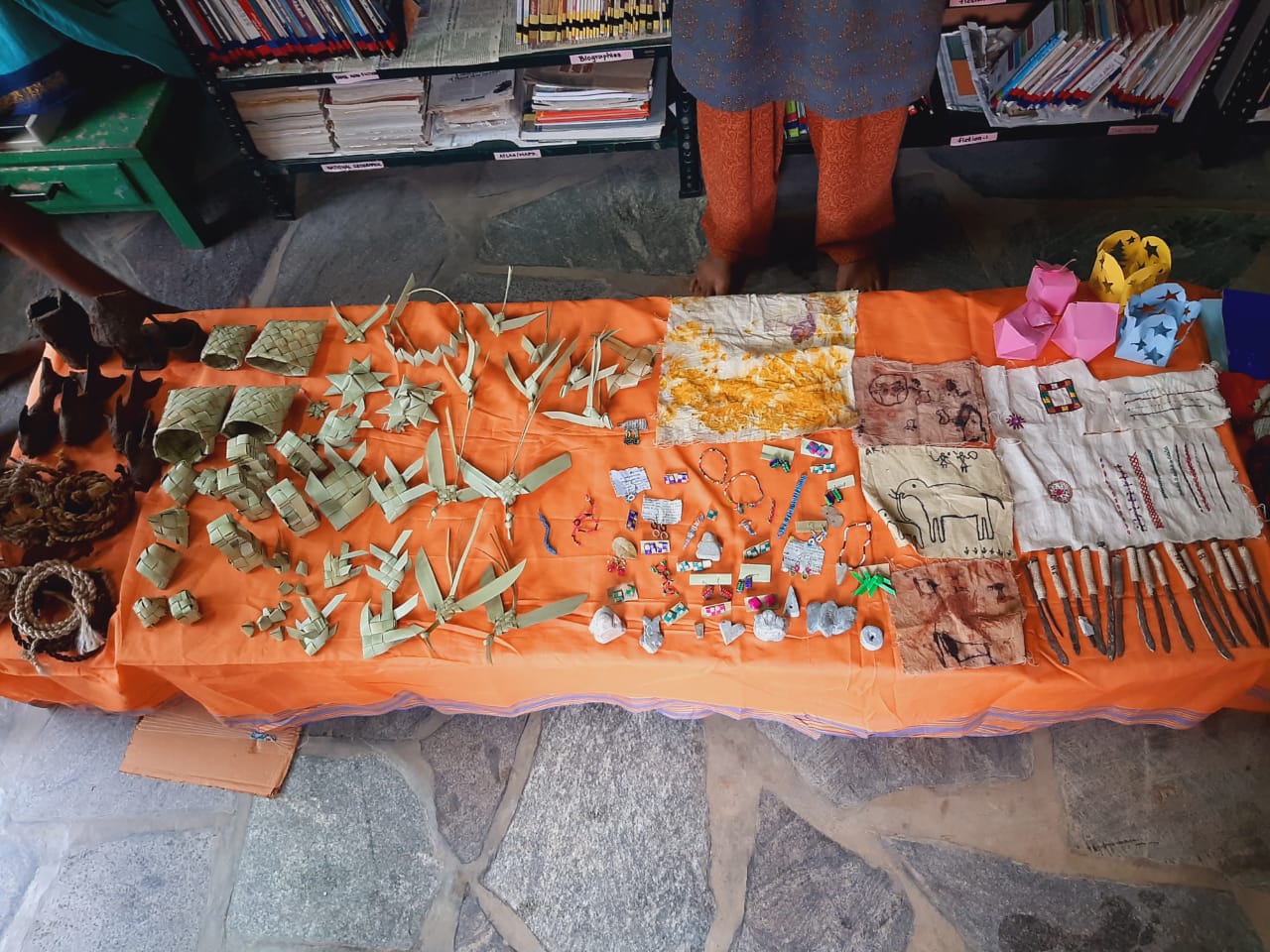
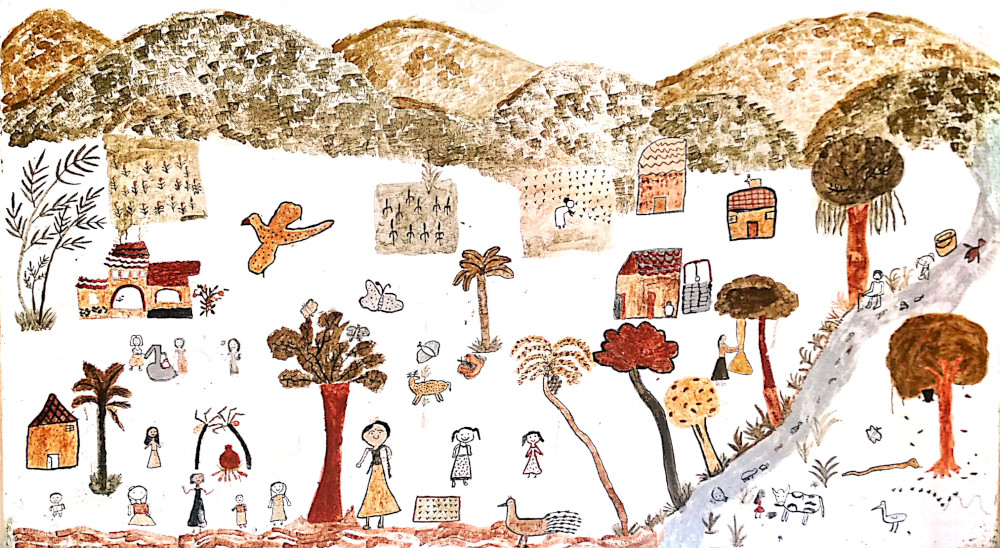
The school walls have come alive with birds, animals and trees! Painting with home-made natural colours under the guidance of Swetha and Rajammal!

We have been able to bounce back with renewed vigour only because of the resilience among children, teachers and others from the community. And because of your continued support.

Let’s keep this spirit of giving and sharing alive and healthy!

Thank you!

Posted in Newsletters | Comments closed

Notes from Riya Dominic

Written by Riya Dominic in 2022:

https://docs.google.com/document/d/11bed_w8NNfz7wj9XCzleRlEKc0ysC1Lq/edit?usp=drivesdk&ouid=116376458781674808693&rtpof=true&sd=true

Posted in Articles About Thulir | Comments closed

Newsletter June-Dec’21

Warmest wishes for health, healing, love, creativity and revival this new year!

Children’ s voices and laughter … a song from the distance … the thud- thud of running feet … the rhythms of a dance somewhere … an adult admonishing someone … the rustle of the leaves… a dog barking joyfully… a calf calling out to her mother… young voices chanting Thirukural loudly and enthusiastically… all these come floating on the breeze whizzing by…

Yes, the Thulir school was active and full of life again after almost two years of lock-down. Full time classes resumed from November 1st and were on until the end of December. The importance of a neutral space where adults and children can learn together free from the interference and pressures of the realities of village life was brought home to us vividly.

Children bloomed in learning much more over these two months than they did in the last two years of our village classes. There was more time for singing, dancing, playing and working with hands. And we got to witness firsthand just how much these activities really enhance a child’s academic learning after two years of their absence.

But sadly the return of the dreaded virus in its Omicron form is dictating the closure of schools again in Tamilnadu starting this January.

Village classes

During most of 2020 and 21 our teachers conducted decentralised classes in the villages. Children from government and other private schools too attended these classes.

Student Enrollment

Tamil Nadu government schools have during the pandemic been distributing their students’ free mid day meals to their families in the form of weekly supplies of rice, dhal, eggs and other groceries. Ten Thulir parents, who were economically affected by the pandemic, have removed their children from our school and have admitted their children in government schools in order to access these food rations. The parents feel that since we also teach government school children in our village classes, these children will still get education from us and food from the government school – the best of both schools.

But new children have also joined us this year and we currently have 49 students in our school this year.

Getting to school

Prior to the pandemic, parents took responsibility for the logistics and costs of transporting their children to school. But the pandemic has affected many of them economically and they are finding it difficult to bear the transport costs.

Currently, the children are using the public transport – a mini bus that shuttles between villages in our valley. The transport costs for the children is supported by the school.

Workshops for mothers

” I have never had a more relaxed day in my life.”

” Can we do this every weekend?”

” I wish I could have learned this when I was in school.”

These were remarks from mothers after a workshop in Thulir.

Most of our children are first generation learners. Their parents have tremendous aspirations that their children should get the most of the education they themselves missed out on. For many parents these aspirations translate easily into anxiety and worry. They don’t have a realistic idea of age appropriate learning and so put enormous pressure on the teachers and their children to attain outcomes that are far too advanced for their age. We have found that this parental anxiety actually hinders and thwarts a child’s learning abilities. Increasing parental awareness about their children’s abilities and progress and bringing them to the same page as us is vital.

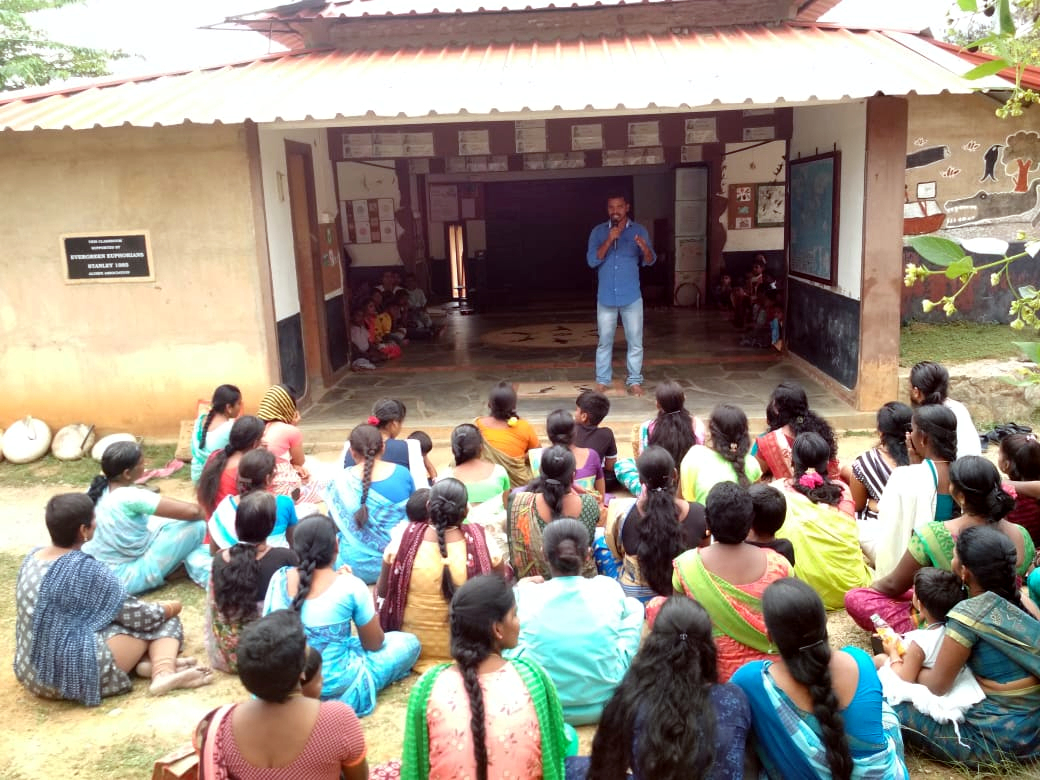
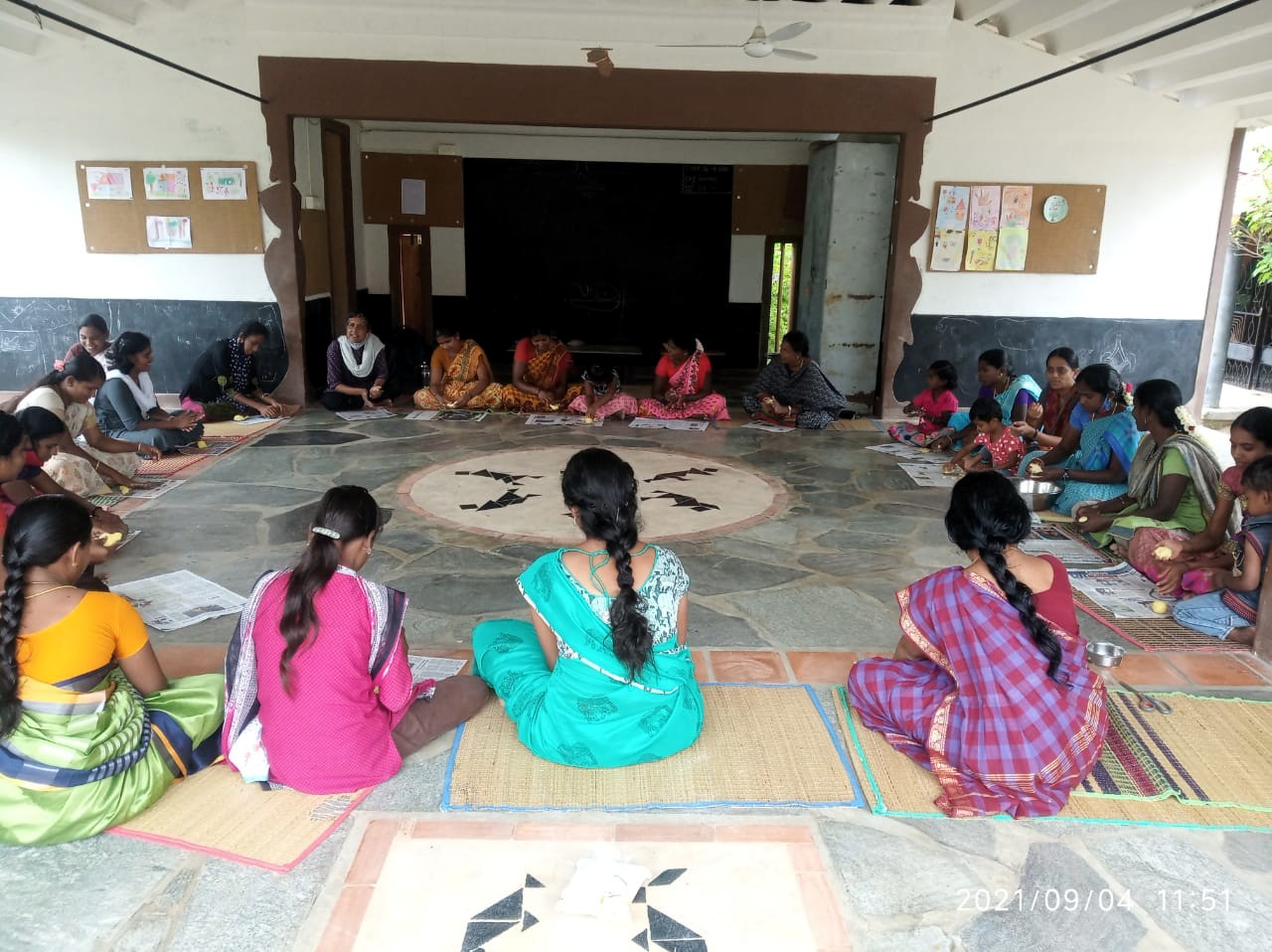
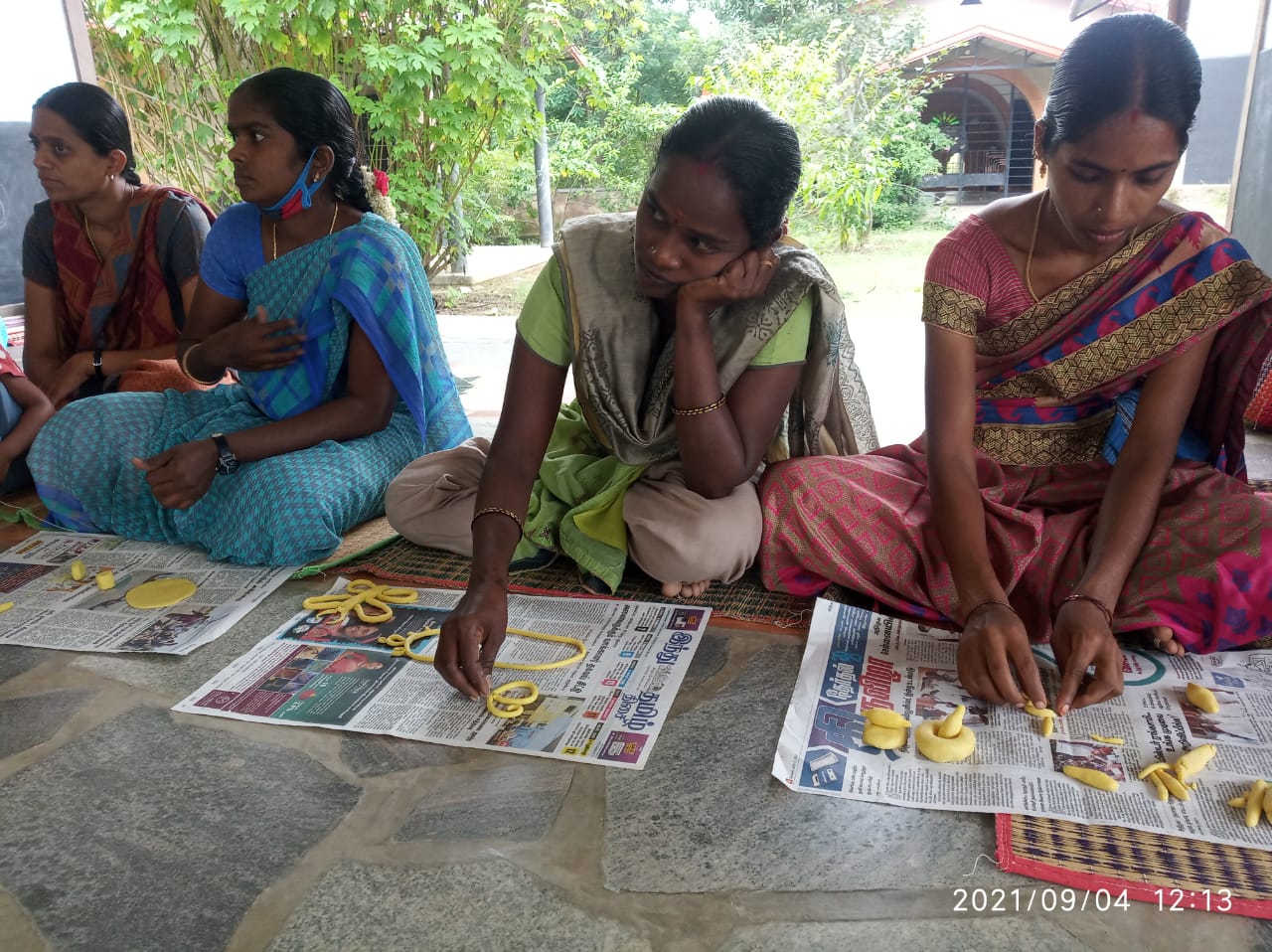
We planned to have practical hands-on workshops for mothers, teaching them activities they can do with their children at home. The first workshop was held in October.

Greening the land

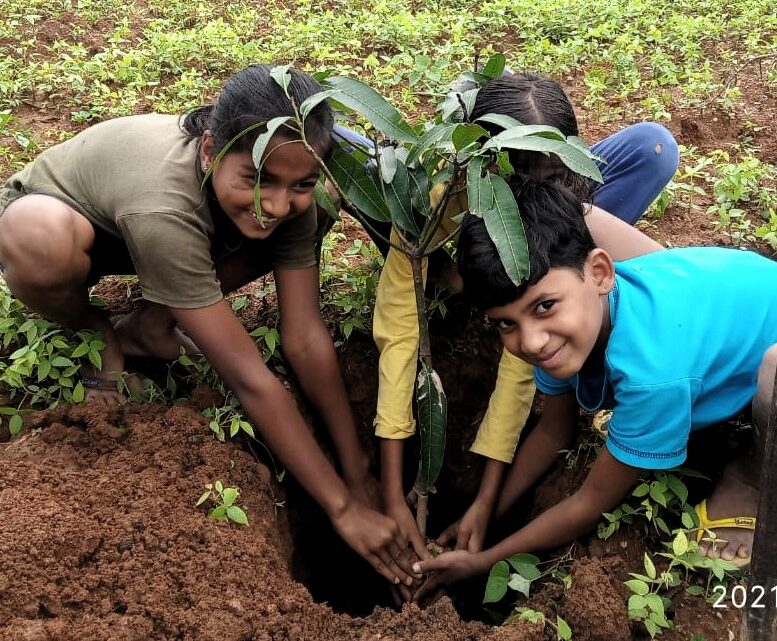
A young and vibrant team from Marudam led by Vinod and Shyam visited us, bringing indigenous and endangered evergreen tree saplings along with their passion and love for the environment. The teachers and students camped at school that night and went out for an early morning bird watching walk with Vinod. Other teachers and students from Marudam joined us that morning for a day long celebration of nature through tree planting. There is indeed immense joy in such life affirming work with Mother Earth.

Rain

In a rural agricultural community livelihoods and lives themselves revolve around rain. Rain can save or completely wreck entire families. So at Thulir we have been measuring and recording rainfall for the last 17 years.

After years of drought, 2020(965mm) and 2021(1010 mm) were years of abundant rain. The valley looks green and lush and beautiful.

But sadly most of the rain was unseasonal and very heavy and many farmers, our teachers and parents among them, lost their crops.

Children with special needs

We are privileged to welcome three children with developmental delays to the school this year. Two of them come regularly and the other comes occasionally. Interacting with them has been a valuable and humbling learning experience for all the teachers and students.

It all started when Dr. Sridhar, a pediatrician from CMC Vellore conducted a session for the teachers on how to identify developmental delays and autism in children and when to seek help. He also interacted with, and counselled, the parents of four such children. Through his help, these four children were able to go for consultation and treatment to the Development Pediatrics unit at CMC Vellore. Two of them stayed in CMC Vellore for a longer period to undergo physiotherapy and occupational therapy. One of our teachers, Ambika, too went with them for a week-long training in Development pediatrics. Special thanks to the Development Pediatrics team at CMC, Shikha Bhattacharji and Dr. Sridhar for making this possible.

Return of the Thulir Alumni

Abhay Regi, editor at The Caravan, and one of the very first students of Thulir has returned to teach our oldest students this year. The children enjoyed his classes exploring Geography through map making.

Rahul from Sittilingi, who studied Leather Technology in Anna University, Chennai and went on to work in Kenya and Malawi, visited and talked to students about Kenya and Malawi. He enjoyed coaching students in football.

Poovarasan from Sittilingi, who is now doing his PhD in Calcutta, donated notebooks and stationery to the school.

Sreyarth taught History online to the older students who discovered that History could be fascinating and not as boring as the textbooks make it to be.

These were proud moments for us as teachers , watching our earlier students, now grown up and giving back to the community. It was nice to see how they have not only imbibed our values and learning but also have learnt much more in their subjects and made them many, many times more interesting.

Tamilnadu education network meeting

Six of us attended the two day meeting hosted by Payir Trust where around 35 educators from all over Tamilnadu attended and talked about their work and the challenges they faced during the pandemic. We came back completely energised and inspired.

New ‘ Thulirs’ (‘sprouts’)

The Thulir family is growing. Lakshmi, Suresh and Sakthivel have baby boys and Rajammal has a baby girl this year. Rajammal and Lakshmi have been on maternity leave this year.

Trip to Marudam School

The teachers went to Marudam School, Thiruvannamalai, over two consecutive weeks to participate in their ecological projects. All our tribal teachers have always been near hills and forests and have grown up taking the incredibly beautiful surroundings and nature for granted. Seeing the urban folk of Marudam love and value nature and forests with a passion was very new for them. Many of them remarked , ” We have never valued what we have on our doorsteps. Our eyes have been opened now.”

Nature walks and nature observation have restarted at Thulir with great vigor now.

New construction

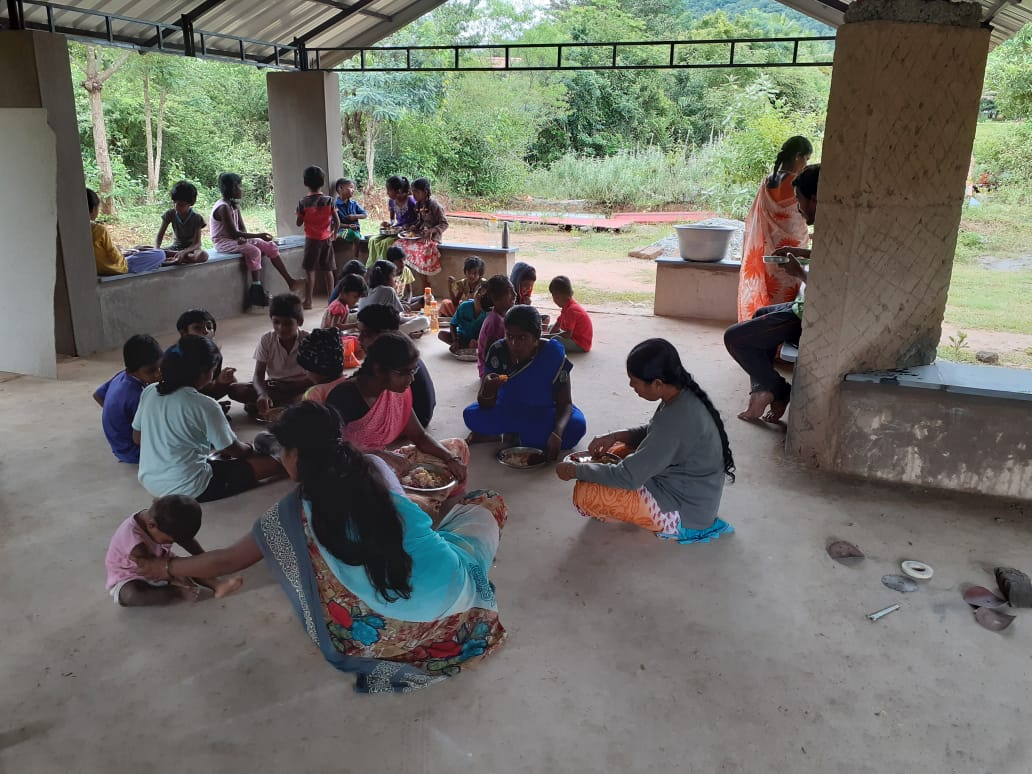
The children and students loved the newly constructed dining space.

Visitors and Volunteers

  • Varun’s scratch classes resumed again.
  • Sini from Kerala visited and conducted Toymaking workshops in October.
  • Senthil from Marudam School had participated in the farmers’ protests in New Delhi. He visited and spoke about his experience.
  • Shanti from Thiruvannamalai came to teach Music to all the groups. She held us all completely enthralled with her singing during a day-long music session. The 4- and 5-year-olds who normally can’t sit still for more than 5 or 10 minutes sat quietly mesmerized for more than an hour that afternoon listening to her sing.
Thank you each one of you for believing in us and standing with us through these difficult and unprecedented times.
Your support is truly invaluable!

Posted in Newsletters | Tagged | Comments closed

Summary of Activities

Here is a summary of activities carried out by the Thulir team during the corona pandemic between Mar’20- Sep’21.

Educational response during the pandemic

This pandemic has deepened the urban-rural, educated-uneducated and digital-nondigital fissures among us. The disease spread has been more in urban areas than in rural areas but in many ways the rural students suffer more. All over the world urban children and teachers are engaged in virtual classes. But teachers and students in Sittilingi and other rural areas have no smart phones or laptops and little or no internet access. Online education is impossible here.

In Sittilingi Valley, until a couple of years ago, we always had to go out to bigger towns to access the net. But even that was not possible in the lockdown. A few years back, the Tribal hospital got the only broadband connection in the valley. The rest of us struggled with highly erratic 2G mobile data. For most of 2020 it was a familiar sight to see young men go around the valley with their phones and laptops searching for good signal spots under a tamarind tree or a particular rock where a 2 G signal from the hills at very low speed may be accessed.

By late 2020, we extended the broadband connection from the hospital to the Thulir school using wireless network devices. Just this year, Sittilingi village has got a 4G coverage. Glitches are still there frequently but on the whole, our connectivity has improved. But most other villages in the valley still have limited access.

Our students are being left behind in the world of virtual education. Families that are struggling to put together two balanced meals a day are under great pressure to invest in smart phones and laptops for their college going children. Even in the homes that have one smart phone, it is very often in the hands of the men in the family and women and girl children don’t have access to it! This is true of our women teachers as well. Most of our lady teachers don’t even own a cell phone!

The first lock down- March 2020

In the initial months of the 2020 lockdown all of us at Thulir had to help the tribal hospital team and the panchayat teams in helping raise awareness about covid norms in the villages.

Schools were closed. There were no classes in the initial months. We believe that children learn more while watching adults work outdoors in the fields and homes than in the classrooms. And this was a great opportunity for them to do so.

From the beginning of June 2020 we brainstormed about activities which would force children outdoors and encourage them to learn from their parents and grandparents – observing plants, trees and insects around their farm, asking parents about them, drawing and writing about them, finding out from their grandparents how each millet is grown, writing about forest trees, finding out and recording weekly household expenditure etc. We prepared hard copy worksheets and learning materials and physically handed them to the children in the villages while observing covid norms.

This didn’t work out well. The sad fact about today’s villages is that many children are only exposed to adults watching TV serials, drinking alcohol or frequently fighting with each other most of the day. Most children live with their extended families in one- and two-room houses. So they had no physical and mental space at home to do any of these activities.

We realised that children need neutral, safe and supportive spaces, outside their homes, for their social, cognitive and emotional development.

Decentralised Classes

Since children were not allowed to attend schools, the school had to go to them! To help educate our children while complying with lockdown rules of not having large gatherings in institutions, our tribal teachers started holding decentralised classes from July 2020 for children in their own villages. These classes still continue. These happen mostly outdoors under a tamarind tree, on someone’s verandah or in open spaces next to the temple. Children from other private and government schools also attend. These classes happen in nine locations. Children have been divided into small groups and each group meets the teachers twice a week.

Worksheets and books from the library are given to the children after instructing them on how to use them. We show them good audio visual materials too. Games, craft, song and dance are also a part of these classes. The attendance in each session varies from 5 to 30!

Our teachers were very diffident at the beginning of last year to go out and teach mixed age groups of children in the villages. Teaching under public gaze is vastly different from teaching one particular age group in a disturbance-free atmosphere in a school setting! A series of motivational, training and academic classes had to be conducted through the year for them. But by the end of the year they grew in confidence and we are really proud of how they have all bloomed as educators and all that they have done so far.

Teachers work though the week taking classes, preparing learning materials, growing vegetables and millets and attending teacher training sessions. This has also been an opportunity for teachers to read, reflect, plan and improve their skills. We hold regular teachers training sessions, reflective and introspective sessions every week.

We are facing a historical educational crisis and we have to respond to it differently and innovatively! We need community learning and teaching! How do we deal with the academic learning and memory loss amongst children? At the same time, how do we acknowledge that children have learnt a lot from their experiences through the pandemic and build on that learning, focussing on their social-emotional-cognitive learning? It is up to us to imagine and create an effective learning movement!

The second wave and after..

The virus entered Sittilingi Valley during the second wave in May 2021 and there were many patients in every village. So these classes were stopped and all of us had to help in covid related work.

A teacher in a rural area can never remain strictly a teacher but has to play many roles as the circumstances demand.

Now the second wave has subsided and the decentralised classes have resumed from mid June onwards on popular demand from the villagers. These village classes have worked fairly well. Classes are held every evening in Rettakuttai and Palakuttai and twice a week in the other locations. Here are some of our observations.,

  • Learning is very local, centred in the village and the parents and elders can see it happening and be a part of it.
  • The teacher who is from that village gets more respect now than when she was just a daughter of the village!
  • Some of the parents (and even some of our teachers) who were initially sceptical about our teaching materials and methods, could now practically see their effectiveness and see how our school students were academically better than students from other schools.

The challenges faced in these classes:

  • These classes were most often outdoors under a tamarind tree or in clearings near a temple. They had to be shifted to someone’s verandah when it rained. Attendance would reduce during rains. Sometimes these spaces were also used by men gambling or drinking and so there were tensions and disruptions at times.
  • Since they were taking place in the village itself, children would sometimes get called away from the classes for some errand or other.
  • When classes were in someone’s verandah or front yard, parents who had some disagreement with that particular family would not send their children there.
  • Students enrolled in government schools get their free mid day meal scheme as weekly supplies of rice, dhal, eggs and other groceries. Ten Thulir parents, who were economically affected by the pandemic, have removed their children from our school and have admitted their children in government schools in order to access these food rations. The parents feel that since we teach government school children too in the village classes, these children will still get the education from us and the food from the government school – the best of both schools!

Transporting children to school

We conduct classes for the children of our school twice a week at school. Prior to the pandemic, parents took responsibility for the logistics and costs of transporting their children to school. But the pandemic has affected many of them economically and they are finding it difficult to bear the transport costs.

As a stop-gap arrangement, we talked to the owner of a private minibus that operates in our valley and convinced him to change his route slightly in order to pick up our children on his way and drop them off near the school. The school will pay the transport costs for the children. Students and teachers are now using this service twice a week.

Workshops for mothers

We have started having practical hands-on workshops for mothers, teaching them activities they can do with their children at home.

Covid response

As our country grappled with the second wave of COVID, we tried doing our bit to help those whose lives and wellbeing were disrupted and affected by the deadly virus and the compelling lockdowns.

The deadly virus which had bypassed us in the first wave spread its tentacles into our valley in the second wave as people had dropped their guard and become complacent. There were no beds available in the nearby big hospitals to refer them to. One 50 year old man who was referred out died before he got a bed in any of the hospitals.

It was imperative that we had to be ready for the deluge ourselves . A community problem of this magnitude had to be tackled together as a community. Our decentralised classes were temporarily stopped and all of us had to help in covid related work together with Tribal Health Initiative , SOFA and the panchayat. Being a part of a larger group of individuals and institutions with the same values is our biggest strength in Sittilingi.

Hospital Care

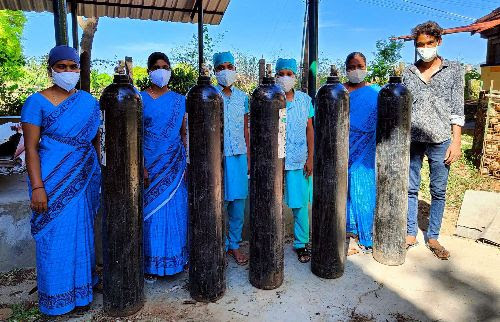
Our friends at Tribal Health Initiative run a secondary care 35 bedded hospital here. They dedicated a 15 bed exclusive Covid ward with protective gear, oxygen, testing, medicines etc. for Level 1 and Level 2 Covid care. The experience of doctors treating covid patients all over the world has shown that if patients were tested early, put on oxygen and medicines in time, they mostly got over the disease. Those who lost their lives were mostly the ones who did not get these in time.
Community work

We realised that the only way the staff of this small covid ward would not be overcome by covid patients and lack of resources is to have community involvement and community prevention. Spaced village meetings were held by the panchayat in which some of us participated. Frequent announcements through vehicles and the local “tandoora” were made by the panchayat. Short videos with messages from our doctor friends at THI and the panchayat president were made and distributed on what’ s app groups in each village to motivate the youth. Youth volunteer groups were formed. Some of our teachers and their spouses joined these groups going home to home in each village identifying patients with fever and cold and guiding them for testing and treatment. Small shop owners and people coming to the milk collection centres everyday in the village were sensitised.

Data base of patients

Siddharth, Ram and Archana helped develop and maintain a data base of patients all over the valley. This helped doctors, nurses , the field health staff and volunteers and hospital helpline volunteers to co ordinate and follow up on patients in home quarantine and the patients who were discharged from the hospital.

Hospital helplines

Phone helplines were set up for patients to access help and guidance. Anu volunteered on one of these full time providing psychological support to patients in home quarantine and following up on those who were discharged but had to be still monitored. The huge fear of being stigmatized by the village, when one was corona positive, had to be assuaged. People with symptoms but yet undiagnosed and wanting advice would call at all times of the day. The older covid patients above 50 would brush all covid prevention norms and need for self isolation aside saying ” Only you city folk will get corona . We villagers work in the sun all day and will not get sick!” They had to be persuaded to self isolate.

Fortunately most of them would want someone to listen to their ailments and complaints ! Listening to them patiently would help most times. On the other hand, the 25 to 45 age group ,especially the men, were mostly very anxious and afraid, because of what they have seen on TV and Whats app. They needed someone to clarify doubts and provide reassurance.

Education and healthcare needs a sustained effort over a long span of time. There is still much more to be done. We hope we can continue to do this together.

We thank all of you for your consistent support during this very difficult time.

Posted in Newsletters | Comments closed

Newsletter Jan – May’21

Coronavirus enters Sittilingi

The dreaded virus that is holding the whole world to ransom has now entered Sittilingi Valley! It announced its arrival almost immediately with a death in the village.

As we write this in the first week of June, there have been 6 Covid deaths in the valley and the hospital has seen around 400 fever patients so far. The actual number of infected people could be even higher as many may have never come to the hospital.

Several villagers who were earlier complacent – convinced that the virus would ignore Sittilingi just as it did last year – are now scared and have started observing covid prevention norms more consciously.

Our decentralised classes in the villages have been temporarily stopped since mid April. Our main priority right now is to contain the spread of the virus in the villages. All of the teachers and their spouses are currently involved in supporting the hospital and the panchayat team in their efforts towards preventing community spread and involving the community in supporting the Covid patients. They are talking to people in each of the villages about Covid awareness and treatment, informing the hospital of any fever cases in their villages and helping to isolate and provide support for the fever patients.

Our doctor friends at Tribal Health Initiative have prepared a 15 bed exclusive Covid ward, as well as protective gear, oxygen, testing, medicines etc. Most villagers who were badly affected economically by the first Covid wave are now unable to pay for treatment. We have been helping THI fundraise for their treatment and food. We are truly grateful to Balaji and Asha For Education for their prompt and timely contribution towards this.

The hospital has set up a number of helplines for residents of the valley. Some of us at Thulir have volunteered to run these helplines. We talk regularly to Covid patients who are isolating in their homes and provide them non medical support, including psychological help and guidance.

The good news is that because of prompt and early action, at both the community level and the hospital, many patients are recovering. But we don’t know how things will change in the weeks to come.

Migrant workers in the valley

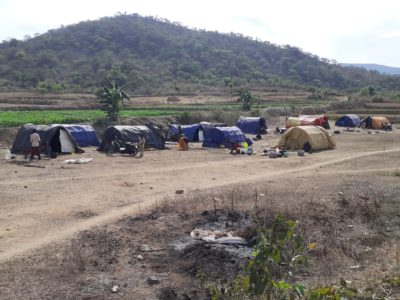
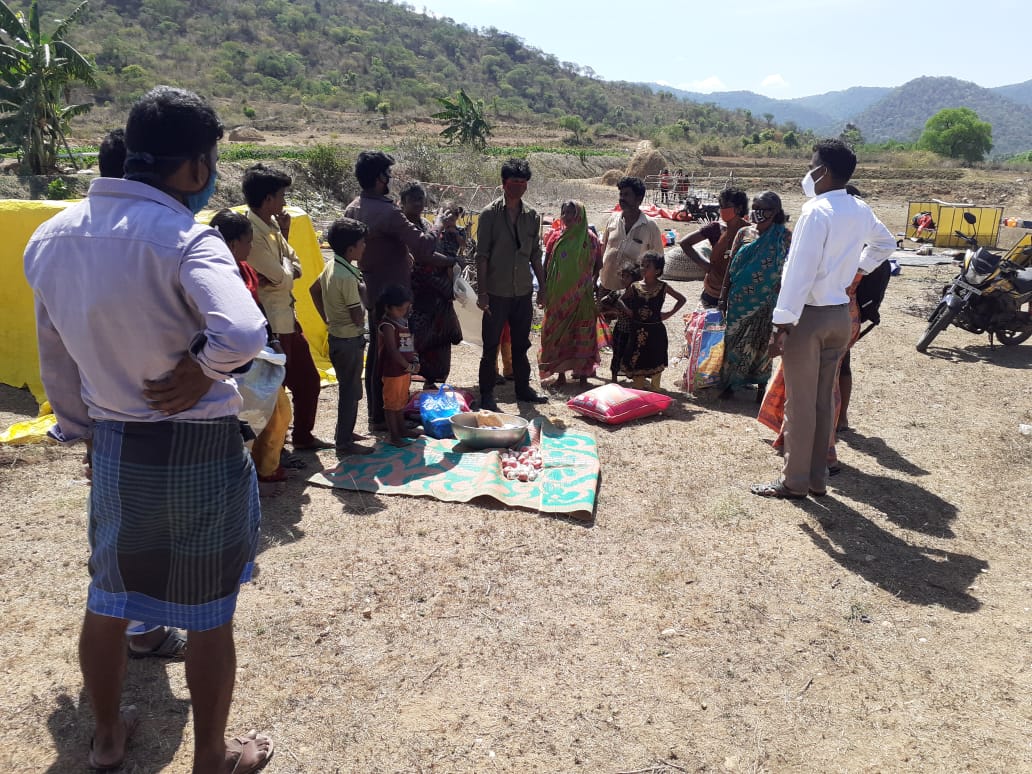
We at Thulir, have also been busy with a group of migrant labourers who came to the valley recently. There were around 45 of them including many women and children. Though originally from Andhra, they had been travelling around the state selling woven baskets and other small items on pavements and bus stands in the cities. The imposition of lockdown left them with no source of income and with no place to stay. They had been driven out of bigger cities and towns.

After trying their luck from town to town they came here asking to be allowed to stay in some open place where they could pitch their tents. We thought they could stay in the school grounds. We tried to help them along with our panchayat (local government) president. But it was not easy. Some of the villagers were afraid that this group would bring Covid into the village and complained to the superior government officials.

The government officials too wanted these people to be sent out of the valley, to somewhere out of their jurisdiction. Finally we managed to get permission from everyone and organized a place for them to stay on some land between two villages. We have been providing them with groceries, vegetables and some livelihood opportunities.

Before the second wave hit us…

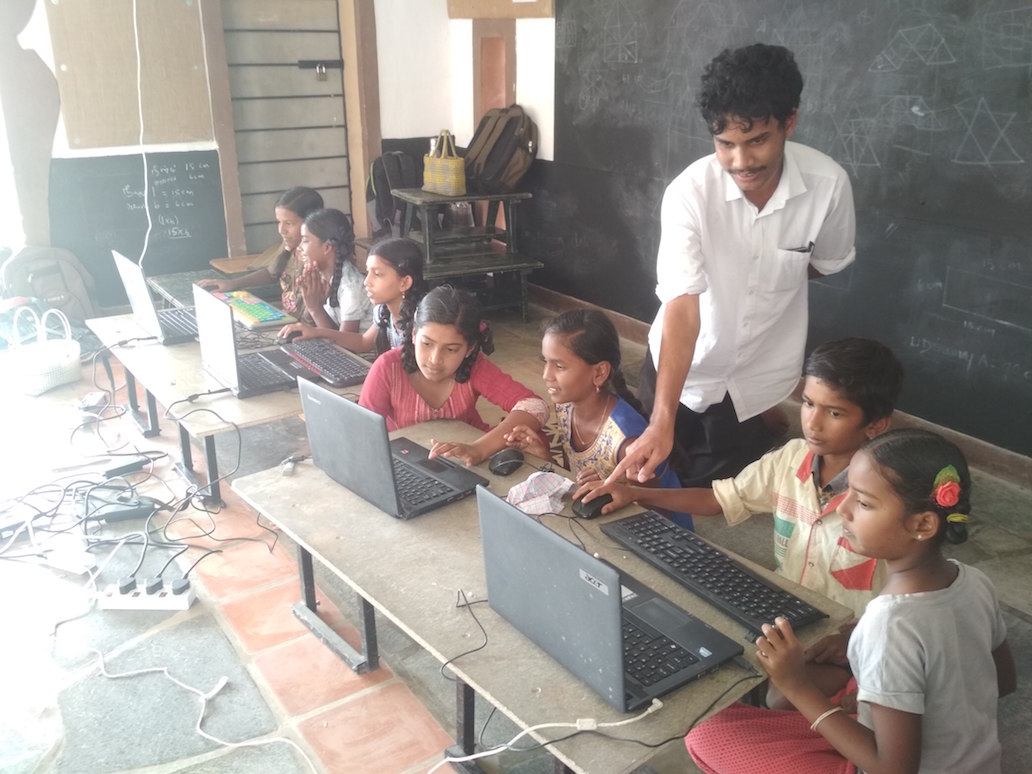
  • Varun from Thekambattu conducted Scratch classes thrice a week for teachers and students from February to mid April. Children and teachers discovered that creating their own videos, puzzles and games is more fun than playing games made by others.
  • The view of the stars in our Sittilingi night sky is amazing from January to the end of March. This year this view was made even more special by Ramsubramanian, an old friend of Thulir. He brought his telescopes to Thulir and conducted star gazing workshops for parents, teachers and children in the school grounds. Lying on our backs on mats and gazing up at the infinite stars or peering through the telescope while listening to him unravel the mysteries of the universe was a fascinating experience.
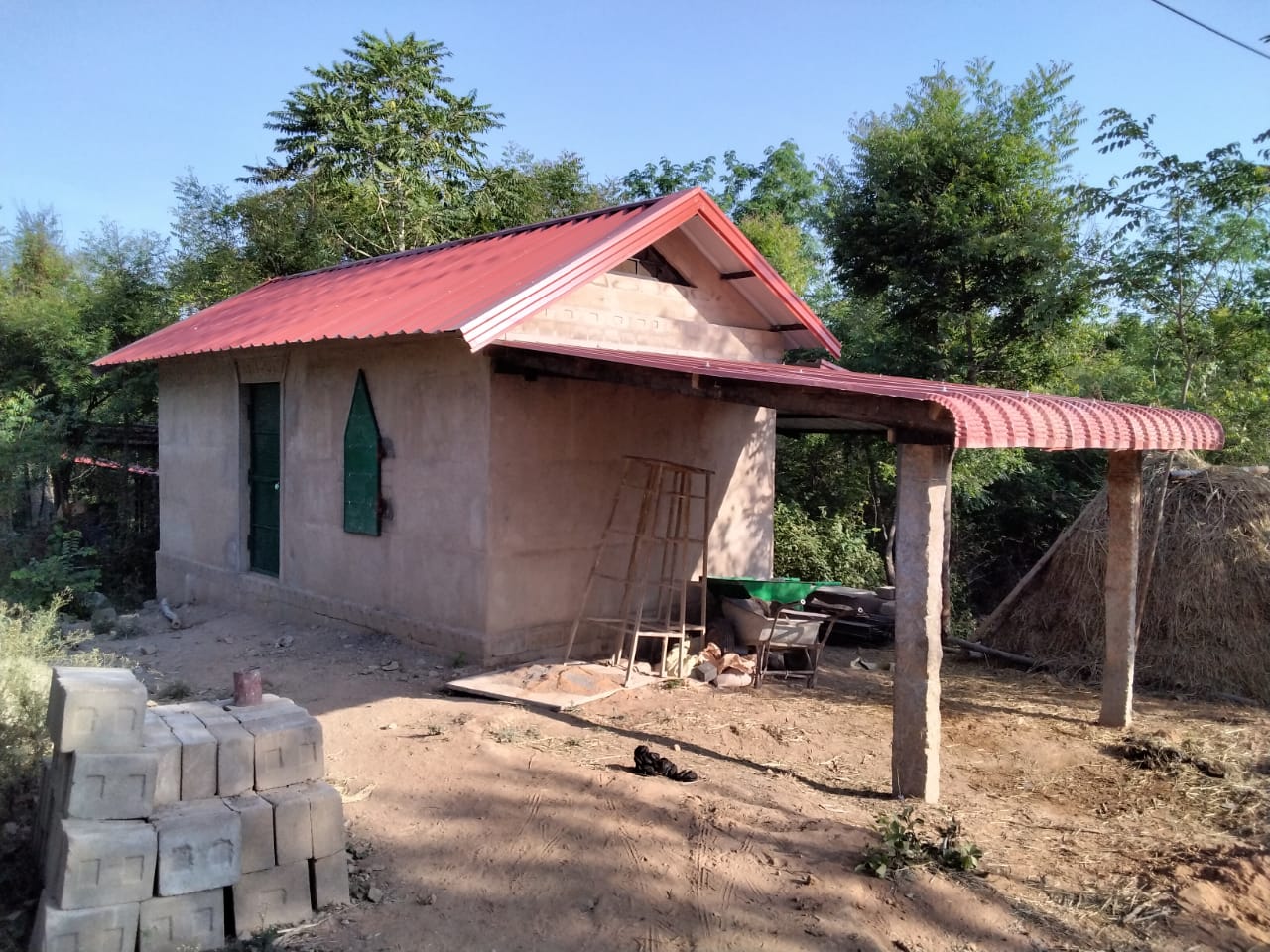
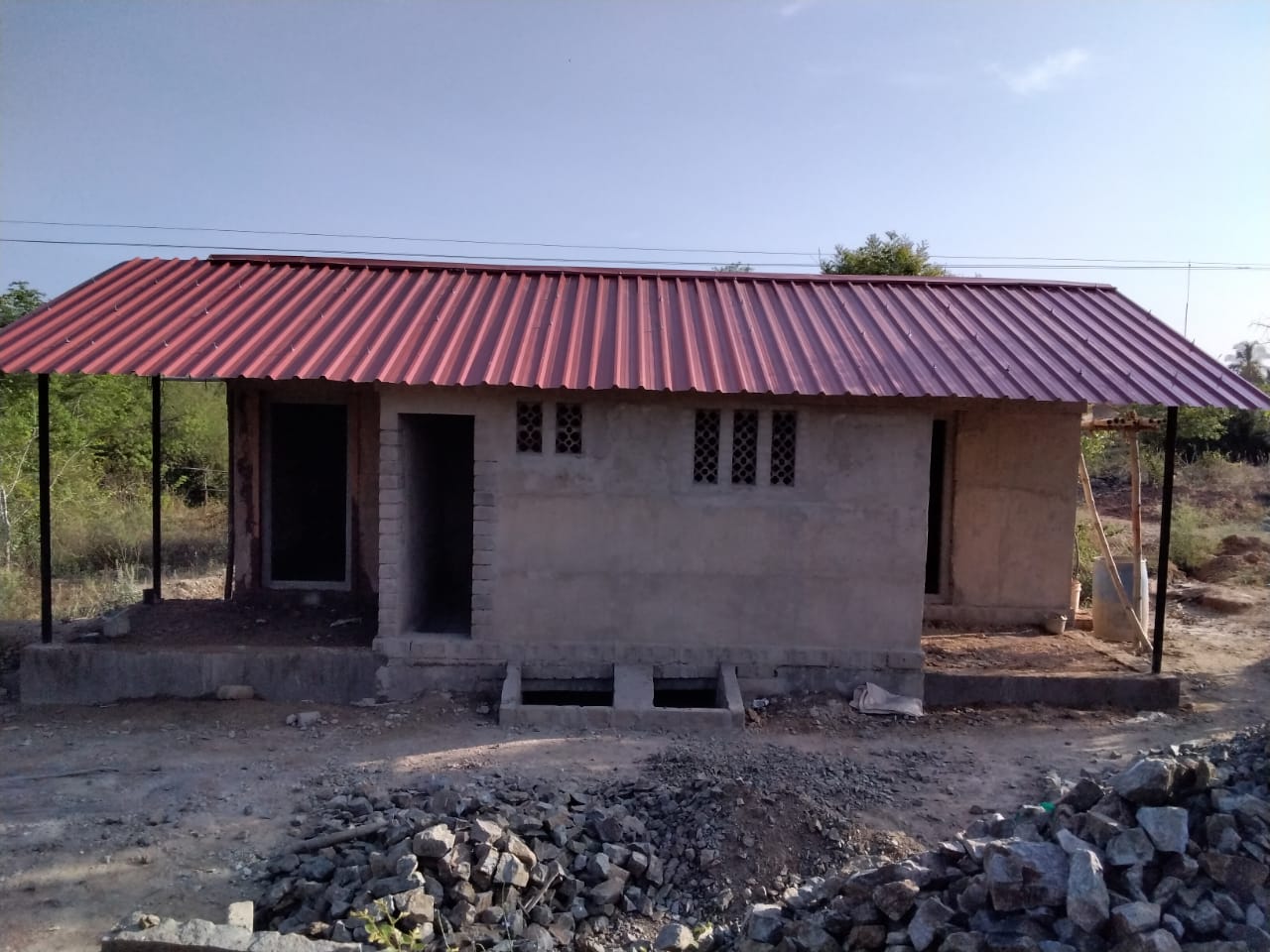
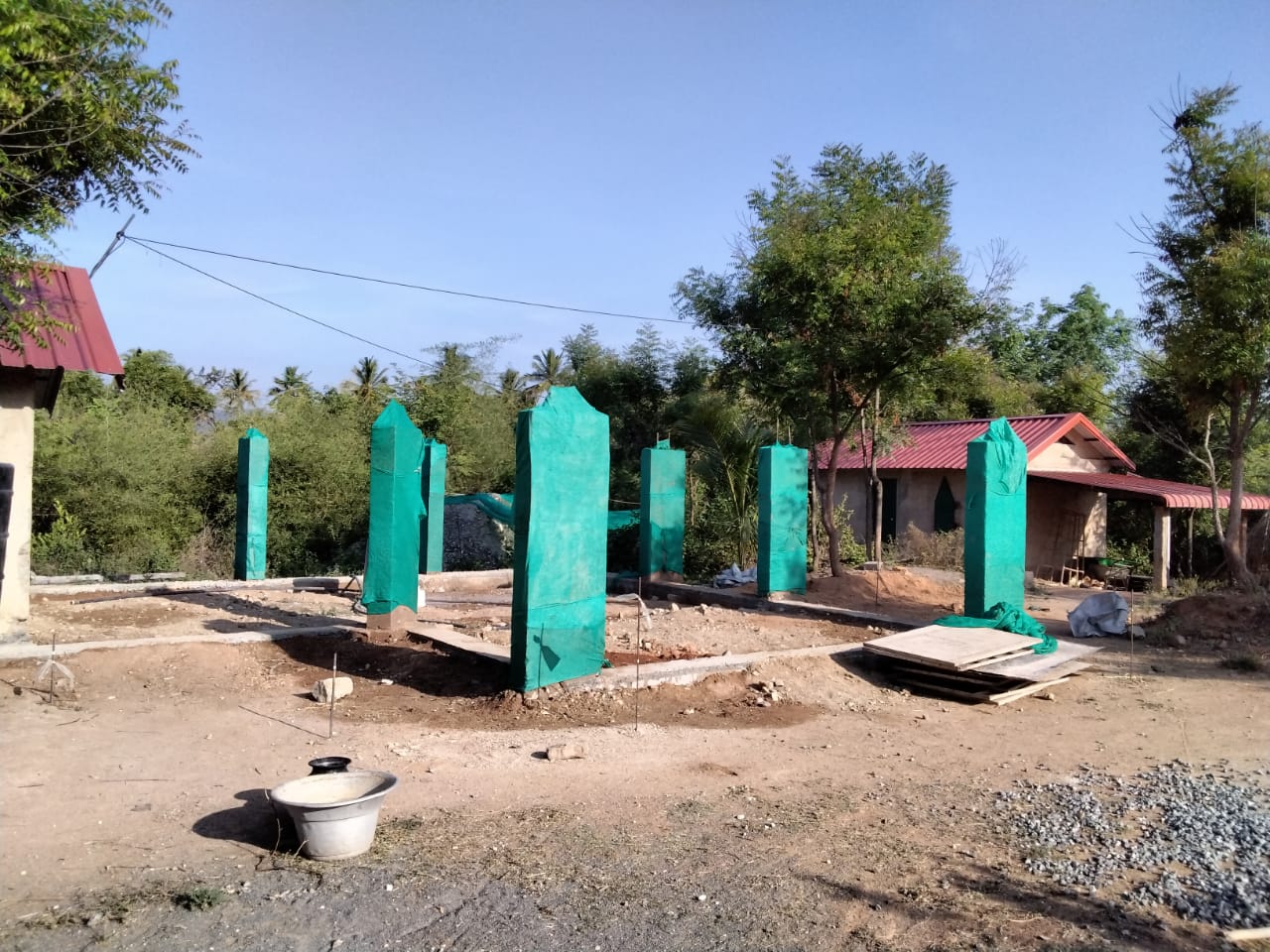
  • Constructing a store room for construction materials, staff quarters and the dining hall provided a livelihood for around 20 building artisans. This activity has been temporarily stopped during the lockdown.
Store room
Staff Quarters
Dining Hall
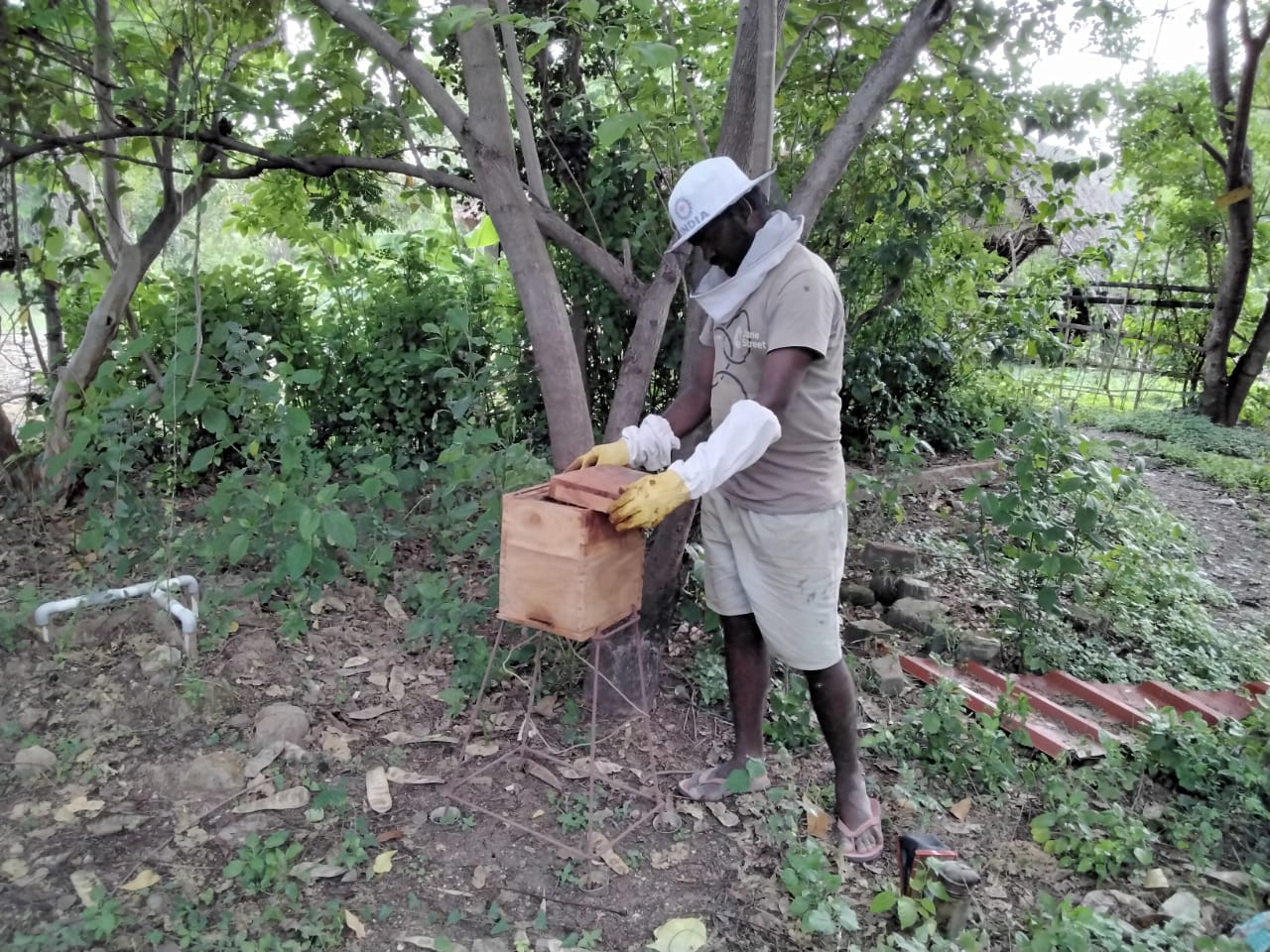
  • Bee keeping and collecting honey has been resumed at Thulir, Thanks to the workshop conducted at Sittilingi Organic Farmers Association, SOFA.
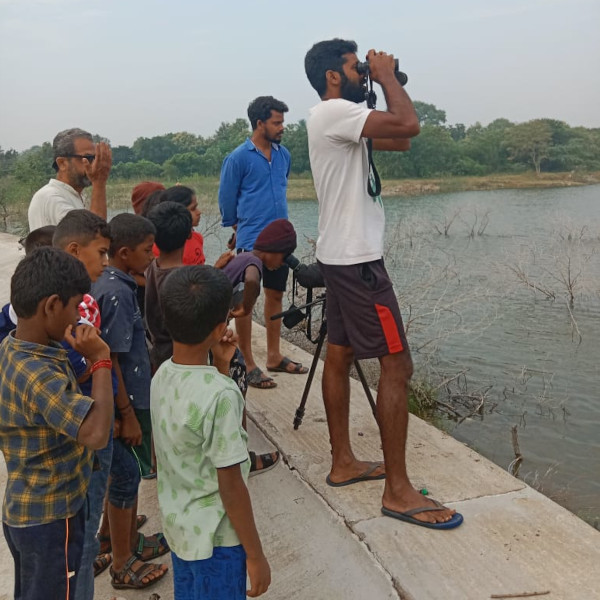
  • Vinod, an expert on birds and insects, took us on nature walks and helped us discover the fascinating array of birds and insects we have here!
  • Anjana from ASHA bangalore visited us in February. Her site visit report can be read >> here
  • Students and teachers from Marudam Farm School, Professor Ravindran and Vanajakka and Balaji from Asha were some of those who visited and cheered us up this year!

Thank you all for being with us. Let’s tide over this storm together!

Posted in Newsletters | Comments closed

Newsletter Jul-Dec’20

Hope all of you are healthy and well.

As this year draws to a close, one only hopes this will be remembered as an unusual event and this will not become the norm in the future!

“The real tragedy would be if we come through this pandemic without changing for the better. It would be as if all those deaths, all that suffering would mean nothing.”

– Poet and novelist, Ben Okri, in The Guardian.

Effects of the Pandemic

The virus does not seem to have an obvious physical presence in our valley – as yet! The disease spread here has been nil or negligible. Of course, one is not completely certain as very few have been tested for covid here. So either everyone here has escaped the virus or many of us have been asymptomatic till now.

Socio – economic impacts of the lockdown

These are manifold and will continue to impact the valley for many years to come. In the last newsletter we had written about the rural tribal community’s ability to grow their own food and resilience to withstand deprivations.

But the actual economic impacts of the lockdown have been starkly felt in the villages only from July/August. Other than people working in Thulir, THI and related institutions no one else in the villages had any cash in hand. Most were already bogged down by earlier loans and struggled to pay their monthly dues. So though we had good rains in July/August, people didn’t have money to start the planting or hire tractors to plough their fields. More loans at exorbitant rates were taken out from private moneylenders to start farming. Fortunately most people are growing food crops this season.

Farmers of SOFA were unable to market their turmeric and other produce during the initial lockdown phase. But our network of friends gave them a hand and bought generously. To browse and purchase SOFA products please >> click here

The Panchayat team spent a lot of time sorting out irregularities in the MGNREGA scheme and has started work under the scheme in two villages.

Artisans of the Porgai craft association also didn’t have access to thread and cloth as well as their normal markets during the lockdown. They have risen to this challenge by very creatively up-scaling, recycling, coming up with new products and setting up an online market.

You can support them by treating yourselves to some of their artwork. >> Contact Porgai

Construction Artisans

Construction artisans too had no work or income during the lock-down and kept requesting us to start construction work. Group activities at public institutions and spaces were still forbidden at the time. We could not start construction work at school. So from the beginning of July we started construction activities around our house at the old Thulir campus, dismantling old unused buildings and repairing and renovating others, while taking due covid prevention measures.

From September, as the lockdown was relaxed, we started construction work at school. The caretaker’s cottage has been upgraded and a storeroom for construction materials and tools is being built. The frequent rains this year often delayed this work. But we hope to build two staff quarters and a dining hall this academic year.

Store room construction at the school.

Construction at SOFA.

Educational impact

“The Pandemic has moved us from a Digital Divide to what some have called a Digital Partition.”

– P Sainath

This pandemic has deepened the urban-rural, educated-uneducated and digital-nondigital fissures among us. The disease spread has been more in urban areas and negligible in rural areas but in many ways the rural students suffer more. Students in Sittilingi and other rural areas have no smart phones or laptops and little or no internet access. Lack of space to study or guidance at homes make it even more difficult for them. These students are being left behind in the world of virtual education. Families that are struggling to put together two balanced meals a day are under great pressure to invest in smart phones and laptops.

Decentralised classes

To help educate our children while complying with lockdown rules of not having large gatherings in institutions, we have been holding decentralised classes for children in their own villages. Children from other private and government schools also attend. These classes happen in nine locations. Children have been divided into small groups and each group meets the teachers twice a week. Class 10 students from Sittilingi government school attend classes conducted by Ram every afternoon.

Class in Sittilingi.

Class in Naikuthi.

Worksheets and books from the library are given to the children after instructing them on how to handle them. Teachers work though the week taking classes, preparing activity sheets and learning materials, growing vegetables and millets in the campus and attending teacher training sessions. This break has also been an opportunity for teachers to read, reflect, plan and improve their skills. We hold regular teachers training sessions every week.

Class in Palakuttai.

Class in Rettakuttai.

Internet Access

Till recently the hospital had the only broadband connection in the valley. The rest of us struggled with highly erratic 2G mobile data. Mr. Ansari and team from Digital Empowerment Foundation have helped us with the internet access in the old campus and the school by extending the broadband connection from the hospital using wireless network devices. It still develops glitches frequently but on the whole, our connectivity has vastly improved now.

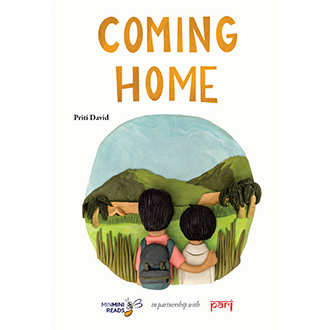
Coming Home

Karadi Tales and the People’s Archive of Rural India (PARI) have recently launched a series of story books based on real stories of rural India. In this series a storybook called “Coming Home” has been launched, this book is based on Priti David’s article about Thulir in PARI >> Read More

 Sakthivel’s Marriage

We are happy and sad at the same time. Happy that Sakthivel has married Swetha from Bengaluru. Sad that he is leaving for Bengaluru. Sakthivel has been an integral part of Thulir, first as a student and then as an administrator. We will miss him.

We wish both of them complete happiness together and hope they will come back to Thulir eventually.


Thank you all for your outpouring of solidarity, generosity and support which helped us wade through this difficult year!

Maybe this painful pandemic can give birth to a new year filled with consciousness, a consciousness of the unity of life, a consciousness of caring and sharing and a consciousness of all life and love. Wishing you all just such a wonderful new year!

Here is a short poem, written by our friends Sunder and Sonati from Thekambattu.

I wear my privilege
On me
Like an endi shawl
Wrapped tightly
About my shoulders
To keep out the cold
But just as
An endi shawl
Can wrap itself around
And warm
More than one person
I find that
I can use my privilege
For others
And the warmth
Of you warming others
And others warming you
Is privilege indeed.

******

Posted in Newsletters | Comments closed

Novel based on Thulir

 “Coming Home“, a children’s novel published by Karadi Tales in 2020, is based on Thulir!

Posted in Articles About Thulir | Comments closed

Newsletter Jan-June 2020

Hope all of you are safe, well and healthy.

This newsletter is an attempt to reach out to you in solidarity at a time when all of us, whoever we are and wherever we are in the world, are affected in varying degrees by the same microorganism!

Our hearts go out as we pay homage to the thousands of workers and their families rendered jobless, homeless and foodless in this pandemic, and to the thousands who have lost the battle with the virus.

This pandemic has brought to light the best and worst in all of us simultaneously. It has reminded us of our oneness with all life, reinforced our interconnectedness and shared humanity, brought out all our empathy and  kindness. But on the other hand it has amplified our fears and selfishness, deepened the existing fissures, highlighted the borders and strengthened the divisiveness among us. The vulnerable among us have been made more so.

“When the virus does not care about our divisions of borders, ethnicity, colour, or race and religion, why do we?” – Tejas Gambhir

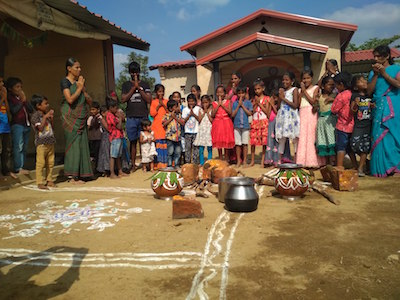
Pongal celebrations at the new school

Lock down measures

Rural self sufficient communities – the future?

This lockdown has made us realise that rural communities like Sittilingi are in many ways more resilient than modern urbanised society. The tribal value of consuming less and making do with whatever meager resources are available has stood us in good stead now.

According to a  2019 survey by THI, 75 percent of families in Sittilingi Valley own land and 81 percent are engaged in agricultural  activities. Most importantly, people still grow their own food. Only 8.7 percent of families have at least one member migrating outside to earn money.

All over the world, experts are now talking about the possibility of an economic recession due to the lockdowns. In times like this people in urban areas are unsure of employment and financial security in the years to come. Having your  own land and growing your own food provides one with basic security in these uncertain times.

Dr. Regi and Dr. Lalitha, shifting out to a rural area and initiating  community activities has made quality health care available at our doorsteps. This is especially useful now when all the government primary health centres are tied up with corona duties.

Community measures

We have been supporting the Panchayat (local government) in whatever small ways we could in their proactive measures in maintaining physical distancing and spreading awareness. Read more >> here

We hope the community maintains this level of unified and mature action when the valley actually receives its first Covid cases!

Construction and allied artisans

The construction artisans trained by Thulir were working on building eco- friendly buildings for other NGOs and friends outside. With the lockdown and consequent stopping of all building activities they are back home without work and income.

The Thulir alumni, Perumal, Kumar, Munusamy and their group have been busy doing all the electrical work in the valley, repairing TVs, cell phones etc., so very essential in the lockdown times.

Food and vegetables

The initiation of  Sittilingi Organic Farmers Association assures the community of a variety of millets, some dals and spices in the valley. Manju and the SOFA team have a nursery where they grow different varieties of keerai(spinach).

From the time the Thulir school started,  around 75 people eat lunch every day at Thulir. And we go once a week and buy vegetables from outside.  Over the years we have been talking to many neighbouring farmers and parents to grow vegetables for the Thulir meals. Many were reluctant as vegetables are perishable and more difficult to market than millets. But a few started and their numbers slowly grew.

We are proud of the fact that for the first time last year we bought more vegetables locally than from outside. And this has helped all of us in the village during this lockdown when the supply and distribution chains are cut and threats to our food security loom on the horizon. Locally grown food seems to be the sustainable solution.

It is heartening to see more and more farmers growing food crops and vegetables instead of cash crops.  True, the variety is limited.  In this season in Sittilingi, we get only brinjals, lady’s fingers, greens, cluster beans and tomatoes. But all of us have become endlessly creative in coming up with new recipes to cook these vegetables!

Educational measures

All over the world teachers and children are engaging virtually with each other and a vast variety of excellent educational materials and classes are available on the net. But all this is out of reach for our children and teachers because none of our villages have good internet connectivity.

Only the hospital campus has broadband connection in the valley but even that is often down. We always had to go out to bigger towns to access the net. But even that is not possible now.  It is a familiar sight to see young men go around the valley with their phones and laptops searching for good signal spots under a tamarind tree or a particular rock where a 2 G signal at very low speed may be accessed. Women and children don’t have even this access . Most of our lady teachers don’t even own a cell phone.

While we believe that children learn  more in the fields and homes while watching adults work than in the classrooms, the sad fact about today’s villages is that children are mostly exposed to adults watching TV serials or drinking alcohol and fights between family members most of the day.

Our teachers have brainstormed about activities which would force parents and children outside and encourage children to learn from their parents and grandparents observing plants, trees and insects around their farm and asking parents about them, drawing and writing about them, finding out from their grandparents how each millet is grown, writing about forest trees, finding out and recording weekly household expenditure etc.  They have been preparing worksheets and learning materials in the old fashioned way and physically making sure they reach the children in the villages while maintaining physical distancing.

But working online, if not done properly can be torture for rural students too. Vennila, (name changed) a Thulir alumnus now studying in a  private nursing college outside, has to mark her attendance on Google Classroom everyday. Though there are brilliant audio visual 3d materials available on the internet her professors have not been trained to access them or use them. They just upload difficult essays from the textbooks. None of Vennila’ s professors or the college management are even aware that there are villages in India where people have no access to smart phones or internet.  Ram has been trying to help her and her classmates and says he has to struggle with the poor connectivity, the bad quality materials uploaded  and the fact that both the professors and the student are only interested in fulfilling the mechanics and requirements of the operations but not in actual understanding or learning.

This is reality in rural India. There are many, many students like Vennila here!

Visitors & Volunteers

Students and teachers from Isai Ambalam School visited us in January. They talked about the importance of herbal medicine and demonstrated the process of making some simple herbal tooth powders and preventive medicines. The Thulir team taught the visitors some local crafts and songs.

Sam & Shiksha, primary school teachers from the U.S.A, visited us in February. They helped us with the classes for teachers and students.

Younger students and teachers of Marudam School visited us for one day in March. Both groups shared songs, dances, plays and tasty food with each other!

Dr. Arundhati finished her stint at THI and left to pursue higher studies. During her years here, she made a habit of putting all her loose change in a piggy bank and donated it to Thulir when she left.

All of us and especially the children were very touched by her gesture.

Folk Dance workshop

These are pictures of the five day traditional Tamil folk dance workshop conducted by Sri. Manimaran prior to the lock down.

Another dance workshop by Jyotsana and her team from Samkaram, Chennai, the end term parents’ meeting and the Annual day celebrations were cancelled due to the lockdown.

Funding

Even at the best of times, our tribal parents are not able to financially support a school like this. Now many of them have no jobs or an income. Thulir school needs contributions and support from its well wishers even to pay the teachers’ salaries for some years to come. Given the predictions of an economic recession,we were worried that Thulir may not receive the funding it needs. This is a real concern.

Friends at Asha Bangalore and Ein Zehntel Stiftung responded with sensitivity and understanding and acted very promptly to alleviate our fears. We thank them for their committed and constant support!

We still need more funds to restart farming and construction activities. We urgently need to build a dining hall, a store room , rooms for people to stay so that the land can be looked after. This is also essential at this time as construction work can provide livelihoods and income for people affected by the lockdown.

Please click >> here to download our brochure that can be shared online.

The virus has brought us all to a stop, to refocus, realign, rethink a lot of things. To re evaluate what is really important.

Let us hope the compassion, wisdom and unity millions of us around the world have felt will ultimately prevail and we will all come out of this together to create a new world, a better world for our children!

Stay safe and well.

*********

Posted in Newsletters | Comments closed

Newsletter Jul’19 – Feb’20

Wishing you all a peaceful and meaningful 2020!

New buds of Thulir

This academic year, we had many inquiries from the parents about the admission process.  We admit children only if they are above 4 yrs. Some of the parents, who couldn’t get the admission last year due to the age of their child, didn’t send them to any other school but waited for Thulir’s admission. We are grateful to these parents for their trust. This year fifteen children from the Sittilingi valley joined the thulir family. We started this academic year with 53 children.

Lessons learnt from the local community

We had a very severe water shortage this summer. The school well was completely dry! Various water saving measures were adopted. We learnt from the tribal team how to manage with whatever little was available. Cooking for 70 people, cleaning, washing was accomplished with less than 500 litres a day. No one complained! Work went on. That was a great lesson for all of us. A neighbour voluntarily and generously gave us water from his well when the condition became worse.

Parents Meetings

In July, during our first parents’ meeting this academic year, old parents welcomed the new parents in to the Thulir family and some of them spoke about their personal experiences with the school. They reassured the new parents that they needn’t compare this school with other schools as Thulir helps their child to learn in an atmosphere of freedom and joy. Couple of parents also admitted that their initial fears that the child isn’t writing A,B,C.., isn’t writing homework, were unfounded  and they bore witness to their own children growing with solid foundation and a spirit of inquiry. We are grateful for the Parents’ trust in our school and team.

Holidays and transport issues were discussed in the meeting in September. We are very happy that for the last two years parents have collectively taken charge of transporting the children to school. But as with any collective action there are numerous adjustment issues.  Sometimes the parents request some of us to intervene. Many meetings were held for this both at school and in the village.

Toy Maker@ Thulir

Our dear friend Sri. Arvind Gupta visited us in August. We are all great admirers of his work and his workshop for government school teachers at Gandhigram, 27 years ago, had inspired Anu and Krishna to step into the world of learning and education! Recently he was awarded Padmashri by our government. It was a privilege to have Sri. Arvind Gupta in Thulir along with his family.

We had organised a small event in our school and also invited Sittilingi govt school teachers/students to participate. We had arranged Arvind’s table in the centre and the childrens’  tables were in the periphery but once the session started children thronged to Arvind and their excitement knew no bounds. Plastic straws, old slippers, water bottles, CD ROMS, newspapers, matchsticks, marbles, magnets, wires etc. were his tools of trade. Right in front of our eyes he transformed an ordinary piece of rubbish to a wonderful toy.

The variety of caps using old newspapers was an immediate hit – Nurse, Policeman, cricket player, fire fighter and many more. All our children were seen sporting one or another variant of the newspaper caps. Children and teachers alike were quite thrilled in witnessing these creations and motivated in making our own.

Children tried creating some of the paper crafts, and tops with Sri. Arvind Gupta’s help. The next day he interacted with the junior doctors of the Tribal hospital and shared his life’s journey. We are grateful to Sri. Arvind Gupta for giving us a memorable experience.

Visit to Moola-Sittilingi

In June, our older group of children along with our teachers took part in conducting a survey in Moola sittilingi village (undertaken by Tribal Health Initiative) for two days. The purpose was to collect the demographic data about the village.

Our children walked alongside the THI staff and visited the houses in the fields one by one and observed the process of taking a survey. Slowly, our children also started asking questions about the food habits of the villagers, comparing what they ate in the past and now, the type of the roof/floor/walls in the village, crops and animals in the farm.

Everyday we started in the morning and by noon we were all very tired. In the classroom, we processed the collected data by tabulating and tried identifying trends by plotting graphs etc. It was a wonderful experience for all of us.

Sports day at Thulir

We celebrated Sports day at Thulir at the end of August. Thulir children and other children of the valley participated in the event. We had planned a 50m Sprint, high jump, long jump (childrens’ favourite murukku jump) for all the age groups. Before the event, our teachers and children worked on the playground clearing it for the tracks and for other events.

Children participated with great enthusiasm and some children were curious to know what prizes would be distributed.  At Thulir, we don’t give prizes only for the winners as, we think, it fails to acknowledge the efforts of other children and seems to make children only compete for the prizes and compare. While it is important to appreciate and acknowledge the efforts of the winners, it shouldn’t also dampen the spirits of these very young children.

We normally give a prize to everyone who participates. But even in this, the focus shifts to the prize and not the sport. So this time we decided there wouldn’t be any prizes for anybody. We would all partake in a common celebratory lunch. Children wholeheartedly agreed to this arrangement.  We all had great fun.

Bags from rags

Thejal from Mumbai visited Thulir after the Marudam craft week. Thejal is interested in recycling and innovative use of, what we generally consider as refuse, coconut shells, rags, leaves, paper etc. She works with these materials and creates beautiful toys, bags, plates, cups, ear rings, necklaces and many more. After meeting her at the craft week, our children and teachers were very excited about her visit and quite keen to learn from her.

Paper peacocks and charka

Mr. Madhav & Ms. Neelima from Pune visited us in November. For over a decade Mr. Madhav spins his charka everyday for 30 mins as a sadhana and uses the yarn to stitch his own clothes. He taught us to spin using the charka. Some of us struggled to keep the yarn going and he encouraged us to try and practice.

Ms. Neelima showed us the many possibilities and potentials in a piece of paper which we usually discard as rubbish. An old magazine paper was first made into a square and some folds here and some folds there, few cuts here and few cuts there, lo and behold, a peacock! Childrens’ excitement was visible. Neelima taught us how to make boxes, greeting cards, envelopes, stars, balls, peacocks, crows using paper.

The process of handwork, irrespective of being simple or complex, helps learning in many ways and conducive to the physical and cognitive development of all, regardless of age. Knowing the material, the rich sensorial experience of handling it  in your hands, planning and sequencing the actions, the intent and motivation towards reaching an end, patience, perseverance in the face of failure and after all the hardship the joy of having created something. This entire process is self-directed/self-motivated and discipline issues never arise.

Children do not need expensive toys, which nowadays are made mostly of plastic. If we try, we can find many uses for the materials around us and this instills the value and respect for the material as opposed to the mere consumption of it.

Home and School – establishing bonds!

Teachers visited the different villages where the children come from, keeping in mind that our school is not an island but an important  part of the community here. Visiting each child’s home and interacting with the parents helps us understand the child and her needs better.

Joy of giving/receiving

“This is the tastiest rice I have ever eaten in my life!” exclaimed child after child. During the 2018 cyclone in Kerala which affected the adivasi communities in Wyanad and the appeal for help from friends at the Gurukula botanical sanctuary, our children and teachers had responded with a gesture straight from their hearts.( Ref: >> newsletter June – Dec 2018) Though their contribution was small, their sister adivasi community at Wynad was touched by the gesture. They used this money to plant traditional varieties of paddy. And when the harvest came this year, they sent a portion of it for the children in our school. Of course their love, gratitude and solidarity made the rice tastier!

Tree planting

“Do you like the old school or the new school?” Most visitors ask our students. “The old school” comes the immediate reply! After spending enormous effort, attention and resources on the new school, we are a little disappointed with this response. But after a little probing we found out that the  children did love the buildings. The lack of trees in the new campus was their problem.

Govinda and Leela from Marudam farm school came again with their previous gift of around 100 native tree saplings. This is the third year we are planting trees and despite the drought and severe water shortage most of the 150 trees from the previous years have survived.

Children’ s vegetable beds

It seems to be true that plants respond more readily to children. These vegetable beds are only 3 months old but they are already contributing considerably to our school lunches!

Ex- students take classes

It was a matter of great pride that ex students of Thulir volunteered in Thulir and took classes. They also recalled what they learnt here earlier and taught that too.

Bharathi Krishnan, who is studying his medical lab technology course in CMC Vellore, taught the students craft, songs and Kolattam (Tamil folk dance).

Anuradha, who is doing her at ANM course at Gudalur Adivasi hospital, taught children about nutrition.

Visit from Ananya School

In November, Santhosh, an old and good  friend of Thulir, brought a group of children from Ananya school, Bangalore to Sittilingi. Ananya trust runs a school for underprivileged children from the urban areas. Our kids and teachers got along quite well with the group. Santhosh engaged the children with stories and sports activities. Thulir and Ananya kids went on a trek in the forest.

Marudam team visit

Govinda along with a group of participants from the ecological nurturance programme visited us in October. The participants of the programme were an interesting group from all walks of life.

They chose to stay in our school campus ( they were our first visitors to do so). We were initially worried about the lack of lodging facilities at the school campus but they gracefully adjusted with the basic facilities at the school.

The group, along with Govinda, worked on the school campus by building bunds, percolation ponds etc., Everyday they started early in the morning and worked at a stretch for 4, 5 hours! Their zeal and enthusiasm caught on with all of us – teachers and students, and we worked along with them.

Govt. Recognition

Our application to obtain the government recognition to our school is in progress. We have got clearances from all the departments and our application is currently pending at the state educational office.

Teacher training workshops at Fig Tree Learning Centre, Bangalore.

During Dec first week, the entire Thulir team travelled to Bangalore on a three day trip to visit Sita school. Some of our teachers brought their kids along. We took a train from Dharmapuri. It was the first train journey for some of us in our team. We packed our food & snacks and we all had a nice time travelling as a big group.

At Fig Tree, Jane and her team welcomed us and helped us to understand how learning, especially language learning, can be made organic and sensible to the child through ingenious use of books and materials, books and libraries, balance of languages, the role of personal motivation. We had a lively and interactive session with Mr. Roshan sahi about the role of Art in Education.

We also witnessed the wonderful creations of Sita school children over the years. It was a remarkable experience to witness 30, 40 year old artworks by children being preserved in excellent condition. Our entire team benefitted by this visit and our heartfelt thanks to Jane and the entire Sita school team for their warmth and hospitality.

On the last day, we visited Cubbon park, Visvesvaraya Science Museum and took a short trip in Bengaluru metro. We are grateful to Runners’ high team for helping us with the travel arrangements in Bangalore.

Clowns without borders

At the end of December, a group of four artists from ‘Clowns without borders’, Germany visited us. They are a group of clowns, acrobatic and performing artists who travel around the world on a voluntary basis to perform for the people, who otherwise wouldn’t have access to such events.

The event was a first of its kind in Sittilingi and we invited all the parents, hospital staff and other children of the valley. It was a spectacular show and an impressive performance by the artists. Children and adults thoroughly enjoyed the experience.

Participation at Auroville Marathon

Sakthivel has been interacting and training with students from the Sittilingi government school. In February he took some of them to participate in the Marathon in Auroville!

**************
This newsletter was written and compiled by Ram. 

Photo Credits: Ms. Niharika and Staff of Thulir.
Posted in Newsletters | Comments closed

Newsletter Jan-June 2019

“There are moments that will make your life worth living for… watching  the joy on the faces of the 50 odd kids and their teachers move into a new campus is certainly one such moment. The achievement we celebrate today is but a step, an opening of opportunity to the greater triumphs and achievements that await us.” writes Balaji, an Asha volunteer and a longtime friend and supporter of Thulir, in his Facebook Post. You can read his full post here >> Balaji’s FB Post

Sangeetha, a doctor who had worked in THI Hospital in Sittilingi, writes further about the event : “ A tree was drawn on the board. The eldest health worker drew the first leaf. She was followed by everyone who contributed to Thulir — the first students, teachers, parents, architecture interns, volunteers, THI team, village health auxiliaries, health workers, the founders, masons, electricians , funders, the akkas who cook food for the children, friends of the founders and the trustees. This was the inauguration of the new Thulir school! It was more than a ceremony. It was a celebration of team effort.” You can read her full post here >> Sangeetha’s FB Post.

Yes, six classrooms and office are finally ready and we shifted to the new school campus on January 23rd! There are not enough words to adequately express our thanks to each and everyone of you who helped us get here.

 Initial days at the new school

“See what I have brought!”  “What’s in your lunch box?” “ I am hungry!” Why is it still not lunchtime?” These were the frequently heard refrains during our initial days. The kitchen at the new school is not yet built. Parents offered to send lunches for their children the first month. This was a novelty at Thulir and therefore a cause for excitement for the children.

But soon parents began to tire, competition and comparison of food began to set in and everyone started to look forward to the school lunches again. Kannagi, Jothi and Kamala, the cooks, without a single murmur or complaint started cooking lunch for 60 people outdoors on two makeshift stoves of stones! The tribal quality of making do with the least of resources never ceases to amaze us.


 Towards social change

The Thulir team along with the THI and SOFA team participated in the Gram Sabha of the Sittilingi Panchayat on January 26th. Gram Sabhas were envisioned as a means of ensuring the participation of the people in the workings of the local Panchayat government. They are supposed to be held four times every year so that the common people of the area can express their needs and problems as well as oversee the functioning of the elected Panchayat.  Though the Gram Sabha system in theory puts a lot of power in the hands of people to bring about change in their localities, there is no awareness about these meetings and very few, if any, people attend them. This year, for the first time, awareness was raised in our valley about the Gram Sabhas and people turned up in large numbers for the first Gram Sabha of the year.

Pongal Celebrations in Thulir

This year too Pongal was celebrated with the usual cooking of new rice, traditional dance, and decoration of walls with murals by children and staff. This has become an annual event in Thulir, keenly looked forward to by the Thulir community.

Network Meeting

 The 26th annual educational network meeting (of individuals deeply engaging with questions in education)  was held in Thulir in February.  Around 35 individuals from various schools and initiatives attended. The theme for this year’s discussions was ‘ The creative process’.

Krishna writes about this:

“The intellectual engagement with abstract ideas, the listening and sharing of personal experiences and anecdotal stories, the one to one or small group interactions that lead to friendships and their renewal, sitting in a group and listening to pauses and silences, the beautiful singing and music and to participate in group singing, the variety in venues and the unique setting each place offers, good food, walks together, not to forget the moments of personal frustrations when communication becomes difficult on rare occasions and being able then to reflect upon it, all are very important in a unique bundle that becomes the meeting experience.”

Yashodara writes:

“Thulir was a beautiful setting for this gathering…a diverse group of creative, sensitive, affectionate people. It was a treat for all my senses: Low, airy mud-thatch structures, bamboo lattices, moving sunlight & shadows in different shapes, Anu’s rangoli on the mud plaster floor, unexpected paintings in earthy colours, the brilliant tree with yellow flowers, jeweled beetles scuttling around, the busy huddle around Diba cutting paper, stitching books, the glorious sky at dusk visiting Shaktivel’s Mula-Sittilingi home, the playful touches in buildings in Thulir new campus, corner blackboards hiding shelves, counting frames in the grill doors, fractions in the window grills, the painted floor-river across rooms full of fish & turtles…

… The smell of the cow dung on the mud floor, turmeric aroma in the pit loos, morning wood fire faithfully making potfuls of bath water, snack delights of all kinds: millet cookies, giant groundnut laddus, crisp khakras, smells of Tamil-style rasam, papads, hot dosai with peanut chutney…”

Dance workshop

Drum beats and songs fill the air and children are dancing and singing in every corner! There is special pride in dancing dances that were taught to senior classes. The dance workshop conducted by Sri. Mohan was on again. The highlight this year was the paraiyattam. Eight and nine year olds slung the heavy parais – traditional hide drums – on their shoulders and danced to the rhythm they themselves created! Children seem to take to rhythm naturally and quickly – their whole bodies respond to it. This is brain-hand-body coordination at its peak.

Some parents objected to their daughters playing the parai as it is associated with a particular caste and gender. But most other parents didn’t and the dance was a resounding success!

Articles about Thulir

Priti David  from PARI visited Thulir earlier to write about Thulir. Her article can be read here>> taking-their-skills-back-to-school-in-sittilingi

An artist and educator, Niharika visited us in January and helped with the shifting and the work for the inauguration. She has written about her time, in her blog, which you can read here >> thulir-in-sittilingi

Bengaluru Summer Camp

Sakthivel took Sribal, Kadiravan, Raina, Chandru and Kumaresan to participate in the week long Warm and Free summer camp for children of diverse backgrounds at Spastic Society of Karnataka. They had a memorable experience.

Election Fever

Homemade ballot paper. Note the party symbols.NOTA option also exists, and received one vote.

“If you vote for me, I will give you 10 acres of land and a cow!” Our party policy is “Improve farming and the farmers” “ If you vote for me, I will ensure more craft time and more free time!” “Vote for the butterfly party! We believe that all gods are one and one need not fight over that!” “ If you vote for me I will ensure there is less millet rice and more white rice for lunch” “Our party policy is to preserve the natural and reduce the artificial”

These slogans are not from our national parties or politicians. These were from our students during mock elections in Thulir. One hopes that our politicians could learn from our children!

Elections are a huge event in rural Tamil Nadu. Everyone everywhere is talking of it. But we realised most people had no clear understanding of the process involved especially in the elections for the Lok Sabha! They have many questions..“How does my voting here for the AIADMK in Tamil Nadu make Modi Prime Minister in Delhi?” etc. So we decided to hold elections in Thulir as a learning exercise.

The older children formed three parties, complete with party manifestos, symbols, flags etc. The whole school was divided into five constituencies spread over five districts in various states. Each party put forth one candidate in each constituency, and there was also a single independent candidate. Ballot papers, nomination forms and voter ID cards were all handmade.

Voting was held in five polling booths in five different classrooms simultaneously. The votes were then counted amidst great excitement and the MP for each constituency was announced. The party with the majority in our five member parliament was then asked to choose the Prime Minister and form the government.

Candidate posing with her campaign poster. Representation of women candidates was certainly far higher than either the national or state average!

Comings and goings

  •  Meenakshi Chandra, who initially came to volunteer for three months, stayed on for a year and helped us with illustrations, books and teaching materials. Meenakshi left this year to pursue her other interests. We wish her the best in her efforts.
  •  Mr. Dipon Deb from Calcutta, visited us in February.
  •  Ute and Karl, old and dear friends, visited us in April.
  •  Swetha volunteered in Thulir this past year and illustrated many of the books we have made. She captivated the students and teachers with her Art and English classes. Though her year with us is over, we hope we will see more of her as she has promised to be back often.
  • Five students – Varshini, Dharshini, Sribalu, Kathiravan and Dharini – who completed class five this year left to pursue their sixth grade in other schools.

Parents’ Meeting

 “Let’s reduce the burdens of the school, take over some of their work and give them more time  to teach our children.” said one of the fathers. “Let one or two of us from each village collect the parental contributions from our village and pass it on to the school.” said another father. “Similarly let’s sit together and smoothen out all the glitches there are in the transport of our children to school” said a mother.

This was at the parents’ meeting in April. It was gratifying to see the parents gradually take more ownership and responsibility over the school. Parents who used to be shy and silent in the initial meetings were now participating earnestly.

 While discussing the recent dance workshop we brought up the questions we had around dancing and singing for discussion. In all indigenous communities dancing was always a communal group activity in which everyone participated. But now it has become a performer/ spectator activity in which the so called experts perform and the others passively watch. usually on a TV screen! Dancing for the sake of dancing has disappeared. Our children too think they are learning dance only towards a function, to perform on the stage. And when it is a stage performance, comparisons and competition set in. So we wondered if we could change this; whether parents and children could dance together!

 Some parents protested: “The children had someone teaching them but we didn’t!” Another said, “ We really like the idea of all of us doing something together but most of us are shy to dance. But we can all work together. Maybe we should all get together and do some work for the school” This was agreed upon with great enthusiasm! Since the days were sweltering hot we decided to work indoors. April 14th was fixed as the D day.

April 14th – Cultural Festival – 15 years of Thulir!

This was truly a special day! It was Tamil New Year’s Day as well as the 15th birthday of Thulir. Parents started trickling in from noon. We had organised different craft work in different classes and parents were free to join whatever activity they chose. Dancing happened in the big multipurpose classroom. There was a festive spirit in the  whole school, people conversing, working, laughing, children running around, dancing. The parents too ended up joining in the dancing and once they started they wouldn’t stop! The children performed the dances they had learned. We served snacks and buttermilk and danced together late into the evening.

We thank each and every one of you for being with us through all our efforts these fifteen years.

The Thulir Team.

*************
 

Posted in Newsletters | Comments closed