Thulir Newsletter Jan – Dec 2012

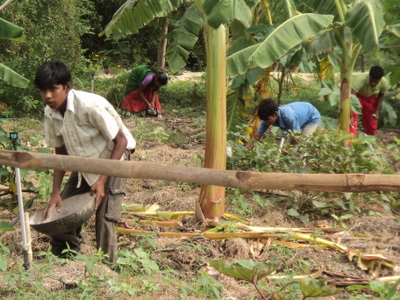
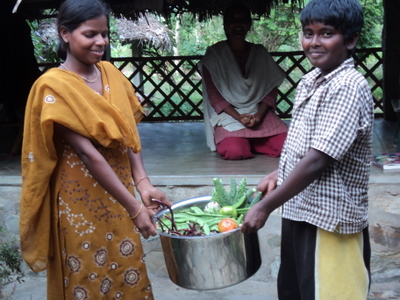
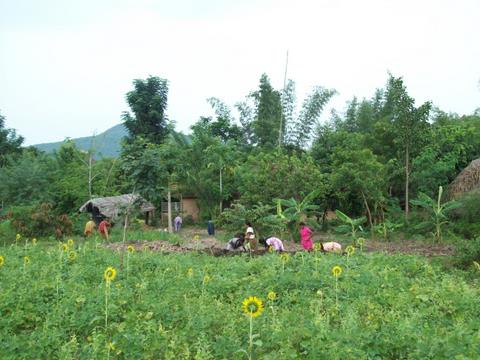
The year 2012 started well with the campus looking very green, lush and prosperous! The organic farming group were at their enthusiastic best and had worked hard transforming the campus. Our animal family grew in January. We had 3 mother cows and four calves! Coriander, cowpea, rice, Horse gram, black gram and ragi were planted in the present campus and the new campus. The white flowers of coriander were like a beautiful and delicately woven white carpet!

Pongal Celebrations

Pongal celebrations in the valley are always heartwarming. It is a time of visiting all our students’ homes, interacting and festivity. This year, since we had more cows in Thulir, we had a Mattu pongal pooja in Thulir itself. This is a thanksgiving festival for the cows and the students did it in the traditional way. All the decorations and offerings were of natural flowers and plants!

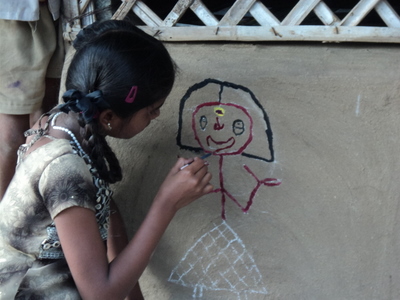
We also had the kolam festival just before Pongal.The staff from the hospital and Thulir and all the students participated. Soon the walls and all the floors around the buildings were a collage of colours, designs and creativity!

January was also a month of harvests and team work.Our yield last year was not as good as the previous year though.

HIV AIDS Workshop

Julie and Jpaul , a couple working with HIV infected children in Namakkal, conducted a HIV/AIDS workshop for all our senior students and staff in January.

Manoharan

This year was a sad year for Thulir and us personally as we lost a very good friend and colleague, Manoharan, to cancer. Manoharan was the person who urged us to register Thulir as a Trust. He had taken on the role of Managing Trustee.We are still recovering from his loss. In the meantime, Dr.Shylaja Devi Menon has kindly agreed to be the managing trustee and another close friend and colleague Dr. yogananda has joined the Board of Trustees.

Classes in the Government school

The government High school in Sittilingi had got computers, projector and some laboratory materials for Chemistry and physics.The teachers were not familiar with the things and were unable to use them. So they asked us to help. Through the academic year, June 2011 to may 2012, we conducted sessions for classes 6 to 10. We conducted chemistry and Physics experiments, we showed them good documentaries on our planet, space and wildlife etc. Sri. Ravikumar and Ms. Kavitha of Rishi valley school and Dr. Yasmin of CFL, Bangalore guided us with the experiments. While at the school we noticed the difference between the children coming to Thulir and the others who don’t attend.We have always wondered how effective our evening classes were and whether they made a difference at all. We always feel these children have a long way to go and have so many more things to learn.At the government school we were able to perceive that the Thulir children were more confident, had more exposure and knew more things.This was heartening to know.

In June the headmaster and many of the cooperative teachers were transferred. So we have been unable to go and take classes. We hope to establish a rapport with the new staff and continue these classes with the children as soon as possible.

Guests and workshops

Katrin Jansen from Germany conducted a workshop on Ninjitsu and another on body awareness and its impact on the mind for all the young teachers in February.She also demonstrated playing the Japanese flute Shikuhachi. We never imagined that sitting in a remote village like Sittilingi we would get to see/ hear/ learn about all this!

Dr. padma, an opthalmologist and Dr. Paul, a surgeon from C.M.C Vellore visited us with their first year MBBS students for a week in April. Dr.Padma’s class on basic eye care for the students was a lesson not only on eyecare but on good interactive teaching! She also checked students’ visions and identified students with problems.We have to send them To her hospital for follow up treatment. The Questions which came up during the interactive session between the Thulir students and the medical students were very interesting. It was an exposure and eyeopener for both sides.

T.Jayashree and Gayatri Devadasan from Bangalore conducted a photography and video workshop first in January and again in April. The senior students have each made power point presentations of their impressions of a day in Thulir. They have also recorded their impressions of themselves and Thulir.

Arvind Gupta and Suneetha visited us for a weekend in May. Arvind Gupta’s hands- on workshop in 1992 in Gandhigram was the spark which inspired the two of us to work with children and education! So meeting the two of them and interacting with them closely was an inspiring and rejuvenating experience for us. As he was not very well, we invited only a small group the next morning, but Arvind held them engrossed for almost 4 hours making toys!

Anita Vargheese From Keystone visited in July and talked to the older about their knowledge of the local forests and plant species and the importance of documenting this knowledge for the younger and later generations. She was impressed by their knowledge but they don’t value it or consider it knowledge. She initiated them into documentation. They have started this work but it is yet to gain momentum.

Workshops For adolescents

Preethi, a young homeopath from Payir, Thuraiyur,volunteered here the initial part of the year. She taught the children Tamil folk songs and some basic bharathanatyam dance. Anu and Preethi also visited the Local Government school and conducted special sessions for adolescent girls aged 13 – 15 on women’s health and adolescent issues during Feb/ March/ April. This was a fantastic learning experience for both sides. We had always thought that in villages adolescent health and sexual issues are discussed very frankly and openly and that girls would be familiar with the changes occurring in their bodies. But we were surprised to know that with TV and alcohol occupying all the adult’s time, middle class morality and modesty taking over and superstitions oppressing the children they had no one to turn to with their questions, fears and doubts. So we were overwhelmed with their response.

Subsequently, we did a 2 week long life skills workshop for both adolescent boys and girls in Thulir.The topics of discussions included understanding oneself, clarifying one’s needs and wants, values, communication, listening, relationships etc. These were not lecture sessions but were interactive and sharing sessions; exploring and clarifying with no right or wrong positions or tests. All of them felt these sessions were very important and necessary especially because..

Psychological problems and attempted/ actual suicides have become a significant problem among the youth here. Maybe the rapidly changing society around them (changes which happened over generations in our families are happening here within a decade) breaking down of traditional community ties, new and mixed messages from media etc. and the general change happening in our country could be factors. We had one former basic technology student coming back to Thulir with acute psychosis. He had initially come to Thulir as a dropout. With great perseverance and effort he had learnt many things , went back to school and finished class 12. He was good in masonry, electrical work and craft work. But our society looking down on work with hands and valuing cerebral work more caused his family to put enormous pressure on him to join a college in Salem to graduate in Math, which he was never good at. He couldn’t cope with it and came back to us a complete wreck! It was a very difficult month for us trying to convince his entire community that he was not possessed by the ghost of the boy who died in the stream some years ago but was sick and had to be treated in a hospital. Finally with the help of our doctor friends and Dr. Anna of C.M.C, Vellore, he was treated and is improving now. He is just one example.

Forums and support groups and mentors for young people to discuss their problems and maybe workshops for parents seem to be a necessity now.

Health classes

Randall, a young doctor working in The Tribal Health Initiative , Sittilingi conducted sessions on oral hygiene, basic hygiene, ill effects of tobacco, good nutrition etc. on many Friday evenings through the year. Along with the senior students and Anu he put up some plays on these topics for the evening children. On one brainstorming session on Health, the children came up with almost 60 varied questions on the body and Health. Randall and the other new young doctors of the hospital have agreed to answer all these questions over the next months through classes, discussions , video and other media.

Arrivals/ Departures

Theerthagiri, Ajit kumar and Parthiban finished their year with us successfully and went on to join class 11 in Coimbatore and Kottapatti respectively. Chandramathi had already gone to join the diploma in nursing course started at THI. Jaganathan, Raman and Thirupathi were taken out prematurely by their families as they felt that the stipend of Rs. 1000 per month at Thulir was not sufficient to pay their debts. Many families in the village have started building concrete houses as part of a Government scheme. The money given by the government is barely enough for the sizes and it also doesn’t reach them fully after all the bribes along the route. Families also tend to think that since they are building once in a lifetime they should build properly and end up piling expenses and loans taken at exorbitant interest rates.They then want their teenage sons to go to Kerala where there is a demand for unskilled labour at Rs. 500 per day. So the stipend of Rs. 1000 per month at Thulir seems abysmally low. It is a real pity because all three of them are very bright, motivated and talented boys and if they had stayed for another year they would have learnt some skill properly and could have gone out and worked as a skilled person.

Jayabal, Danapal and Parameswaran are still here. Sakthivel has come back,very confident and mature after a very fruitful and meaningful training at vanya and Goutham’s and has joined as staff. He is showing great enthusiasm in teaching the younger children. He is clearly inspired by the teachers at Sita school.

Kalpana,one of the cooks in the Thulir kitchen was attacked by her cow and injured and so stopped working. Saroja has joined in her place. Chidambaram, Ambika, Vijayakumari, Lakshmi and Sasikala have joined in the new academic year. Vijayakumari has now gone on a maternity break.

Organic Farming Enterprise

Senthil, Jayapal, Danapal and jaganathan started the organic farming and Dairy project as a business enterprise. The idea was that they would do it for at least a year, keep regular records of work, keep regular accounts of income and expenditure and see if it is a viable proposition or not. They started out with great energy and enthusiasm and teamwork. It was truly amazing to see them work.But unfortunately nature played foul with them this year! The period March to August was the hottest we have ever experienced here. We also had no rain after the end December2011 Thane cyclone till the middle of August. There was absolutely no grass for the cows. The price and demand of paddy straw rose up and they could only get it with great difficulty. One calf died.The two of us were preoccupied with Manoharan’s illness and passing away tt we could not give them adequate mental support..With all this, two boys dropped out. Raman joined in. They continued inspite of the hardships though. They bought hens and started rearing them. A new cowshed and hen house were built. The bio gas was working well and the operation of it has also been regularised over the year. Raman too dropped out in June. Senthil and Danapal are still holding on.A bad monsoon did not allow them to plant the regular pulses and cereals in both June and September. The ragi crop of June failed completely.They have now planted coriander and Channa. The northeast monsoon, which is the main source of water for us, has been very inadequate. Our land which looked very green and prosperous at the beginning of the year already is dry and parched in December. We’ll have to wait and see how 2013 fares! But it has been a great learning and growing-up experience for the boys. They have managed to keep all their accounts and records on Tally. We will upload them separately.

Parents’ meeting

Through April and May we had a number of informal meetings and discussions about Thulir’s role in Education and the needs felt by the parents especially the staff of the hospital with Regi, Lalitha and the hospital staff. In June, we had a long meeting. Three couples wanted us to help them teach their 3 year old children and asked if we could keep them in Thulir during the day. There were many other requests which amounted to interventions in education right from the age of 3 to 21!

We have to work on these requests slowly. Our main constraint is trained, willing and motivated manpower to handle all this. We need a group here even to think about this, plan and provide direction before the actual execution. The two of us are too busy with the actual day to day administration, management and teaching, to take time to plan, discuss and decide. We hence decided not to take a fresh batch of adolescents for the basic technology course in July 2012 in order to give ourselves some breathing space to think and plan for the future.

Balwadi

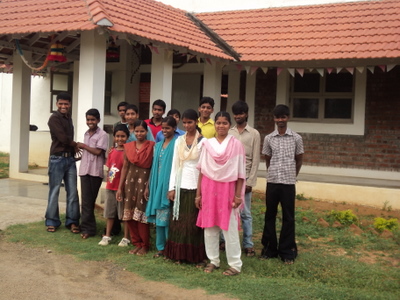
The Thulir campus has been enlivened by four fresh, energetic lively 2 1/2 to 3 year olds! All girls! This has resulted from the parents’ meeting. This is a new development! We decided to open the ‘Kutty Thulir’ for just the children of the staff this year. We have two young married girls, Lakshmi and Sasikala, enthusiastic and eager to learn, to handle this section. Professor Ravindran has generously agreed for us to use his courtyard space for the balwadi. We are busy helping the children feel at home and helping their natural learning instincts bloom while training the teachers to find the right balance between letting them free to flower naturally and engaging them in creative activities

Yercaud Trip

The entire village was agog with excitement as children prepared to go on a trip with us to Yercaud. We haven’t taken the younger children on a trip for quite a few years now and this has been a long drawn demand from them. We didn’t expect so much excitement though! Parents and children were awake and ready from 3.30am and on the road for the hired buses to come at 5am. As luck would have it there was a stray group of elephants on the forest road to Kottapatti( An unheard of event in this area) and the buses were delayed by an hour! But everyone waited patiently and except for the widespread motion sickness all 50 children and 10 adults enjoyed the trip, especially the zoo parks in Salem enormously!

Sita School Visit

Jane and Santhosh brought a group of students and teachers from Sita School for 3, 4 days in the beginning of August. Jane has always been a source of quiet inspiration, friendship and support to us. Santhosh is the person behind the Marathon running in Thulir and a good friend of the entire Thulir team. So it was a great pleasure having them here and interacting with them. Sakthivel was well known to the Sita school students and he played host very beautifully and was a bridge connecting the two groups. Each group taught the other crafts they knew and they worked well together.

Wedding Bells

Theerthammal got married in August and left Thulir to her husband’s village near Thiruvannamalai. We miss her gentle and smiling presence.

Senthil and Rajammal, once our students and now the senior most staff of Thulir got married in September amidst great excitement. All of us were busy with this for the entire week. They continue to work here.

Best wishes to all of them for a meaningful and happy married life.

Sports Days

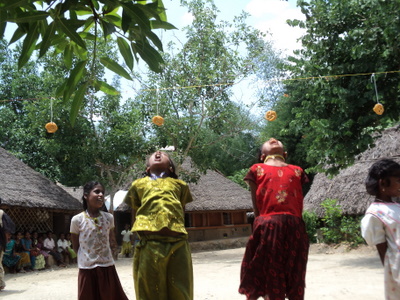
We had three sports days this calendar year! One in March, one in October organised by the Thulir team and, one in December organised by Rolf and Susan. All of us enjoyed them hugely and the students of course would even like to have one every month.

Quiz

We had a quiz in Thulir for the first time this year for the under 13 year olds. Since this was the first time, we kept writng sample questions on the black boards for a week before the event and children were encouraged to do research or ask someone and find answers! We were very happy with the response, the intense search for information and to see our encyclopedia and other such books being used!

Evening Classes

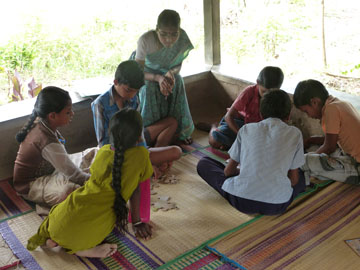
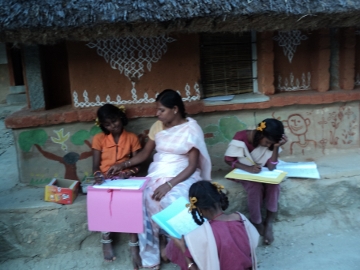
The evening classes have been going on more enthusiastically and are well attended. 190 children attended and used Thulir from June 2011 to May 2012. The children coming in the evening are of various groups. There is a faithful group which comes most working days and which wants to learn subjects with some continuity. They would have at least 75 percent attendance.There is another group which comes on holidays and random days to use the books , Art materials, puzzles etc. There are some who come in for specific needs- to prepare for an exam or competition or to get something explained. We sometimes call in groups for fixed camps. In 2012, Sakthivel, Chidambaram, Senthil, Ambika have joined Rajammal, Devaki and Anu to teach the children in the evenings. So each of us has a group and we also have sessions for planning and learning what we would teach each of the groups. What we plan to teach depends on what the learner has asked to be taught. so one has to start from what they know and what they need to know. Most times they come to us saying, ” I didn’t understand this, please teach me this” . The students follow the Tamilnadu samacheer kalvi system in their school. so we have to teach the same, but we might use other methods to make sure the learner has understood. We use activities and experiments to make the topic more interesting. But because of the limited time we have we definitely can not cover the entire syllabus. We have to do a balance of what the child asks for and what we feel a child pf that class ought to know.Attendance is not compulsory, so our numbers vary from 15 to 60 each day.

Tests And Evaluations

This has always been a source of questioning and exploring for us. We are not a formal school and the government school children are not with us full time. But we would like to get a feedback on how effective we are and also gauge the progress of each child. We do have tests and worksheets from time to time when the child asks for it and is eager to participate in the evaluation. But our time with them is so limited, we have so much to share and they have come to us after 8 hours of school and tests that we are not able to have them regularly. We have tried various ways over the years! This year on Anita. B’s suggestion we have started files for individual students where we file all the work the child does. So at the end of each academic year, the child and us can assess what the child has done over the year,even though this leaves out all the oral or practical work, games, songs , dances etc. We also from time to time ask them to evaluate Thulir.

Exchanges with Marudham Farm school

We have an ongoing and meaningful exchange programme with the Marudham farm School. Teachers from both schools have been visiting each other over the year. In September, Poornima brought a group of students and teachers to Thulir. Both groups went trekking together, swam in the stream, taught each other many songs and dances and had a very good interaction.

In December, Marudham School invited a group of us for their craft week. Anu and all the young women teachers attended. Meeting similar minded people doing great work, learning various crafts like palm leaf weaving, making masks, embroidery, theatre etc. was energising.

Classes for nursing students

The hospital is conducting a diploma course on nursing from last year. They have seven students now. They come here once a week for classes on general awareness, life skills, environment etc. and also to use the resources at Thulir.

Participation in Running events

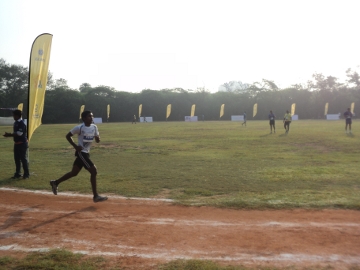
At the beginning of the year it seemed as if interest in running was waning in Thulir. Fewer students participated and they were not very regular in their training. But still over the year they participated in the Auroville, Cauvery and Chennai marathons. But as the year ends interest in running has reached a new high with many younger boys-10 to 15 year olds- joining in. They are very enthusiastic about their training schedule and most days come to Thulir before dawn, and sit around a fire waiting for daylight and their seniors to arrive! The seniors, especially Parameswaran aAnd Chidambaram have taken responsibility for their training and are discharging it admirably. They are all preparing for the Auroville marathon in February.

Cycle trips

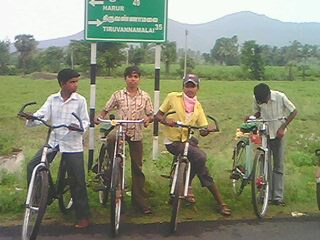
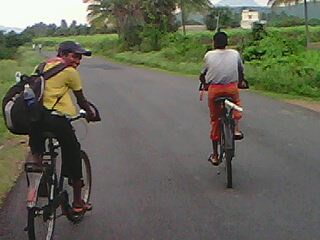
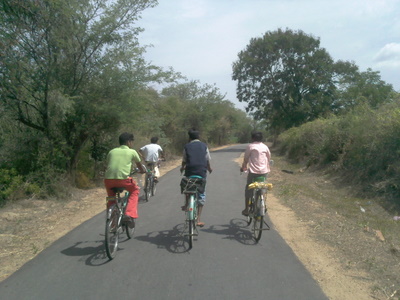
The older boys continued their long distance cycling trips. They cycled to Payir, Thenur in June.Their cycles are old and worn out. But they carry their tool kits and repair them on the run.

Volunteers in Thulir

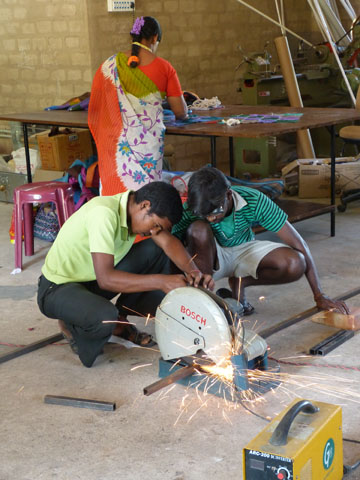
Florence From France and Rolf and Susan from Switzerland volunteered in Thulir towards the end of 2012. Florence was here for 4 weeks and taught English classes for both the staff and older and younger students.She talked to the students about France. Rolf and Susan were here for 6 weeks. Rolf taught carpentry, metal work and metal bracing to the students. From him the students learnt how to be systematic and organised about work. Susan continued Florence’s English classes introducing new activities and Games. By the end of their stay, the entire group’s confidence in English speaking had grown enormously. They could communicate with ease in English. Both of them did other activities as well, cooking European dishes for everyone, Showing pictures about Switzerland and talking about it, organising Games etc. We thoroughly enjoyed having all three of them here. They will be writing separately about their experience here.

Reviving Traditional Art

The older music, theatre and other art in this valley has long been over shadowed by cinema music and TV. There are only a few remnants. We have been trying for a long time to get older people who know this to come and teach the young at Thulir. Finally at the end of this year, Vellachi Ammal from Thekkanampet agreed to come and teach. We were apprehensive whether students would find her music ‘cool’ and we kept talking to them beforehand and preparing them. We also decided to keep the teenagers away for the first session as they might not be interested. But as she started singing all the children started keeping beat unconsciously and soon the teenagers too drifted in,shoved their cellphones in front of her as if she were a celebrity and started recording the songs. 50 children from age 3 to 23 remained singing and learning for 3 hours!

2012 ended and 2013 began in Thulir with this music, a meeting of old and new and a hopeful note!

Thanking you all for remaining by us and supporting us and wishing you all a happy, peaceful and meaningful New year,

Anu and Krishna

******************
 

Posted in Newsletters | Tagged | Comments closed

List of full time Life skills students

Updated  Oct 2012

2004- 2005.

1. Vediyappan- s/o kanagaraj, sittilingi
2. Satya, Devaraj, Malaithangi

Students of the Basic Technology Course in 2006-2007

3. Senthil.S s/o samikannu
4. Balamurugan – s/o kanagaraj
5. Mohan – s/o Chinnayyan, Sittilingi
6. Perumal s/o annamalai Nammangadu
7. Jairam , Nammangadu
8. Madhu , S Dhadampatti
9. Satish, s/o  Imayavalli, Sittilingi Thanda

The 2007-2008 batch

10. Rajammal- d/o samikannu, Moolasittilingi
11. Devagi- d/o Sadayan, Moolasittilingi
12. Krishnan-  s/o Samikannu, Moolasittilingi
13. Sangeetha,  nammangadu
14. Sangeetha d/o S chellamuthu, Thennagar
15. Nirmala- Velanur
16. Daivanai- d/o Palani, Malkaithangi
17. Chinraj- s/o Palani, Malaithangi
18. Chitra- d/o Annathurai, Moolasittilingi
19. Arul- s/o ponnan, malaithangi
20. Ilavarasi  d/o Mani, Sittilingi
21. Priya-  d/o Kulandiayan, Sittilingi
22. Vignesh- s/o  Ramayee, Sittilingi

2008-2009

23. Vinu ,s/o Kullan, Wayanad, Kerala
24. Ezhumalai s/o sadaiyan, Moolasittilingi
25. Govindammal- s/o Rajendran, Moolasittilingi

2009-2010 batch

26. Venkatachalapathy, s/o chinnasamy , moolasittilingi
27. Vijayakumar, s/o Thankgamani, Sittilingi
28. Sakthivel, s/o Manikkam,Moolasittilingi
29. Jayabal, S/o Mayilsamy, Moolasittilingi
30. Chinnadurai, s/o Ponnusamy, Sittilingi
31. Kumar, s/o Annamalai, Moolasittilingi
32. Theerthammal, D/o Krishnan, Moolasittilingi
33. Santhashivam, Ponnani village, Gudalur, Nilgiris
34. Srikanth, s/o Rajagopal, Ponnani, Gudalur, Nilgiris
35. Velayudam, Ponnani village, Gudalur, Nilgiris

2010 -2011 Batch

36. Raja, Nammngadu village
37. Ramamurthy, s/o Raman, Nammangadu
38. Parameswaran, s/o Rajamanikkam, Moolasittilingi
39. Chandramathy, d/o Ramanan, Sittilingi
40. Sathyaraj, s/o Dhanabal, Sittilingi

2011-12
Batch

41. Theerthagiri, s/o Kulandayan, Sittilingi
42. Prashanth, s/o Theerthan, Sittilingi
43. Ajith kumar, s/o Arumugam, Sittilingi
44. Raman, s/o Dharuman, Aruvangadu
45. Dhanabal, S/o Manikkam, MoolaSittilingi
46. Jagannathan, s/o Kullan, Moolasittilingi
47. Thirupathy, s/o Ponnuswamy, Sittilingi
48. Parthiban, s/o Jayashankar, Malaithangi
49. Eeswari, Koraiyar village
50. Rajathi, Malaithangi

2012-13 Batch

51. Chidambaram, s/o Annamalai, Sittilingi
52. Vijayakumari, d/o Selvam, Sittilingi
53. Ambika, d/o Krishnan, Sittilingi
54. Lakshmi, d/o Arumugam, Sitilingi
55. Sasikala, w/o Shiva, Sittilingi
[19 female students  and 36 male students]


Posted in Alumni | Comments closed

Anita Balasubramaniam’s Reflections on Thulir

Anita Balasubramaniam has been a regular visitor to Thulir since 2004.She has been closely following activities at Thulir all these years. Following her visit thie year, we requested her to reflect and share her thoughts on Thulir. Here is her response. We would be happy to hear your thoughts and responses too.. so please do leave comments!

Anita Balasubramaniam’s Reflections on Thulir

Satish and I first visited Sittilingi in 2003 as Anu and Krishna were doing the initial surveys and planning before starting Thulir; and we recently visited them in June 2012 with Nidhi, our two and half year old for a few days. During one conversation, Anu wondered if I would do a write-up for their website considering that I have “seen” Thulir grow from a baby to entering it’s Ninth year! And I agreed to. So here it is.

From the time I visited them in 2003 to now, Satish and I have tried to visit Sittilingi, or meet Anu and Krishna in Chennai almost every year at least once. We have built a personal relationship with them and have learned a lot from them – on parenting, education, and life in general. As I began to write this I went back to read the report I had sent to Asha after our very first visit in 2003 (>>First site visit Report). Thulir has grown by leaps and bounds on the land that Anu and Krishna bought jointly with their friends and in the last year they have purchased land nearby specifically for Thulir’s activities as well. You can read all about the updates and activities at Thulir on their blog. I am not going to repeat them here. Here I share my thoughts and views on where I think Thulir is now, from where it started and where it can go.

When Thulir started, Anu and Krishna were hesitant to start a school (>> read about it here). They chose to start a resource center that could “have various activities and reach out to more number of children, school going, out of school etc.” and also “involve the youth in various ways – helping with the activities of the center, training sessions for the youth on various livelihood skills etc.”

In my view, Thulir has been able to create such a space where children and youths can come and participate in different activities. Not any space, but a vibrant learning space for the children who come in the evenings, after school. The beauty of this environment is that there is no force or pressure on the children who come here. The adults offer whatever they have and can and children are free to make what they want of it. And it is okay to be doing nothing as well. Not everyone has to participate in the song, balloon making, painting, or origami sessions. Everyday unfolds in a different way and there is no “schedule.” Consequently, children who do come on any given day are engrossed in whatever it is that they are doing (including observing others) individually or in a group.

In their work with youths too, Anu and Krishna have been able to create a space that is supportive, welcoming, and embracing. The period during adolescence is sensitive and vulnerable in many ways with the emotional and physical changes. Youths often go through strong feelings, much confusion, and encounter myths about several aspects of emotional and physical changes (from people and media)! Anu and Krishna recognize this and find ways to support youths in a multitude of ways during these years. To say they are counseling the youths who come to Thulir would be an understatement just as it would be too much to say that they are in a parenting role. But watching their interactions with youths and to see how it has supported so many youths over the last 7 years, it is clear that there are aspects of parenting, counseling, training, and so on that is involved in their work with youths. It is no wonder that youths drop in any time of the day to have a chat with them about what is happening in their lives or simply to spend time at Thulir. Others have begun to take more responsibility for specific activities at Thulir as well.

Another thing that happens in such a space is the indirect or subconscious learning. I share an example from my recent visit that will clarify what I am saying. Bharathi has been with Thulir since it began and he was 4 years old then. After joining the nearby government school when he turned 6, he has continued to come to Thulir in the evenings. One evening during this visit, I noticed Bharathi leading three or four groups of children for preparing a story-telling show using puppets. He was extremely creative in how he interacted with the children, giving them suggestions but never imposing them, gently guiding, and monitoring their work. It was a pleasure to see him in this role and observe how he handled it with so much care and ease! What I saw with him speaks to the possibility of how children learn from watching the adults around them (specifically Anu and Krishna, but also others who visit Thulir) interact with children and youths. The voice of these adults becomes children’s inner voice as they subconsciously make it their own. I am not suggesting that every child or youth does what Bharathi did, but that the possibilities for learning through imitation exist because of the environment and the adults in the space who treat children with respect, care, and interest – just as you and I would like to be treated by others.

I think there is much to learn from Thulir’s experience and here are a few specific areas that Anu and Krishna can take up next, reflect more on and write about to share their learning with everyone. First, some kind of a formative assessment for children who come to Thulir in the evening would be good. This need not be very rigid or done by Anu and Krishna, but can be a self-assessment by the children once every six months. Each child can have a portfolio/file where they keep track of what they have done or read. Over time children can feel a sense of ownership, it will reflect the ways in which children are growing, and become a part of Thulir’s documentation work.

Second, if Anu and Krishna can reflect on the various ways in which they support youths during their stay at thulir (helping them prepare for exams, training, counseling, listening, etc etc.) and write about each aspect in greater detail – what it involves, the challenges, the possibilities and so on. And third, over the next few years, youths living at Thulir can be guided/supported to become independent in their decision making and take increased responsibility for their livelihoods. Based on conversations with Anu and Krishna, I think some efforts are already underway in this direction, but Thulir can keep this as one of the aims/goals for the next 3-5 years with respect to their work with youth. For example, can those interested in organic farming, actually go and intern (for a few months to a year) with a farmer in the area, now that there is a co-operative of organic farmers in the Sittlingi Valley?

Being around for so many children and youth is definitely not an easy task, especially when they want to come and stay even when Thulir is supposed to be “closed.” In that sense Thulir has been able to create a space that it set out to for youths and children. Over the next 3-5 years at Thulir, it would be important to find ways to let the youths “fly away” with a lot of confidence and clarity and make their life and living.

*****************
Posted in Reflections | Comments closed

Newsletter — August to November 2011

Mural on the wall

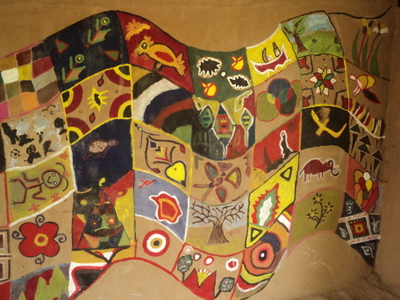
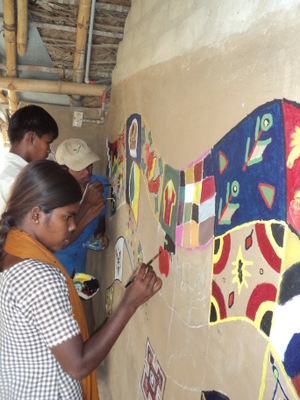
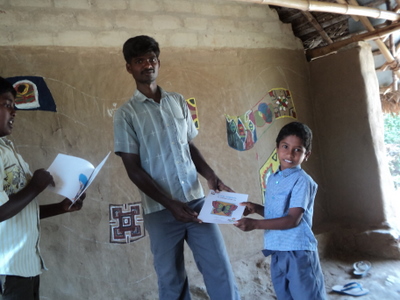
This year the staff and students decided to make a large mural on the wall at the Entrance Lobby of Thulir. This became and interesting project where we made a collage of different individual pieces, so everybody got to paint a portion! New Batch joins Theerthagiri, Jasgannathan, Dhanabalan, Ajit, Gomati and Prasanth joined us this year in August. Sathya, Jayabal and Parameswaran decided to continue. So has Sakthivel who continues his training in Bangalore.

Smokeless chulha [firewood stove]

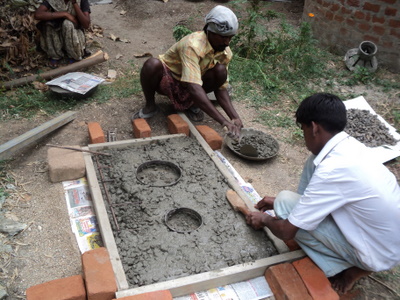
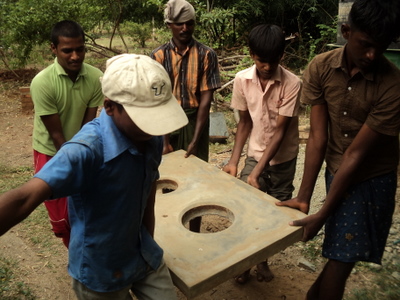
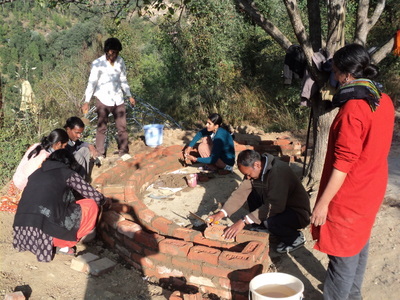
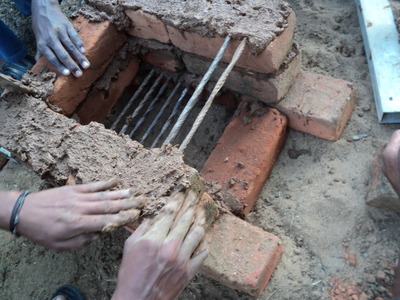
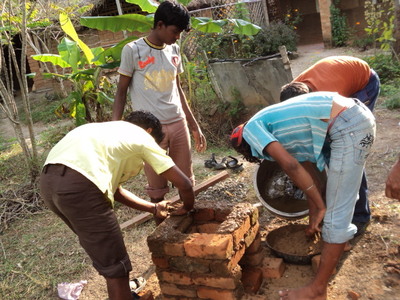
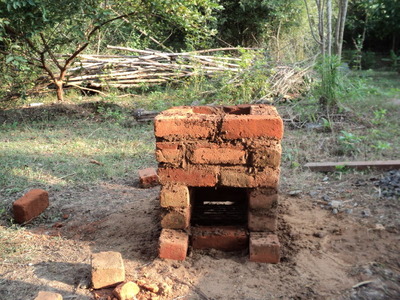
The old mud chulha we have been using in the kitchen need to be replaced and we built a new one using a RCC stove top. This became a good opportunity for our students to learn concrete molding and also in construction of a smokeless firewood stove.


Biogas

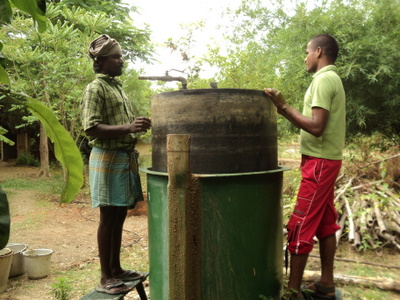
The Tribal Health Initiative donated a fiberglass made Biogas reactor, to produce gas for cooking. We decided to use it on an experimental basis, charging it with Cow dung, to learn the technology. We hope to scale it up when our dairy project takes off to provide for most of the cooking energy in our kitchen.

Wash area Construction

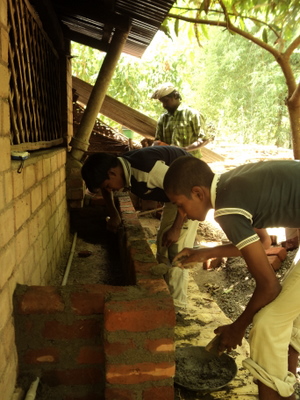
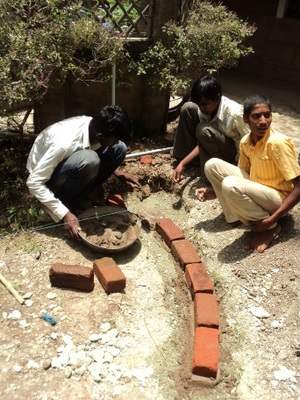
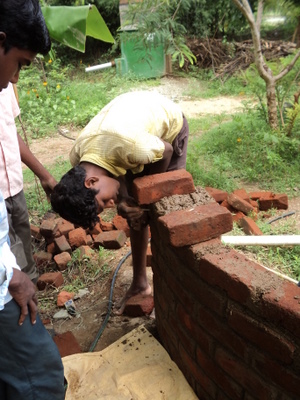
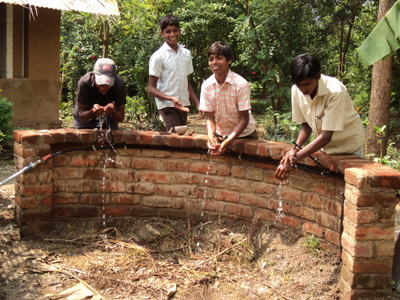
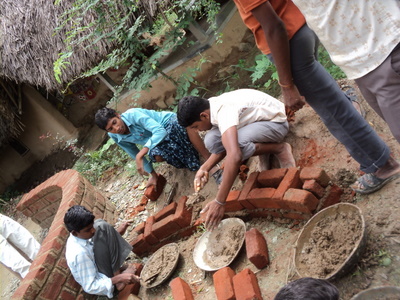
A new water conserving/ recycling outdoor Wash Area needed to be built and we thought it is a good opportunity for the new Batch to learn basics of masonry. The wash area consists of a simple wall , a drip irrigation pipes based plumbing [to regulate and lessen water coming out] and a simple mulch bed with Banana and Canah plants where the waste water is absorbed.


Lavanya and Gautham’s visit

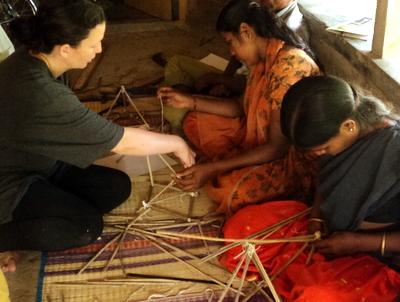
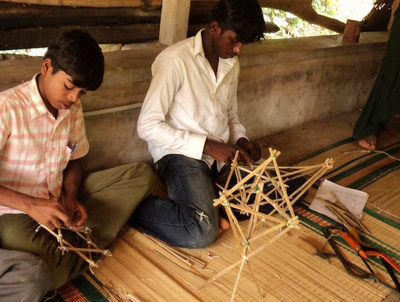
Lavanya and Gautham visited us in September. They have a Wood Wokshop in Bangalore where they design and make furniture. Sakhtivel is currently being trained by them. They did sessions where they taught making of lampshades using split bamboo frames and wrapping with paper.

Exposure tour to  Kattaikkuttu Gurukulam  Kanchipuram

The Thulir Seniors went on an Exposure tour to the Kattaikkuttu Gurukulam near Kanchipuram. The School, a residential one, trains children in the traditional theater form of Kattaikkuttu and the students put up professional performances. It was a very inspiring experience. The school tries to balance formal academic learning with very serious, high quality training in Kattaikuttu. The apprentices group [made of former students of the Gurukula], conducted a session for our students and also demonstrated Kattaikuttu performance. Thulir students, taught paper folding, and soap making to the Gurukulam students. Though initially the students were shy, and it took a while to break the ice, once they started interacting, it became difficult for them to part when time came to say goodbyes. We hope to continue interactions for mutual benefits. From Kanchipuram, the students also visited Mahabalipuram to see the famous archaeological monuments and to go the Beach [a novelty for us living in an inland valley with mountains around]. The Kattaikuttu Gurukulam, kindly arranged for their vehicle for this trip and we are grateful.

Students leaving/ joining:

In October, Sathya and Gomathi stopped attending Thulir due to financial problems at home and so have gone for agricultural contract labour. Both have said they would like to rejoin after a few months when their contract gets over. Meanwhile, Parthibhan a regular in our evening sessions, underwent major surgery and so is out of school. He is joining Thulir for the rest fo this academic year as a full timer. Raman, a new student is also joining as we write this newsletter!

Outdoor Seating area

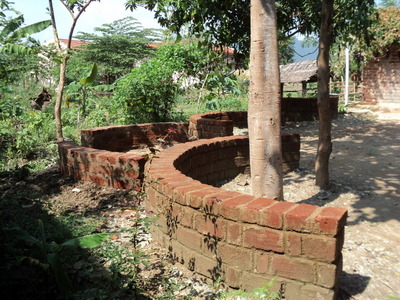
Encouraged by the wash area construction, there was enthusiasm to continue. So a project to build another wash area [this time for the evening class children to use] and also seats under the trees in the Thulir Courtyard, were taken up.

Work on land

The organic garden work continued and a nice circular vegetable patch with Permaculture beds took shape. In the months of October and November, this provided quite a bit of vegetables to our kitchen, not enough to replace all our purchases but hopefully enough to spur us on to produce more!!

Cycling/ Running

A cycle tour to Sattanur Dam [about 60 kms away] was organized for the new batch boys as an introduction to long distance bicycle tours. In September, 6 of our students participated in the Kaveri Trail Marathon [2 of them did half marathons and the rest 10 km]. This has been a regular event Thulir Students have been participating over the years.

In November, the new batch students went to Bangalore to participate in a running event organized for the Karnataka Spastics Society. As has become a regular feature, they stayed at Ananya School. Sanjeev organized a day long Electronics workshop at his office [Read his report for details and pics].

Visit to Chirag school

Anu and Krishna visited Chirag School in Nainital District of Uttarakhand. It was an opportunity to Interact with the staff and understand the curriculum and methods of teaching the School follows. A 3 day building construction workshop for class 4 and 5 students and teachers was conducted during this visit. A small outdoor seating area was built and basics of arch building were demonstrated.

This visit was made possible by Prof Ravindran, Vanajakka and Balaji. Prof Ravindran and Vanajaakka were in Sittilingi during this time and took classes for the students. Prof. took classes in basics of Plumbing, units and measurements, while Vanajakka took Tamil classes. Balaji, also kindly volunteered to be in Thulir and take classes for the students. He wrote a report on his visit. [Read his Report]

The New Organic Farming Project

In October, Senthil and three of our students, proposed a project of Dairy and organic farming to the rest of Thulir. They wanted Thulir to make an investment in purchase of cows and some minimal facilities [like cow shed]. They would look after the cows, and also all the pieces of land around Thulir and in the new campus. They would do it outside of the Thulir class hours [mostly in the mornings and evenings and on holidays. The idea is to see how much income can be generated through these efforts and to learn organic farming techniques. The produce and the milk would be purchased by the Thulir Kitchen [so we get to eat home grown organic food!]. Over many sessions, the whole team brainstormed and a financial proposal was worked out to see what sort of investments needed to be made and also what possible income could be generated. The exercise yielded a positive picture, and we felt this was worth giving a try to increase our own understanding of organic Farming practice. The project started by mid October and since end October the four of them have started living in the campus and looking after the Cow and the 2 calves we already have. Efforts are on to purchase a second cow [of native breed, so it is taking some time].

************
Posted in Newsletters | Comments closed

Newsletter — April to July 2011

Class 10 exams, and an interesting Workshop

April is the month for public exams and 3 girls and 5 boys wrote the class 10 exams.

In April, Jeyaprakash, an Architect friend took a two day workshop along with Yedendra Srinivasan , on using the 3D modelling software “Sketch up” and on Data visualising techniques. Jeyaprakash after doing an introductory presentation, took us through a demo of how to use the Software. This was followed by a day long session where students got an opportunity to try the software — initially following step by step instruction and then branching off to explore various possibilities with the models they were working on.

Yedendra showed how we can link the disparate data we have gathered for instance, weather data and attendance in Thulir, and visualise it in a manner that is easy to see patterns/ relationships.

Learning to Repair Motors and more Electronics

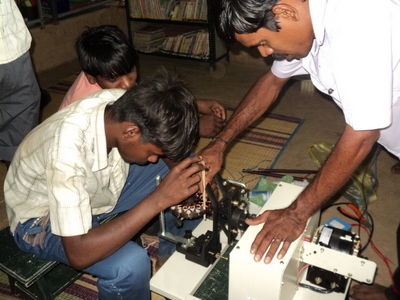
In May, there was a workshop on motor winding and repairing for the senior batch. Visiting Resource persons from Chennai, Mr Anand , Mr Karthikeyan and Prof. Ravindran taught the students. Ramasubramanian and Sanjeev took theory classes on the basics of Electricity and motors for both the batches.

Sanjeev did an intensive course for the girls and the junior batch on electronics, computers and building several exciting circuits. He also taught them  to do several projects using the programme called Scratch.

We took a summer break from May 15th to June 1st.

Start of a new academic year and our Seniors graduate and move on

In June, it was our annual ritual of repairing / repainting  Thulir buildings. The mud walls and floors were re-plastered and repainted  wherever required. The field had to be ploughed to get it ready for the next sowing season. The Permaculture beds needed some attention. It was also time for us to plan activities for the coming year.

In June the results of the class 10 exams came out. All the seniors who appeared had passed.It was time for them to move on to the next stage of learning . So we started exploring options for each individual student according to their preferences and aptitude.

Sakhtivel had already gone to Bangalore to learn wood working skills from Vanya and Goutham in January.He liked the experience and wanted to continue.

Srikanth finished his training in wood craft from Vanya and Goutham. He went back to Gudalur and has started making learning aids in wood at Vidyodaya school.

Kumar felt it was time for him to take on a job in Sittilingi. He was clear that he did not want to go for any further education/ training outside. He has joined the TTI [Tribal Technology Initiative] workshop in Sittilingi on a full time job. He has also learnt Tailoring and has been stitching clothes for the villagers. There is a need for a specialist Tailor for the crafts initiative in Sittilingi(Porgai) and they are now trying to arrange further training for him.

Theerthammal decided to join Thulir as a staff. In the past months she has been quietly taking on minor responsibilities. Devagi and Rajammal are training her in the management of the Thulir Kitchen.

Chandramathi wanted to go outside and pursue further studies, but her family was reluctant to send her away alone to an unknown place. We talked to them and helped her to apply for a course in Medical Lab Technician at Gudalur, a place and institution we are familiar with, and which we thought the parents might find agreeable. But after securing admission, on the last hour her parents changed their mind. She is now applying for a nursing course at the Sittilingi hospital.

Jayabal, has also joined Sakhtivel in Bangalore to undergo a similar training in wood work under Vanya and Goutham. Since he is inclined towards art and craft work, we hope he will benefit immensely from this exposure. He is very young and might find being away from home a bit of a challenge, though.

Perumal, Ezhumalai and Chinnadurai wanted to look at further education possibilities. We contacted several places to search for vocational certification, as all three of them are very good at vocational skills. We located Govt. ITIs nearby where they could apply. Perumal has a flair for electronics.So we  thought Perumal may benefit from a spell at a company where he could learn more electronics related skills; Sanjeev contacted a company in Bangalore where he could apply for an apprenticeship.

The education scenario at Sittilingi valley is changing rapidly these last few years. In 2004, students finishing class 10 was a rarity. In the last three years, more  and more students have finished class 12. The number of students going outside to join college has increased. The trend in the past few years is to do BSc Math with the idea of doing a B Ed then and applying for a Govt Teacher’s job in future. People look down upon vocational skills. This line of reasoning says any vocational based training like ITIs or even a Diploma in Engineering is not good.

So, after looking at the possibilities and after talking to many people, all three of them have joined the Kottapatti Govt. School to study Science. This being nearby they can stay at home and commute; and so help in the family Farm. This also has local approval, as the Village thinks BSc [preferably BSc Math] with BEd is the way to go!

A day long hike


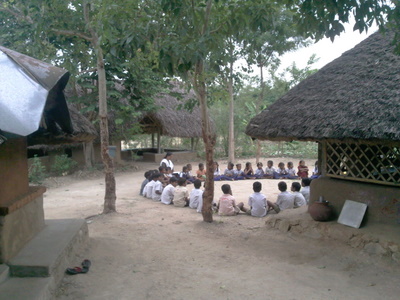
Endowed with a beautiful location, we try to walk into the hills to enjoy the forests that surround us.It is an occasion to show the students that we respect their knowledge of plants and forests and to show them how much we appreciate the beauty of their homeland.They too love being outside but very often they take all this for granted. We hope to see a feeling of pride and ownership of the natural resources and the need to conserve them, growing among our students.

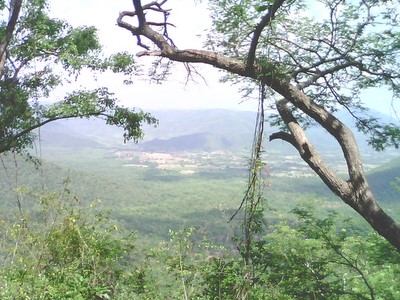
On Saturday the 2nd, the younger children took us to a viewpoint rock on a hill nearby.We were quite out of breadth trying to keep up with them!! In some places on the rock face they would whiz past the thorny bushes whereas we grown ups had to crawl on all fours under the bushes! On Sunday the 3rd, the older students and staff took off on a day long trek to a waterfall high up on a ridge on the Sitheri hills. From there the view of our valley was incredible!

Sports Day

After the first sports day held last year which turned out to be an event everybody enjoyed, we thought we should hold one this year. So on July 9th and 10th we held Sport  events. It was very similar to last year — having more or less the same events. This year we lacked enough volunteer power to clear up our neighbour’s land and make tracks etc., so decided to hold the events in the Thulir play ground itself. There was a festive atmosphere and a lot of fun. Many children, even those who don’t come regularly to Thulir, participated. This year too we gifted a book to all the 60 participants.

Interactions with the Government School

We have been always interacting with the students of the Government schools as almost all the children who come to Thulir in the evenings go to the Government school. But the children who come from far away villages and have to take a bus back have been unable to come here. We have conducted some science experiments for them earlier but were unable to do anything for them regularly due to various reasons. The present Head Master has been aware of our work and has requested us to take some science, computer and General awareness classes there. So we have started going there once or twice a week. There has been a good response so far. He has also been sending students to Thulir to learn Basketball from Siddharth, who is home on holidays.

A Cycle trip

On 18th July, the older boys and Siddharth went cycling to Theerthamalai- about 70 km totally. They enjoyed themselves thoroughly. The sky was overcast and the Weather pleasant, making it ideal for the trip.

As always, we look forward to your comments and feedback!!

************
Posted in Newsletters | 11 Comments

Newsletter Oct. 2010 to Mar. 2011

Transformation of Thulir Campus.

As we write this, a pair of Golden Orioles are singing away merrily on the tree outside the window. There is a cool breeze which is surprising for March and welcome shade under the trees.

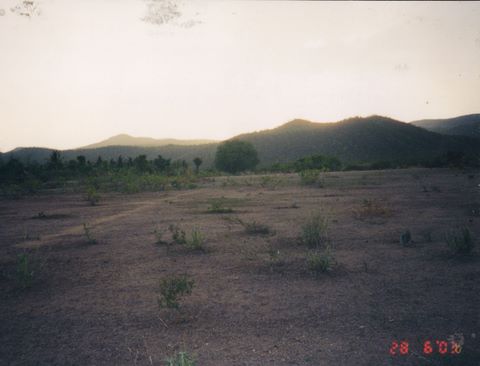
What a change in the last seven years! When we shifted to this land in March 2004, it was completely brown, bare and overgrazed. There was no grass, let alone, shrubs, trees or birds. Coming from lush, fertile Nilgiris to this hot, dusty and barren land was very difficult for our children and us. We now look back to those first few months of digging contour bunds to conserve rain water, digging pits for the trees, getting mulch material from neighbouring fields, planting slowly, ….. It was hard work, and in the initial years we had to do it alone. Slowly the Thulir community has grown and now there are plenty of hands to share the land work. Nature has been kind to us — plants have grown, trees are bigger, the bamboo bushes have grown back, weaver birds nest here, so do Bulbuls, White breasted water hen, Tailor birds, Robins, etc.; and many other birds visit. Looking back, regenerating this land has been the most satisfying part of our work here.

The land in 2004

In 2010 !

Land Work / Organic agriculture

What started as tentative steps in learning organic farming methods has taken better shape in the last few months. Slowly the area under cultivation and also variety of crops and methods have increased.

Our efforts got a great boost this year when Shri Nammalvar, a well known proponent of organic and natural farming, and a great teacher visited us on two occasions in January and February. The interactions on site and theory classes were an energising experience. This has greatly increased our team’s confidence and resolve.

Shri Nammalvar taking a class.

Subsequently, most of our students and staff visited Vanagam, a demonstration Farm set up by Shri Nammalvar and his colleagues to teach organic and natural farming. Inspired, students have come back and prepared circular permaculture beds for vegetables.

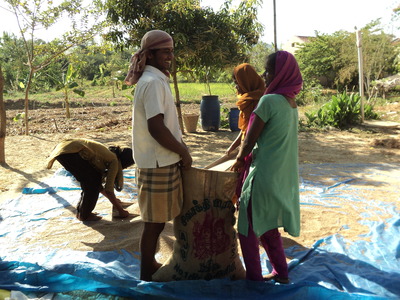
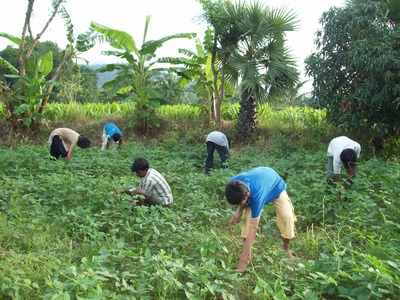
In Sept. of last year, we had planted a mix of horse gram, cow pea and black gram in the new land we purchased for Thulir. By end Jan the crops were ready for Harvest. The team started work early in the mornings on the harvest and this turned out to be an exercise of great fun. The hard morning’s work was always followed by extended swimming / bathing sessions in the stream. We have a good harvest and visitors to Thulir this year can taste dishes made of these pulses!

In Jan we prepared a plot in the Thulir campus for planting of Ragi. On one half we transplanted the saplings the traditional way and in another, we made raised beds and planted single sapling with larger spacing of 12 inches. As we write this, the former is ready for harvest, and we hope to harvest it this week.

Horse gram, Cow pea and Black gram being threshed.

filling up the sacksand filling up our sacks!

Exposure Trip to Pune and Pabal

In October, Sanjeev and Anita accompanied our senior students and staff on an exposure trip to Pune and around. They visited Vigyan Ashram, Pabal, near Pune; Science Centre at IUCCA, Pune; and an Army Service Corps campus at Pune. On the way back they participated in the running event at Ananya school, Bangalore. Not only Anita and Sanjeev, but also Sanjeev’s mother, sister and uncle spent time and effort to make this a memorable trip for the students.

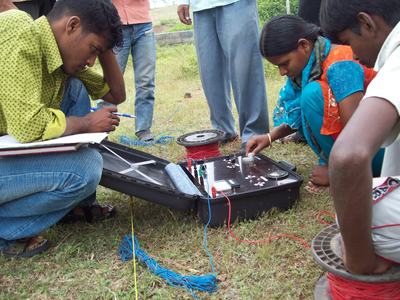
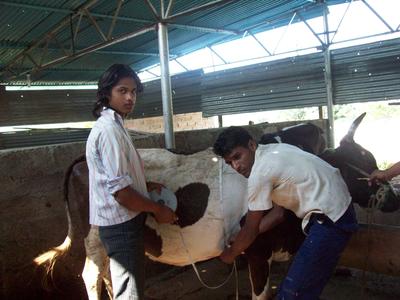
At Vigyan Ashram, they split into smaller groups and learnt a variety of activities including use of Earth Resistivity Meter to predict water availability below ground; soil and water testing; basic animal husbandry skills etc.

using ERMLearning to use the Earth Resistivity Meter.

Measuring of Cow to record Health status.

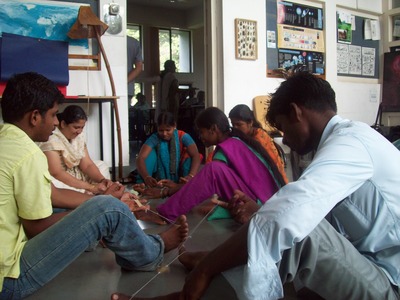
At the IUCCA, Shri Arvind Gupta and his team demonstrated making of science toys.

Learning to make toys.

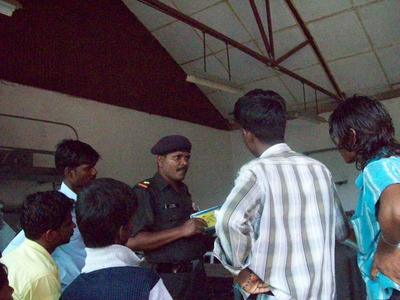
At the Army base, they saw a museum of old machines that the Army used, besides visiting the workshops and training facilities.

At the Army Base.

Exposure trip to Isai ambalam school, Auroville

Rajammal, Devaki and Theerthammal help teach the younger students in the evenings.We had always wanted them to visit other alternative schools, interact with good teachers and get exposed to various teaching methods. Therefore it was an important opportunity when Sanjeev and Anita took them to visit Isai ambalam school at Auroville in November. Shri Subhash and the teachers there warmly and patiently demonstrated their teaching methods to them. They also visited a few other units at Auroville.

Centre for Learning , Bangalore, students visit Thulir.

In December, a group of 8 students and 2 teachers from Centre for Learning, Bangalore visited Thulir for a week. This was the first time such an event with urban school children was organised in Thulir. We had many doubts as to whether cultural differences, language etc. would come in the way of meaningful interaction. We organised a series of sessions where each group taught the other new skills. Slowly, students got to know each other, and started to enjoy the sessions and each others company. Sadly, soon, it was time to leave !! We hope to have more such visits in future.

De-weeding at the Black gram plot.

A sketching session under progress.

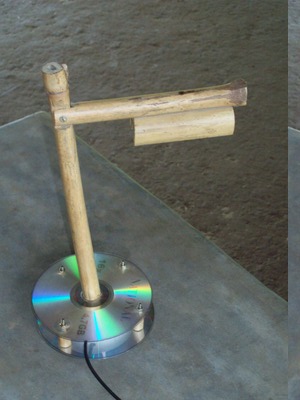
An LED reading lamp that was made during the week.

Building a Battery room with a vaulted roof

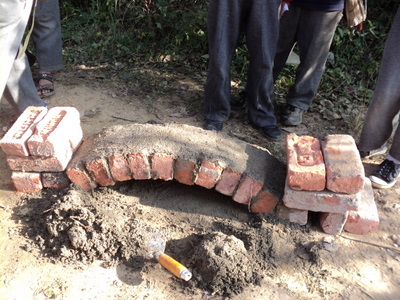
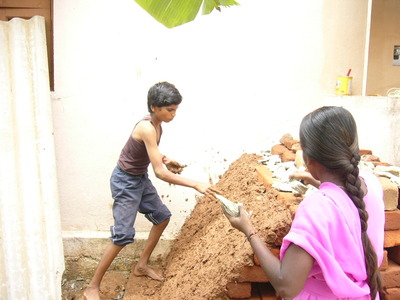
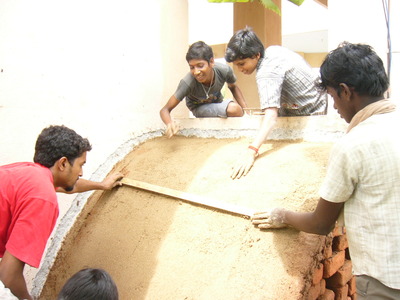
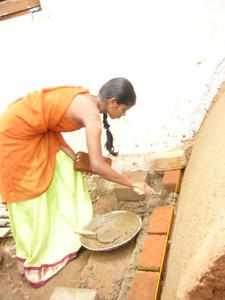
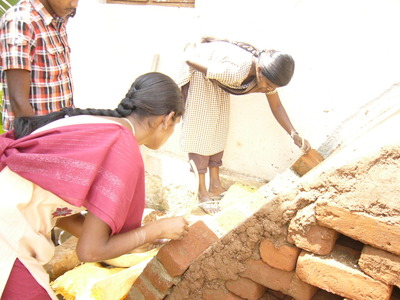
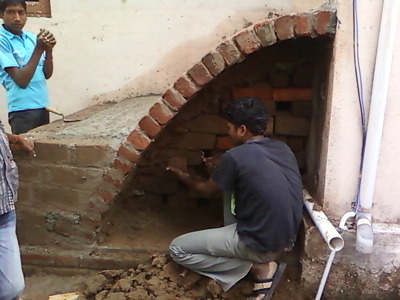
The junior batch’s exercise in learning masonry was to build a small Battery room. We built this using a catenary vault using burnt brick and cement mortar.

Preparing the temporary support for the vault.

Top surface being smoothened with wet sand.

The first courses being built.

The vault coming up.

Finally the support being removed.

Evening Classes

The evening classes continue regularly. The students, mostly girls are an enthusiastic, eager and highly vocal group. They learn quickly and with great interest. Now a days, Jayabal too has started teaching them. Initially Ravi and now Sanjeev, have been taking computer classes for them.

Long distance Bicycling

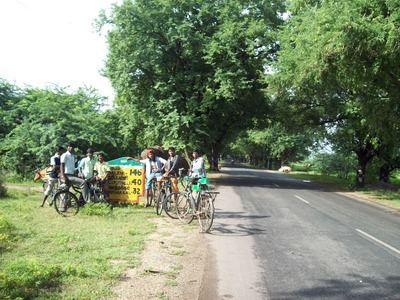
Ever since Balaji visited Thulir travelling on his bicycle long distance, our students have been fascinated by the idea. They started with short trips to Kottapatti and Thumbal [10 kms and 20 kms away respectively] on weekly holidays, on their bicycles. Then they tried Vazhapady [45 kms away]. Soon they did Salem [80 kms away] — a return trip on a single day! The first major trip came when they travelled last year to Gingee fort. They cycled 105 kms the first day and stopped near Gingee for the night. They visited the famous fort there, had lunch, cycled back through the evening and night and reached home at dawn, exhausted but happy!

near ThiruvannamalaiThe team near Thiruvannamalai on Karthigai day

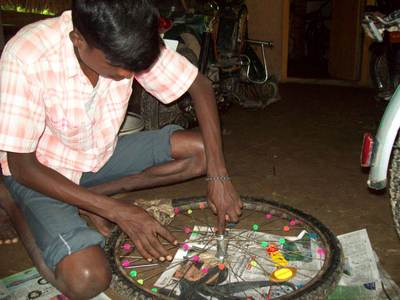
getting cycles readyMuch preparation goes on before a trip!

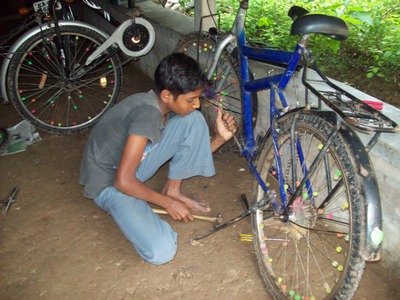
getting cycles ready

This year, on Karthigai Deepam, an important festival day in Thiruvannamalai [80 kms from Sittilingi] , a group from Thulir cycled to see the famed Deepam. On the way they took a detour to visit Sattanur Dam.

During the Pongal break in Januray, our team went on a 3 day trip to Hoggenekkal, which is 135 kms away. They stopped en route at Puvidham Learning Centre.

Getting ambitious, now they want to do longer distances. Balaji is working on organising a cycle tour in the coming months which will take them to more distant places. So far, they have been using old bicycles donated to Thulir. These are not ideally suited for long distance travel and are usually in very bad condition. Our trips so far required elaborate servicing of the bicycles before starting and quite a bit of repairs on the way [which our enthusiastic group carries out on the way, as they usually travel with their tool kit!]

Meetings/Conferences hosted

The beginning of January saw all of us in Thulir preparing to host two major meetings here. This was again a ‘first’ for us. Since we have the bare minimum of facilities here and access to logistics difficult we were apprehensive whether the participants would be comfortable, etc. We had the conference of the Fellows of Asha from the 4th to the 7th of January. Fifteen participants came together for 3 days and we had meaningful interactions.

The next occasion was the network meeting of people involved in Alternative education.This annual meeting has always been a source of strength and inspiration for us and we were happy to host it this year. We initially expected around 40 participants. Finally 27 people attended the meeting from January 27th to 30th. We needn’t have had any apprehensions; the Thulir team rallied together to play hosts; the kitchen team churned out their best; all the participants adjusted cheerfully to our organisational lapses; the friendship, humour, sensitivity, caring, bonding and spirit of sharing of the whole group made the meeting a memorable and inspirational one !

Improved firewood Stove for Hot water

As part of the preparation for the meetings, we decided to build a stove for making hot water for the guests.

stove 1

stove 2

stove 3

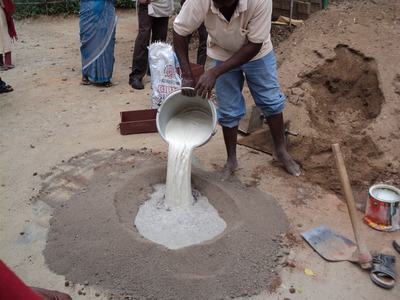
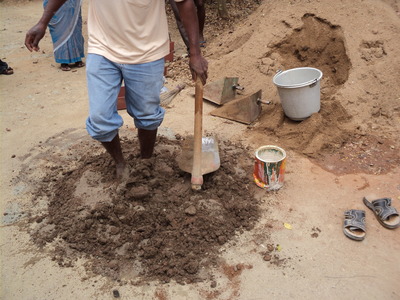
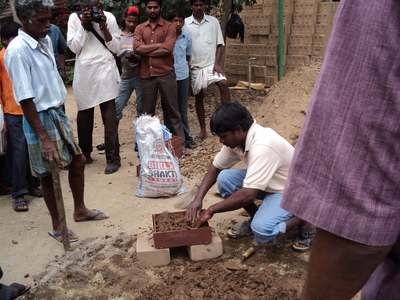
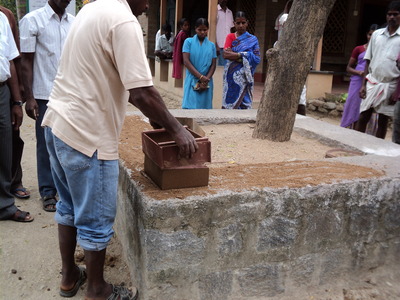
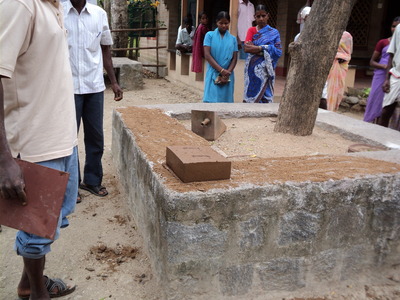
Stabilised Adobe Training Programme

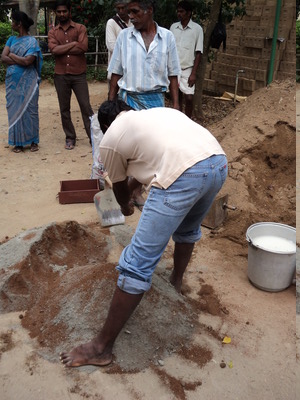
Adobe refers to hand moulded mud bricks that are usually sun dried and used in constructing walls. This is a very old and simple technology. Dr Yogananda from Bangalore has now come up with an improved process for making Cement and Lime stabilized Adobe. We organised a training programme to introduce this method in Sittilingi Valley. Thulir students along with local villagers participated in the Programme.

Stabilised adobe 1mixing soil, sand and cement

Stabilised adobe 2Adding slaked lime [lime water].

Stabilised adobe 3Pugging [mixing with stamping of feet …. the most important part]. Caution! – use boots and gloves to protect from lime burning skin!

Stabilised adobe 4The mix is filled into a steel mould.

Stabilised adobe 5Ejecting the Block out of the mould.

Stabilised adobe 6The finished Block …. Now has to be cured with water for 3 weeks.

Apprenticeship.

We have been exploring avenues and oppurtunities for our senior students to have further specialised training in their specific area of interest. We were therefore very happy and grateful when Vanya and Gautham offered to train Srikanth and Sakthivel in wood carving at their Workshop in Silvepura, Bangalore. Vanya and Gautham have very generously taken Srikanth and Sakthivel into their home and lives for the last 6 months, spent enormous amounts of time and effort looking after them and teaching them ‘ to think with their hands’. Santhosh’s continuing interaction with them has been of great help.

Similarly, Manoharan from ACCORD, Gudalur has taken Senthil under his care and tutelage from January and is training him in crucial administration and computer skills. Senthil has grown hugely in skills and confidence , thanks to Manoharan.

Village Survey

The Tribal Health Initiative has started a new free health scheme for the senior citizens of the valley. They were hence doing a village to village survey of all old people. Our students too participated and helped them in this survey.

Five students took part in a theatre workshop conducted by Sri. Arumugam from Krishnagiri at THI.

Marathon running

Santhosh continues to guide and co-ordinate the training schedules for long distance running of our students. Balaji continues to help by looking after our students whenever they travel to participate in running events. There have been some breaks in our team’s training for running, mainly due to the fact that there is an increase in Farming activities — both at Thulir and at home, as there is labour shortage in the village. Small groups, have been taking part in several events — the Ananya school run, Bangalore ultra, and Auroville marathon. We need to better organise and integrate running into our schedule in the coming months.

Public Exams

As we write this some of our students are writing the Tamil Nadu state board class x exams as external candidates.

***************************
Posted in Newsletters | 4 Comments

Evaluation by Students 2010

We recently had a round of evaluations of Thulir both by the smaller children and the young adults.During the first round of evaluation the following people were present – Teenagers group of 10 students [the present senior batch], Perumal, Rajammal, Devagi, Senthil, Ravi, Anu and Krishna.The object was mainly to get a feedback of students’ opinions, confidence, skills gained etc.

This was a session of group discussions interspersed with a few questions which everybody answered anonymously in writing. The answers were read out .

The background of this was that in May many students from sittilingi got their std.10 and std.12 results. This year saw a significant number from Sittilingi finishing their class 12 . Many of them came to Thulir for help in applying for higher studies. The prevailing mood in the village is that everybody should apply for engineering or BSc. (Math). All these students look down at the Basic technology course students as failures. So we thought the morale in Thulir was low.

We started the session by going over our objectives in running the course viz.

– to give them self-confidence

– give them skills to lead an independent, and satisfied life

The students then listed thulir’s contributions towards achieving this,viz;

money

materials

resource people

education

Then a series of questions were put to them —

What do the students give Thulir in return ?”

Their response was that they give back the following:

Work – both for the functioning of Thulir and project work

Cooperation – with Thulir and with each other

Self- iscipline

Learn and teach others thereby helping with Thulir’s objectives

If we give each one of you money and ask you to earn a living on your own in the village , would you be able to ? Are you confident to do so ?”

Answers from all present except 3- Yes [83percent]-

This was a great surprise to us. We had expected them to say we need more education, we need support, skills, etc. In the discussion that followed many of them expressed the view that if the same question had been asked them a year ago, their answer would have been in the negative.This one year of the course had helped them say yes with confidence.

Would you like to work alone on your own or would you like to work as a group with some of your batch mates here? Which do you think will work better?”

All of them answered that they would like to work as a group and they felt that would definitely work better.

They were then split into groups and asked to enumerate what they would do to earn a living and lead an independent life.

Answers-

Group 1

Farming

Construction contracts

Group 2

Organic farming

Electrical wiring

Furniture- need to learn more

Teaching – need to learn more

Craft work – need help with marketing

Group 3

Electronics

Electrical wiring

Group 4


Electrical wiring

Organic farming

Construction

This listing gave the whole group a lot of confidence and this was plainly visible.

What skills do we require to succeed in each of these jobs?”

Wiring was taken as an example; and the following was listed as something they have to learn;

Planning

Estimating

Names of components

Quality/ rating of components etc.

Rates

Quantity of labour

Ability to write about the work done/ Record progress

Costing

Ability to talk to strangers

What does a family in the village spend money on normally?”

36 items were listed .

There was then a discussion as to whether one could survive in the village doing just one job or whether a combination of jobs was required? The groups had already answered this question when each had listed a combination of jobs to survive.

Test for Thulir

[Evaluation by the teenagers- Thirteen students were given a questionnaire which they filled anonymously.]

Question 1.- What did you learn in Thulir?

They listed the following:

  • Basic Maths
  • To talk to new people
  • To read some English
  • To read and write Tamil
  • organic farming
  • to make torches
  • bee keeping
  • To make soap
  • Wiring
  • to build
  • to draw plans
  • To estimate
  • Table lamps
  • ceiling lamp
  • lamp shades
  • welding
  • Calculations and costing in organic farming
  • plumbing
  • some computer work
  • to repair cycles
  • Cooperation and working together
  • Division and multiplication
  • To measure with a tape
  • To measure with a multi meter
  • To repair motors
  • Calculation of area of land

Question 2.- You had some expectations of learning before you joined Thulir. Did you learn more than that , less than that or as much as you expected?

More than I expected- 12

As much as I expected- 1

Question 3.- Do you understand the way things are taught in Thulir?

Yes 11

No 0

Okay 2

Question 4.- What you learn here is

Useful- 12

Not useful-0

Moderately useful-1

Question 5.- When compared to school the learning in Thulir is

more 13

less 0

the same 0

Question 6. – To improve teaching / learning in Thulir we need

More practical classes 11

More theory classes 2

    Question 7.- Are these classes necessary?

[the following list was provided and each had to list the things they felt is necessary and list those they think is not necessary]

Activity – necessary


Sports 6

Vocations 10

Art 8

English 6

Maths 7

Music 6

Dance 2

Farming 5

General knowledge 5

Discussions 5

Craft 7

None of them listed any of the activity as not necessary.

Question 8.- I would like to be taught the following things further… list

The following is the summary of the activities that came out of the responses.

a. Electrical Wiring

b. Welding

c. Operating different machines

d.Tailoring

e. Computer

f. Maths

g. Tamil

h. General knowledge

Question 9.- In thulir, we need to be more

strict- 6

not strict-4

don’t know- 3

Question 10 – Should we continue conducting this course?

a. Yes 13

b. No o

Question 11.- In your opinion Thulir has

failed in its task 0

succeeded in its task 13

Question 12 .- I award the following marks to Thulir

Average score from 13 students — 76%

—————————————-

Test for Thulir

(with the children of the evening batch)


What have you learnt in Thulir?

It was heartening to note that most children listed reading books and mathematics as the first activity. This has never been the topmost activity in earlier years. Learning through handling materials, activity based learning was always viewed as play and the children would list ‘playing’ as the first activity.

The other activities listed are playing, stories, songs, art, craft, talking to new people, learning about new places, etc.

What did you like in Thulir?

Most children have said that they like Thulir, the place itself and the people in Thulir. Many have said that they like reading books, listening to stories and doing mathematics here.

What don’t you like?

One or two have said that they don’t like the older boys take over the playground and play . A couple of children have said that there is nothing about Thulir they don’t like.
But, most children have misinterpreted the question as ‘what they don’t like generally’ and have said that they don’t like to fight or use bad language.


Is the evening snack provided in Thulir necessary or not?

Everyone has said that they like the evening snack.

Will you come to Thulir even if the snack is not given?

[These questions were for us to find out if the children were coming to Thulir just for the snack or were coming for something more…]

Everyone has said that they would come even if the snack is not given.

Would you like to have sessions on all days?

[We presently have sessions from Tue through Sat.]

Everyone has said that they would like to have sessions everyday, except Sundays. [In earlier years we have had demands to have sessions on all days. With free TV in every house they want to watch TV on Sundays. They would like a session on Mondays.]
Should we teach only from the school textbooks and dispense with other general activities we do?

The unanimous answer is “No, please do both – but don’t teach like at school”.
Should we hit children to correct them as in school?

[We had a doubt that some parents and children might be expecting the above two and perhaps some kids were forced to drop out as this was not happening.]

Everybody has said “please don’t hit and continue to teach us kindly and patiently”.

Should we be stricter at Thulir?

“No” from most children – 4 have said “a little more strict”. A few children have written that when corrected patiently they respond and adhere to rules better.

Do you understand what is being taught in Thulir?

Everyone has said that  they understand well. A few have said that they understand better than in school.

Some students have dropped out – do you know the reason why they have done so?

Reasons cited for the children dropping out or being absent now and then
a.Sickness
b.Fear of ghost believed to be residing in the house on the way to Thulir
c.Agricultural work
d.Parents stopping them at home for work or for looking after younger children

Should we make attendance compulsory?

No

Should written work be given everyday?

Half the kids wanted written work, while the other didn’t want it and wanted a mix of activities.

In your opinion, is Thulir succeeding in what it has set out to do?

Everyone has certified that Thulir has succeeded.

Marks awarded by you….

Most children have awarded 100% to Thulir, some have given one thousand, a lakh [hundred thousand], etc.

Posted in Evaluation | Leave a comment

Reflections – 2010

On April 14th, the Tamil New year day, in 2004, we inaugurated the Thulir Learning Centre at Sittilingi. It is more than 6 years since then, and we thought it is a good time now to reflect back and share our journey so far.

In the initial years, there were many periods of frustration. We started our work with the 10-14 age group of mainly school going children. We started with after school classes in the evenings and also during the day on weekends. The appalling level of academic skills among the children seemed quite insurmountable. We found that the children in spite of having spent 5 years or more in school hadn’t learnt basics and were more keen to get into rote learning to tackle exams. Though some of them could read, their ability to comprehend text was poor. We were keen to get their basic skills corrected. It was a struggle. We couldn’t see where we were going. “Were we making any progress at all?” was a constant question in our minds. Our limitation in terms of Humans Resources, space, lack of adequate time to spend with children seemed huge.

Along with the school going children, we slowly started working with teenage children who had opted out of schools too. With them we started working full time.They were in a similar situation. In addition, having spent more years in school and having failed exams, they had a huge block towards reading and writing. But they also believed that passing the 10th public exam was an important qualification they ought to possess.

But now after 6 years we feel most positive. We can now see tangible improvements and growth in our students. Some of our students who have gone out, come back in the holidays and actually list the benefits they have got from spending time at Thulir. We realise now that enormous patience is needed for educators. And for doing education work! In the initial years we expected too much improvement in too short a time. It takes quite some time for something to take root, branch and flower in a person’s life. It is so unlike building construction or health work, where results are visible in a comparatively short span of time … a few days or months.

We notice that our students who have been coming to Thulir for 3 years or more are generally more confident, not afraid to talk to outsiders and are more aware of things happening around the world. These were children who were afraid to talk even to us, who thought their “country” was Tamil Nadu and asked whether America was a vegetable [“Ka’ in Tamil is a suffix to most vegetables names]

The older children [who came to us full time] had a great fear of reading when they came to us. They now read the Tamil Newspaper regularly, but read other books only if they are required to do so. They do not pick up books to read for the sake of reading and enjoying. But the children who came to us from a younger age are enormously interested in books and want to read them.

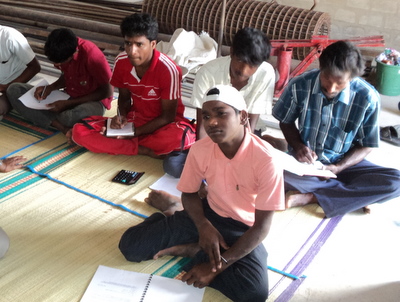
Our work with the older age group children has been one of trying various different approaches. While academic class room sessions have been very frustrating [they all seem to have a well developed ability to automatically switch off the moment a concept becomes difficult], sessions that involved working with hands seemed to be more welcome. We started with simple tasks that needed to be done around in the campus — from gardening to laying water pipelines to some electrical wiring work. We slowly expanded to doing masonry, some electronics work, bamboo craft etc. . The students showed enthusiasm and seemed comfortable. Of course, in a group, we also found that different individuals were enthusiastic about different types of tasks — so someone showed interest / was a natural in Masonry while another was good at and enjoyed electronics, while someone else was happy in the garden and could grow plants seemingly effortlessly.

The students did not see this as education, and so we did not push them into very in depth and repetitive learning of skills, as normal vocational training is done.

For years we have been trying to strike a balance between academic sessions and hands on work sessions for this group of students. We want both flexibility to respond to each student’s needs but also some organisation so that learning is smooth. It is difficult and we have been trying various combinations, and are yet to decide on the ideal.

There has been yet another important area of learning. This is the time we spend talking/ counselling/ discussing various issues we feel are important. Issues about teenage/ adolescence; about growing up and relationships with older people; relationships between genders; changes in the society and the technologies that come in; geography [different places and people]; politics; global issues such as global warming and climate change; taking interest in current events/ news; etc. , etc. .

We found that whatever be the kind of course combination that our students went through, their time in Thulir seemed to have given them self confidence. The result was often unexpected — some of our students who we never thought would be able to handle academic work, went back on their own to the Schools and rejoined to finish public exams. [See appendix on Thulir Alumni].

—The question of ideology / methods of teaching:

We didn’t follow any fixed ideologies in our work so far; we have been open to look at various methods of teaching to see what we could learn in terms of ideas or insights and have tried to use them wherever we felt it was appropriate. We believe that not getting bogged down by methods/ ideologies is important to achieve a sense of freedom for the learner and for creating a right atmosphere to learn. We believe in trying to respond to each child/ individuals specific needs. This is difficult and at times very frustrating; but in the long run rewarding.

—- Our own learning:

We have learnt enormously and grown personally in the last 6 years; and it has been a huge learning experience for us. We have learnt a great many important lessons from the children and the community. Their values of simplicity, ability to live with few material things and a low ecological footprint, modesty, a quiet dignity, ability to learn new things in-spite of great odds stacked against one, Knowledge of forests, plants, living beings, agriculture; total involvement in whatever one does, lack of ego., etc…. continue to amaze and inspire us. Living here and running the centre has meant that we have learnt to do many things required ourselves.So right from cleaning our spaces, toilets, etc…., to dealing with different kinds of people, animals, growing plants and trees to making small repairs to pipes, electrical equipment, teaching etc…., had to be learnt. Though we are not brilliant in any of these skills we have begun to learn quite a range of skills.

“working with hand ” v/s “working with the head”

This is one of the most crucial question which we feel, needs to be addressed by any educator today.

When we started working with older children, we did introduce “hands on work”; but with caution. But over the years we found that they are extremely good, fast and skilful with their hands. They master each skill very fast and once they do that their self confidence grows enormously. This self confidence then spreads to other aspects of their lives – some even tackle academics which they found difficult earlier.Over the last 5 years we have watched around 5 teenagers flower this way. But the community around , though recognising that each of them have improved enormously, still views hands-on work like this as that meant only for failures..

Our mainstream idea of Education is one very partial to ” working with the head”. Also “working with Hand ” has been reduced to very specific skills training in the so called “Vocational” mode. The very word evokes the idea of it being “education for failures”. This of course is consistent with the idea that “white collared work” is more superior and desirable. To make matters worse we also have the historical baggage of our “Caste” system where castes that worked with their heads were at the top of the ladder.

Children from rural/ poor backgrounds are traumatised by their schooling — facing bewildering new academic skills they need to pick up, in schools that have very bad quality teaching and where they are constantly reminded of how poor they are in these skills and abilities. Improving quality of teaching would definitely help. But it can be helped a lot more by providing opportunities in schools for working with hands [a skill they already have/ or find easy to acquire]. This would increase their confidence and help them perform better in acquiring more difficult academic skills. This would also help them in valuing skills they already possess and skills that society badly needs today [the industry –at all levels, be it our local mechanic shop or a multinational corporation –is constantly bemoaning the fact that we don’t have skilled workers].

The reality of is that the hand cannot do any work without involving the head and the head does benefit/ grow with the work done by the hand. The challenge before us is how do we integrate the two as part of our education. This would enhance our overall quality of education for all sections — children of urban, educated classes as well as children who are rural/ poor/ first generation learners. Urban children are not as skilful with their hands as rural children and so introducing this would serve as an equalising factor.

As compared to conventional “vocational” training, the Hands- on work in school level should provide variety of learning opportunities. It should also include real life problems [for instance fixing / repair of things at school and from the community/ homes around; craft work that produces utilitarian items] , apart from art/ craft work which may not be utilitarian. Just as we teach children in schools a range of academic subjects, we need to provide a similar range in “working with Hands” skills too. We find that even at the age of 16 or 17, students are not in a position to choose a vocation, particularly since they haven’t experienced any of the vocations till then. This is another important reason for offering variety, so that they may realise for themselves what various skills involve and which skill/s one is comfortable practising/ has interest in/ or has a natural talent for.

This brings us to a larger question of what “work” means to us as individuals and to us as a society.

Is it merely a means to making a living? Can it be something more? Does it have anything to do with our individual happiness?

How much does the work we do for a living shape they way we look at ourselves, our value to society, our usefulness to our families, and so on. Obviously Society’s prejudices play an important part. So should we go along with it? If society favours IT coolies to farm Coolies, should we encourage students to go along with it? Do we question this as educators?

We clearly see these concerns as the important issues to face now. The way we tackle these; think about these will shape our work in Thulir.

—-Creating Communities:

We have always felt that our work was not only to raise the awareness or to educate people of the local community , but also to raise awareness about the grass roots in our urban middle-class community. We hope to create bridges, in order to build a community of sensitive, just, equitable, like minded, ecologically concerned community of people from all over the world. This is imperative now, given the globalisation of dominant forces – corporate interests, markets etc. .

We are happy that a great many people from various backgrounds and parts of the world have visited, interacted with Thulir, and the Thulir community has grown. A number of people have made significant changes in their lives, and lifestyles and we hope their interactions with Thulir helped them with this transition.

We had hoped for funding support from concerned individuals as against formal institutions. We have been lucky to have found friends even among institutions that support us. The support from Tribal Health Initiative, Asha Princeton Chapter, Asha Bangalore Chapter , Hunnarshaala, and have been crucial in our growth. They have been real partners in our effort and not merely funding agencies. Many Volunteers who came representing their groups have formed valuable friendships with the two of us and with many of the students of Thulir.

Now, we feel our students, after studying in Thulir for some time are in a position to create a community that can provide creative/ learning spaces for others — children from the villages as well as adults from elsewhere around the world.

— Our children, and their education:

We shifted to this remote, new place when our children were 11 and 6 yes old. We were under pressure from ourselves, our children and concerned friends and family with regard to their education. Though we were convinced that we could give them a good educational environment, there were anxious moments during the initial years. Were we being fair to our children?

We were in a totally new environment totally different climate with no house to live in, no organised work or funds. While we had to work on these aspects, we also had to engage our children in a positive, learning mode. They had to make new friends too. It was not easy.

Here too we avoided getting straight jacketed into a narrow definition of “home schooling” or “alternative schooling”. Depending upon the age of our child/ and his current interests at that moment and learning needs; we organised variously home schooling, partially attending Thulir sessions, attending sessions at other alternative small schools for short periods [ranging from weeks to a full term], and joining a boarding school full time [at age 13 when we felt they had outgrown what home/ Thulir could offer them and that they needed to be in a school environment that can provide appropriate peer group/ intellectual stimulus ]

—- Working with the land:

One of the most satisfying aspect of life in Sittiligi the past 6 years has been the opportunity to work on the land and see it transform itself. When we purchased the land, it had been uncared for, for decades and was used as grazing land. The top soil had got washed away and the place was bereft of any trees. Even the shrubs were hard and thorny. The couple of Bamboo clumps at the edges had been cut and torched.

Slowly with building of bunds, digging pits and planting trees, mulching etc., the trees have taken root and grown, shrubs with flowers have come back to the land and now we have a rich fauna of birds, bees, insects, snakes and butterflies.

Also with Thulir student’s increasing interest in organic farming, we are able to now begin growing crops and vegetables, in a small scale.

—- Using alternative technologies:

Moving to Sittilingi was also an opportunity for us to try to build a house using alternative, eco friendly technologies, and use alternative energy sources. Our house with a thatch roof and mud wall has been comfortable to live in, in terms of climatic conditions. We have been surprised at how comfortable it can be compared to conventional modern houses; both during peak summer when there is frequent power cuts and during winters when it can get cold in the nights/ early mornings.

Going Solar for electricity has meant giving up on the Refrigerator, fans in all the rooms, and washing machine. While this needed adjusting to [and sometimes frustrating], there have been positive changes – for eg., almost all our meals are freshly cooked!!, and we have discovered the taste of traditional ways of preserving leftovers – old rice soaked in water overnight and eaten with buttermilk and raw small onions is a family favourite!

—— The Challenges that face us:

We are faced with a traditional Adivasi Community in rapid transition. This has its repercussions often difficult to identify and address.

For example, we have increasing cases of suicides and the causes seem frivolous at first sight. Could there be deeper issues involved?

We can see increasing pressures of mainstream consumerist culture, concept of what constitutes basic needs is rapidly changing with ever increasing need for hard cash.

Increasing emphasis on acquiring degrees and the commercialisation of education and the exploitation this entails.

Farming as a way of life is fast disappearing in the village. This means a loss of traditional knowledge and seeds and even the idea of food self sufficiency at the local community level.

While the villager who has been a farmer should have the choice of changing his vocation/ migrating to the city; can we help those who would like to keep farming .against all the odds stacked against them?

It is not that we have all the answers; our job as we see it is to make people even aware of the situation and how it is affecting the community as a whole. To equip them to begin to analyse and understand what is happening around them and to them. The make independent decisions — not based on any ideology but as a collective decision of common good and of individual freedom.

==============================================

Appendix A — Marathon runnning and Cycling

Sridhar, an Asha Volunteer from Princeton, while visiting Thulir one weekend in 2007, wanted to go for a 8 km run as part of his marathon training. He wondered if someone can help him with the route he can take in Sittilingi. Senthil was given the task of showing him the way and it was suggested he bicycle with Sridhar for the distance. But when Sridhar ran, Senthil decided to run with him and so accompanied him, running barefoot. Sridhar was amazed at the ease with which Senthil could run long distance without any preparation and suggested that he take up training for marathons.

Following this, Santhosh a volunteer in Asha Bangalore , and who was training the Team Asha in Bangalore, helped us with training schedules. He came to Sittilingi with a group of volunteers who were training for a marathon, to do a long run in Sittilingi as part of their training. So our students go to interact with them and also get to observe marathon training and running. This was a good boost to our students, and gradually, more and more took to running. Santhosh has been coaching / training our students and starting with shorter distance [5 to 10km] runs, he has been able to gradually get them to do extend the distances. So we have students who have run full marathons, and a few who have run half marathons and many who have done 10 km runs.

Apart from the regular training in Sittilingi [which provides a healthy activity which doesn’t require too much in terms of facilities[; these events have provided our students a very good opportunity to learn to travel to new places, meet new people and interact with them and to form friendships with Asha Volunteers. For Sittilingi children this is a great learning, given the fact that we are in a remote area, and they seldom get chances for such interactions.

Appendix B — Thulir Alumni

Read this Report on what Thulir Students are doing after studying here, as on April 2010 >>

As always, we would be happy to hear your comments and responses.

**********************************
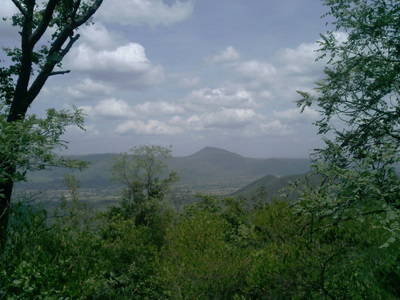
Posted in Reflections | 4 Comments

Report on Alumni

Report on the full time Teenage Students of Thulir -compiled in April,2010.

1. Vediyappan-

was in Thulir from 2004- 2005. While here he rewrote his std.12 exams and passed

worked in Svad-the Sittilingi valley organic farmers association for 2 years. Has

joined a college in Salem to study BA.

2. Satya

She came to Thulir to rewrite some of her class 10 subjects . She is now working in her farm.

Students of the Basic Technology Course in 2006-2007

3. Senthil.S – higher studies – works in Thulir.

Worked in Thulir for a year 2007 to 2008, helping in administration. He worked for short periods in Timbaktu collective and Payir Trust. He with other students did the photo voltaic system installation in a farmhouse in Tumkur.

Went back to school in 2008. Joined std.11 in The Government school in Kottapatti.

He has just written his std.12 exams. He now works in Thulir.

4. Balamurugan – higher studies

Went back to school in 2007. Joined std.10 in the local school. Went on to do his std.11

and 12 in the government school in Kottapatti.

Has just written his class 12 exams.

5. Mohan – Higher studies

Came to Thulir with a very bad heart problem and bad health.

While here he wrote his class 10 exams and passed.With help from Thulir

and Asha he had a valve replacement surgery done at CMC,Vellore. Joined a bible college

at Kolar in 2008.He will be finishing this year and plans to work for the church.

6. Perumal- Works in Thulir

After finishing his course, he started working in Thulir. He finished his class 10 exams. He learnt how to teach the junior batches, administration, driving, accounts and more electronics. He with other students did the photo voltaic system installation in a farmhouse in Tumkur. He now has a good reputation of having a good intuitive understanding of electrical and electronic equipment. So is often called upon to fix things in the hospital and in other places etc. He helped in installing the solar lighting of the hospital. He went to two projects in Orissa to help Rams install micro hydel power plants. He is now an important part of the teaching team in Thulir.

7. Jairam- agriculture

He dropped out the course halfway through the year as he had no one else to mind his farm. He continues farming.

8. Madhu- higher studies,own enterprise

He went back to school after the BT course and finished his class 10. He runs the cable TV network and does repair and maintenance for the people in his village S. Dadampatti. He has applied for a job in Boom TV, Chennai.

9. Satish- works in a factory

He dropped out halfway through the course due to conflicts with his family. He was pressurised to go to Tirupur and work in the garment factory there.

The 2007-2008 batch

this batch did some of the projects of the Basic Technology course but did more academics than the previous batch as most of them were keen to finish their class 10

10. Rajammal- higher studies, works in Thulir

She finished her class 10 after joining Thulir. She had an aptitude and interest to teach younger children and so after finishing one year has joined Thulir to learn and teach . She is also doing her second year BA in History from Tamilnadu Open University.

11. Devagi- Higher Studies , works in Thulir

She finished her class 10 after joining Thulir. She had an aptitude and interest to teach younger children and so after finishing one year has joined Thulir to learn and teach . She is also doing her second year BA in History from Tamilnadu Open University.

12. Krishnan- higher studies

Rejoined school and has finished class 12 from Kotapatti High school. Plans to join Krishnagiri Art’s college.

13. Sangeetha- higher studies

Went back to school after finishing class 10 exams here.

14. Sangeetha .S.- Agriculture

Tried to finish class 10 subjects but failed . Is now capably managing her own large farm.

15. Nirmala- higher studies

She rewrote a few of her class12 exams while at Thulir and passed. She has joined a private college for nursing.

16. Daivanai- higher studies

She rewrote some of her class 10 exams while at Thulir and passed . She has rejoined school for class 11 and 12.

17. Chinraj- Agriculture

Rewrote some of his class 10 exams while at Thulir but failed . He does agriculture now.

18. Chitra- Higher studies

Rewrote some of her class 10 exams while at Thulir and passed. Has now finished her class 12 from Kottapatti Govt. High School and plans to join a college in Salem for graduation.

19. Arul- drives a tractor

Rewrote some of his class 10 exams while at Thulir but failed. He now drives a tractor locally.

20. Ilavarasi- higher studies

She rewrote some of her class 10 exams while at Thulir and passed .

Has gone on to study class 11 and 12 outside.

21. Priya- works in a factory

Went on to work in a factory near Coimbatore.

22. Vignesh- agriculture

Works in his uncle’s fields.

2008-2009

This year additional inputs in teaching , managing and Admin were given to Perumal, devagi, Rajammal and Vinu. So we did not take in a complete new batch.

23. Vinu- own enterprise

Came from Kanavu school , Wynad, Kerala. He was at Thulir for 2 1/2 years. He learnt here and also taught the younger children and the subsequent batches of teenagers. He managed the Art and Craft unit At Thulir. He has now gone back to kanavu and started his own Art and craft enterprise there to help the Kanavu community.

24. Ezhumalai- Working and studying in Thulir

Joined as an assistant to Perumal . Is now part of the 2009-2010 batch of BT. Students.

25. Govindammal- Married , agriculture work

Got married on her own terms – managed to convince her would be husband in an arranged marriage not to take any dowry .

2009-2010 batch

26. Venkatachalapathy

dropped out of the course as his father passed away suddenly and he was under pressure to work in Tiruppur and earn money.

27. Vijayakumar- finished one year of the course . He was also under pressure to go to Tiruppur and earn money.

There are 9 other students studying in Thulir from this batch; including three adivasi students who came from Gudalur Nilgiris to stay and study in Thulir.

To summarise,

  • Higher studies– 12
  • Working in Thulir- 5
  • Married-1
  • Agriculture- 5
  • Own enterprise-2
  • working in Factory-4
  • driving-1

[Some of these heads overlap]

Posted in Alumni | Comments closed

Newsletter — June -Sept, 2010

pookolam

Reflections on the past 6 years!!

On April 14th, the Tamil New year day, in 2004, we inaugurated the Thulir Learning Centre at Sittilingi. It is more than 6 years since then, and we thought it is a good time now to reflect back and share our journey so far. In the initial years, there were many periods of frustration. We started our work with the 10-14 age group of mainly school going children. We started with after school classes in the evenings and also during the day on weekends. The appalling level of academic skills among the children seemed quite insurmountable. ……READ FULL ARTICLE

Evaluation of Thulir by Students

We recently had a round of evaluations of Thulir both by the smaller children and the young adults.During the first round of evaluation the following people were pesent – Teenagers group of 10 students [the present senior batch], Perumal, Rajammal, Devagi, Senthil, Ravi, Anu and Krishna.The object was mainly to get a feedback of students’ opinions, confidence, skills gained etc.This was a session of group discussions interspersed with a few questions which everybody answered anonymously in writing….. READ FULL ARTICLE

growing team

The Thulir team is growing!!

A very significant development is that our Thulir team is growing. Ravi Chandran, who has worked with Tribal Health Initiative since its inception in 1992 and who had taken a break from his work there has joined Thulir to teach. He is a very good teacher. He is a Mechanical Engineer by training who worked in Admin at THI and so has a variety of experience and skill to offer. Already in the 3 months since he has been with us, he has made a big difference in the programme of the senior children. He has spent considerable time counselling students who have finished class 10 and 12 about higher studies opportunities – colleges, courses, helping fill applications, available scholarships, etc. He has also been coaching students preparing for re-exams for class 10 and 12 and plans to continue this activity as part of Thulir’s schedule this year, since there is a demand for this from the students. He takes regular classes in general studies [news analysis], puzzles and quizzes, Tamil language skills, and helps in Workshop projects that our senior batch of BT Course students are doing. Sanjeev and Anita (Asha-Bangalore volunteers) have also shifted to Sittilingi for 6 months. They have been frequently volunteering at Thulir for the past 3 years and you may remember about their sessions on electronics, puzzles and singing. We are excited to have them volunteering here and teaching students at Thulir.


Purchase of Land for Thulir Campus

After a few years of looking around to purchase suitable land for Thulir’s campus,  we have got lucky and have now  purchased 2 acres of land very close to the present place, closer to the village. We gradually plan to put up buildings and eventually have a campus of our own.we have to raise the money [about Rupees 7 lakhs] that we spent for the land purchase and raise additionally for the buildings in the future.

The Evening Batch Children

The evening batch children have been coming regularly and now we have more girls in this batch than boys. They have been divided into groups and we now have regular 4 to 5 parallel sessions. We also have regular preparatory sessions for the teachers where topics and methods of teaching are discussed.

This month these children were taken on a hike to the nearby forest. Here are some pictures from the hike.

Hike 1
Hike 1

The New Batch for Basic Technology Course joins

A new batch of 2 girls and 4 boys have joined the Basic Technology course this year. This is the first time we will be having a senior and a junior batch of the course studying together in Thulir. Of the Senior batch, Vijay Kumar has left the course to try to become an insurance agent. Srikant, Siva and Velu have returned to Gudalur to continue training and working at the Adivasi instituitons in Gudalur.

welding
srikant siva velu

Wiring at the Workshop building.

The New Workshop building is complete and the Electrical wiring work had to be taken up. The senior batch along with Perumal took on this job and have successfully completed a complicated wiring job. There is a 3 phase supply and separate circuits for lighter lighting loads and for individual machinery.Along with the actual work, detailed stock maintenance while working, making estimates of material requirement for each stage of work, and costs calculations were taken up.

wiring

Welding training.

As the workshop building is ready three of our senior students learnt steel fabrication work which involved deign and drawing of a Farm Gate, cutting and welding steel, and finally painting and erection at site. Detailed material consumption and labour input figures were maintained and a costing exercise taken up.

welding 1******************************
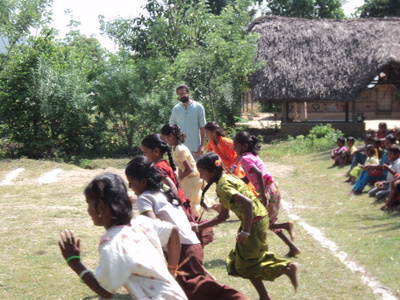
Posted in Newsletters | Leave a comment